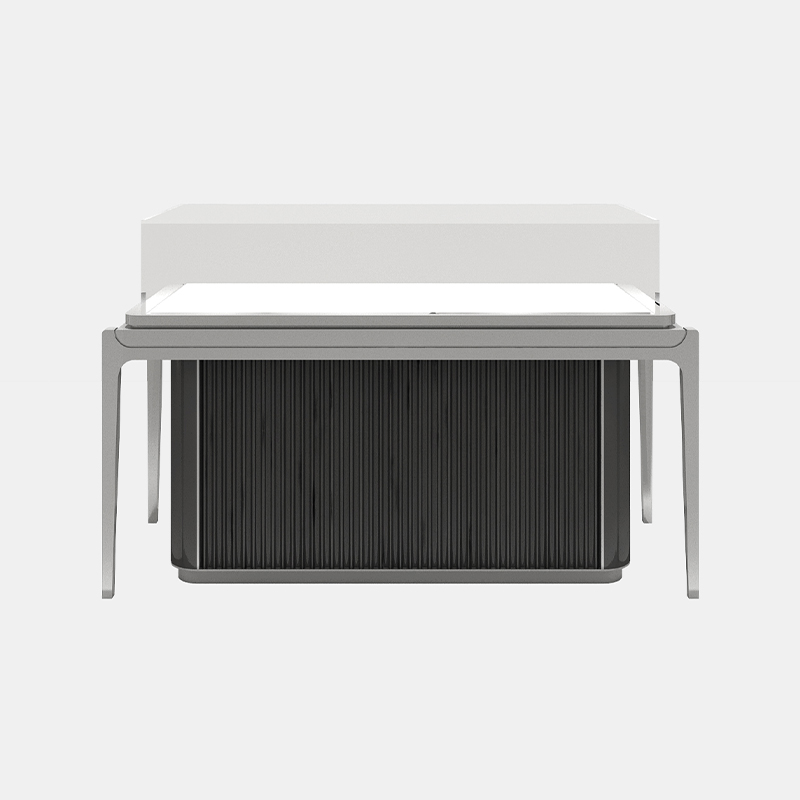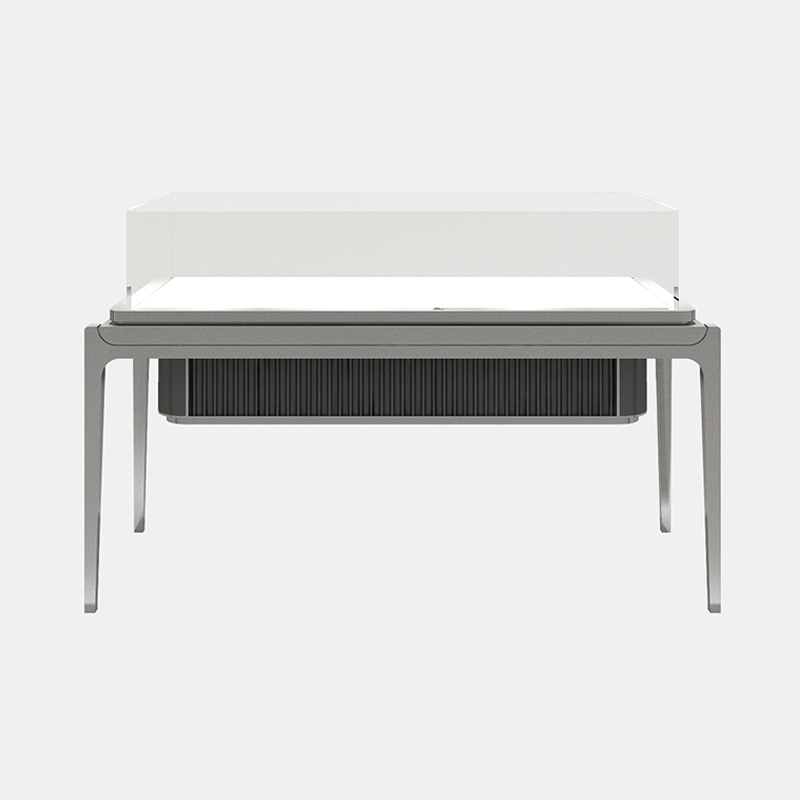
That single rejection is the whole argument for treating commercial display cabinets as engineered furniture rather than shop decoration. Four numbers decide whether a cabinet still seals, slides and lights correctly after five years of daily opening: frame squareness, glass build-up, the heat load left inside the case, and lock grade. Finish, colour and silhouette can be changed late in the project. These four cannot.
What follows is a specification-led walkthrough: the tolerances worth writing into a purchase order, how the main cabinet types differ in structure, and where lighting and glazing quietly decide whether a piece reads as luxury or as a generic fixture.
Content
A purchase order that says "high-quality tempered glass and premium hardware" gives a factory nothing to be measured against. Replace it with values a QC inspector can check with a tape measure and a set square before the crate is closed.
Weight is the number most often left out. Float glass runs about 2.5 kg per square metre per millimetre of thickness, so a 10 mm door on a 0.9 square metre frame weighs roughly 22 kg. That mass hangs on two hinges, and at forty openings a day across 300 trading days you reach 12,000 cycles a year, or 60,000 over five years. Hinges rated to 100,000 cycles leave headroom; unspecified hardware leaves a liability with the store team.
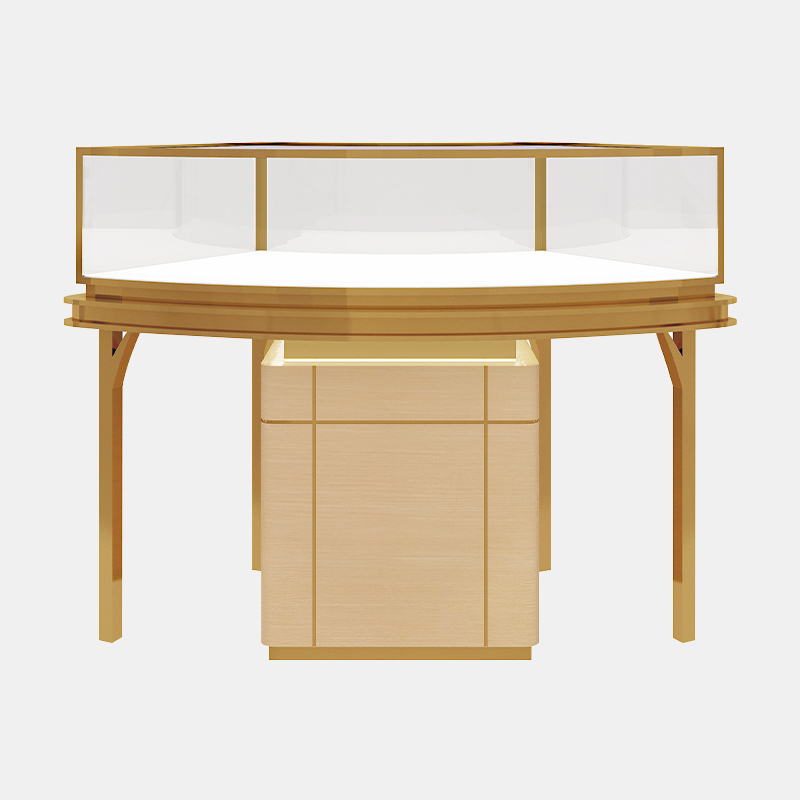
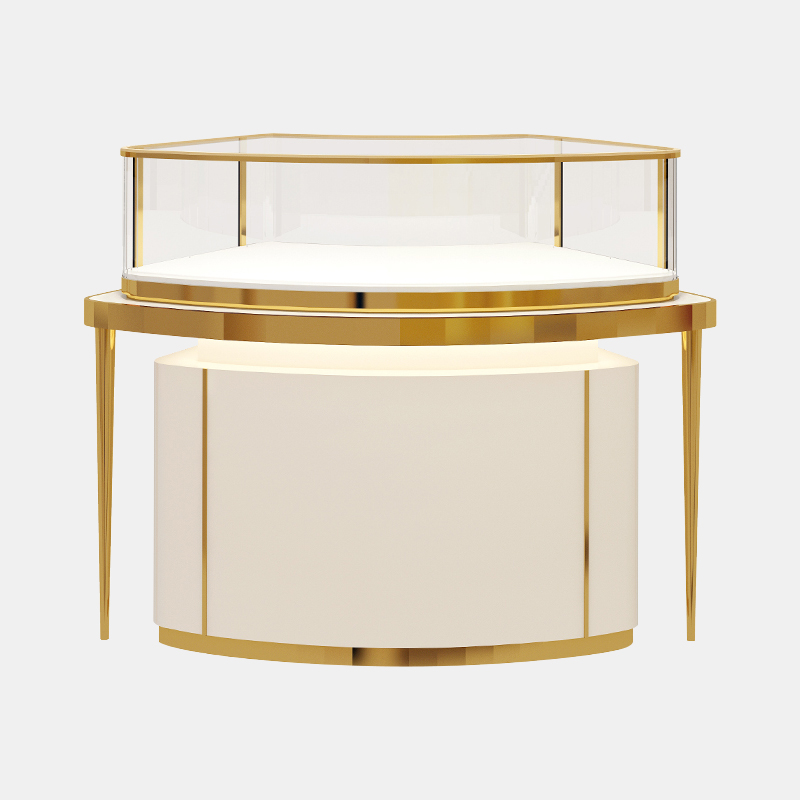
Almost every retail or museum floor is assembled from five structures. What matters at procurement is sightline, door type, and whether the case can be serviced without unloading the stock first.
| Type | Typical use | Glazing | Structure notes | Main procurement risk |
|---|---|---|---|---|
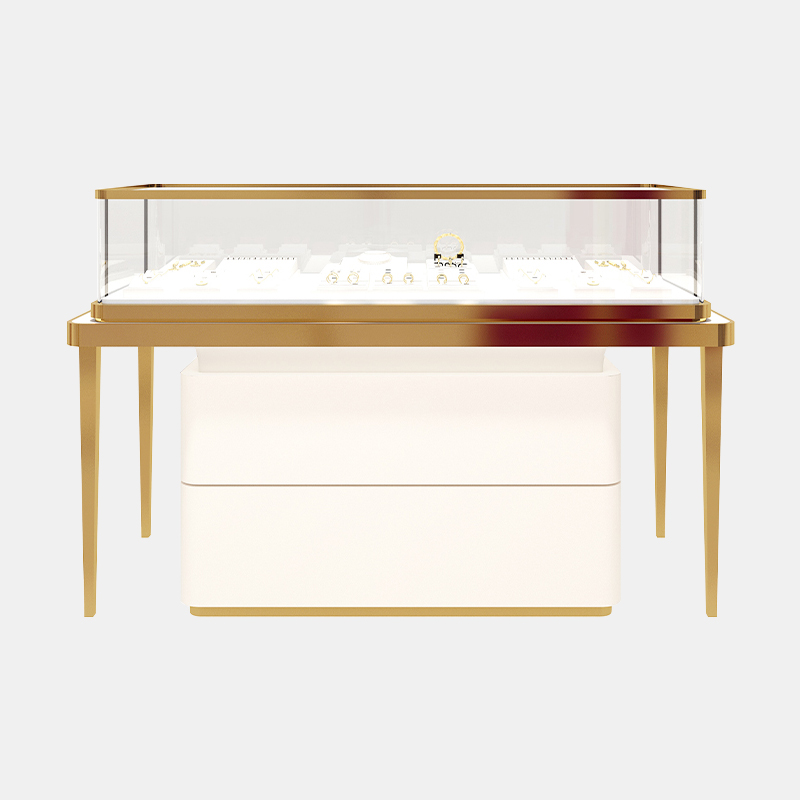
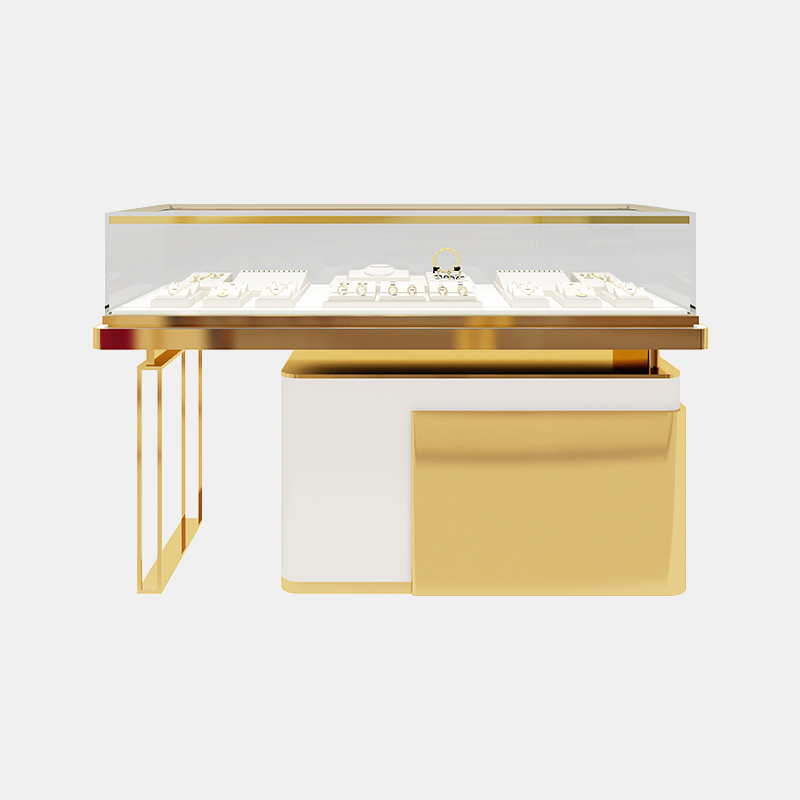
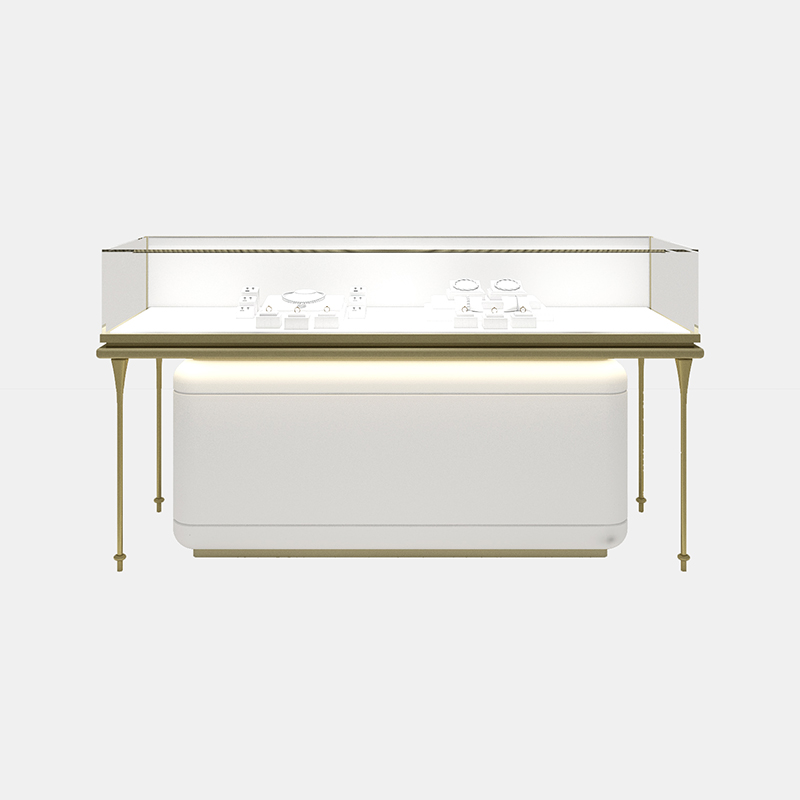
| Full-vision island showcase | Jewellery, watches, high-value small goods | 8 to 10 mm tempered, low-iron on all four sides | Welded steel frame, top or shelf LED, hidden cable chase | Reflections and fingerprints; standard glass shifts colour |
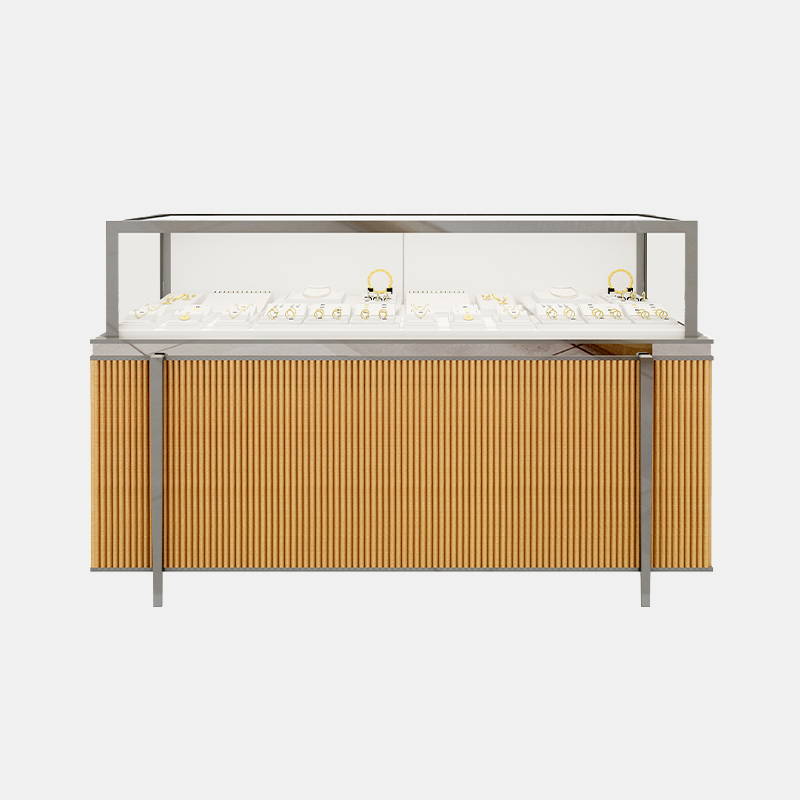
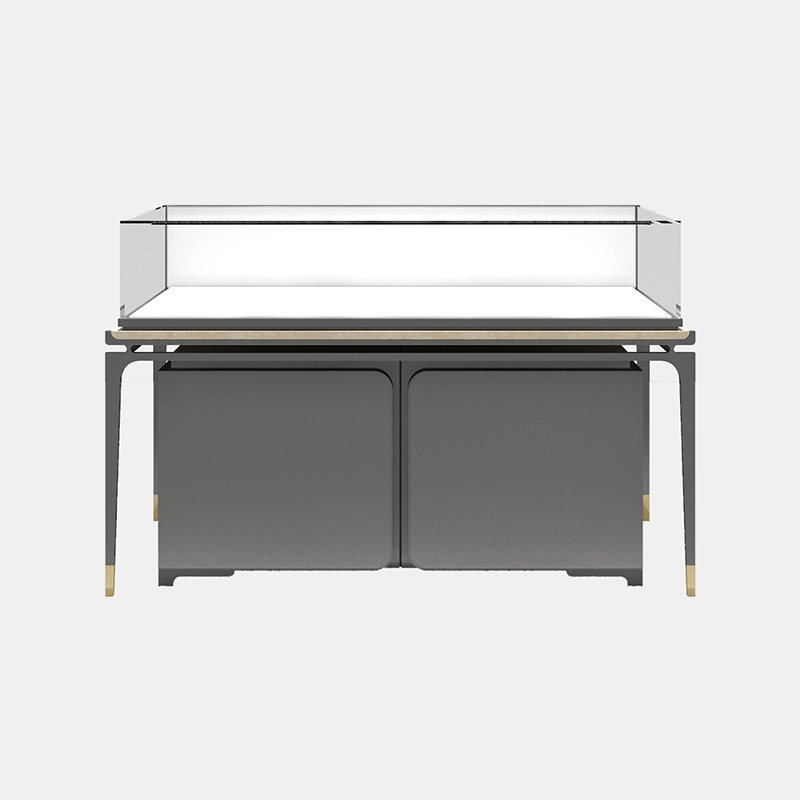
| Counter and sales cabinet | Jewellery counters, cosmetics cash wraps | 6 to 8 mm glass top over a solid body | Lockable drawers, knee space, routing to the POS point | Height mismatch with stools; drawers fouling the plinth |
| Wall unit | Cosmetics, watches, sunglasses, perimeter runs | 6 to 8 mm sliding or hinged doors | Adjustable shelves on 32 mm pitch, back-panel fixing | Wall plumb and fixing depth; door swing versus aisle width |
| Tall tower or high cabinet | Brand statements, window frames, boutique entrances | 8 to 10 mm hinged or sliding, soft close | Three-point locking on tall doors, 100 mm plinth | Door weight, floor loading, transport damage on top-heavy units |
| Museum pedestal case | Artefacts, sculpture, small exhibits | 6 to 10 mm laminated with UV filter | Sealed gasket, silica gel chamber, no visible key | Airtightness and internal off-gassing from adhesives |
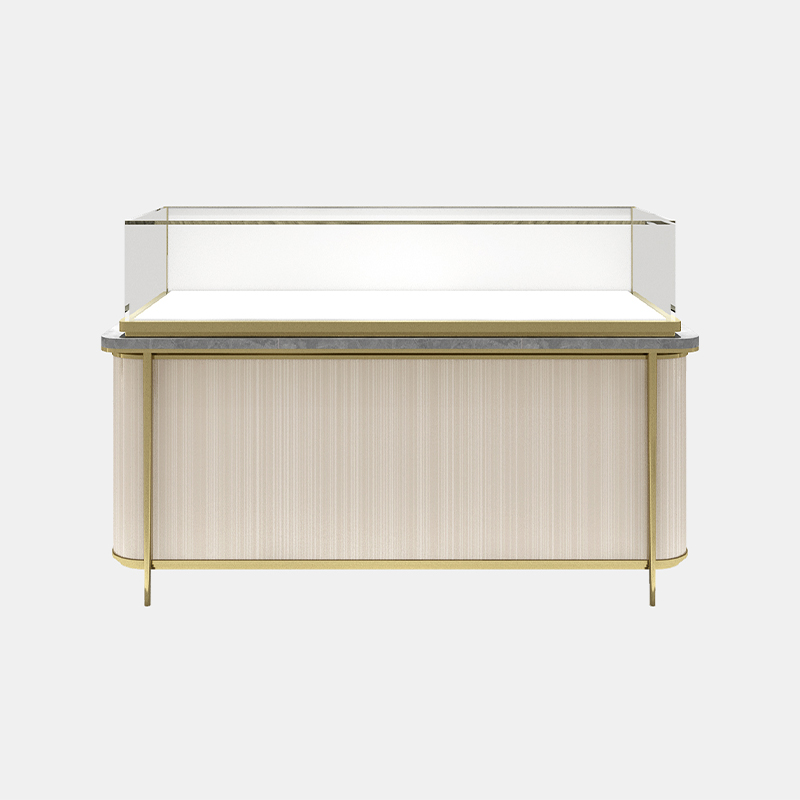
Most jewellery floors end up mixing three of them: an island for hero pieces, a counter run for transaction, and a tower or window piece for the street. The completed jewellery projects show how that mix shifts between mall boutiques and standalone stores, and where a fourth element such as a museum-style pedestal earns its space.
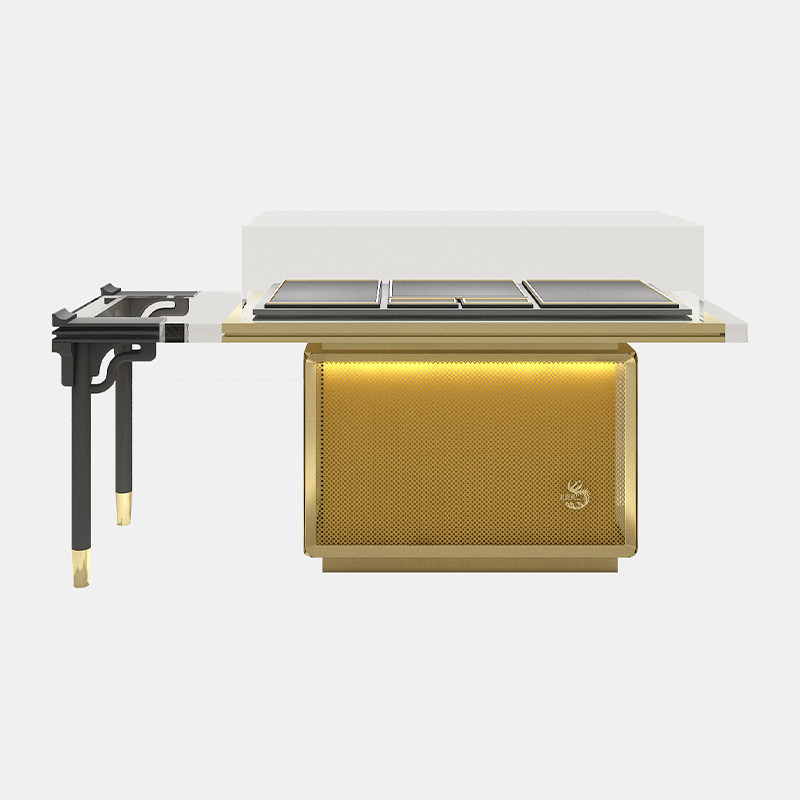 JR-C201 Customizable Stainless Steel Jewelry Display CabinetCustomizable stainless-steel jewelry display cabinet for island, counter or window schemes, with materials, shapes, colors and sizes adapted to retail requirements.View Product →
Two decisions sit inside every case and both are usually decided by whoever draws the render. Colour rendering should start at CRI 90 with R9 above 50, because the red channel is where gold, rubies and skin tones fail first. Colour temperature of 3000 to 4000 K suits jewellery and watches; cosmetics displays often read cleaner closer to 4000 K.
Heat is the quieter problem. Every watt dissipated inside a sealed case becomes heat around the merchandise. Put drivers in the plinth or in a ventilated top box, and keep the LED strip behind a diffuser so no visitor sees a bare diode reflected in the glass.
In museum work the illuminance ceiling is set by object sensitivity rather than merchandising ambition, and the lighting plan is usually agreed with a conservator before the case is built. In retail the same chart is a useful brake: more light is not automatically more attractive once glazing reflections take over.
That second chart explains why low-iron glass is worth naming explicitly. An 89 percent pane carries a faint green cast that pushes white diamonds and pale gold toward grey; the ultra-clear alternative protects the colour the merchandiser was hired to show. For display of manuscripts, textiles or pigment on paper, laminated glass with a UV filter is the practical line of defence.
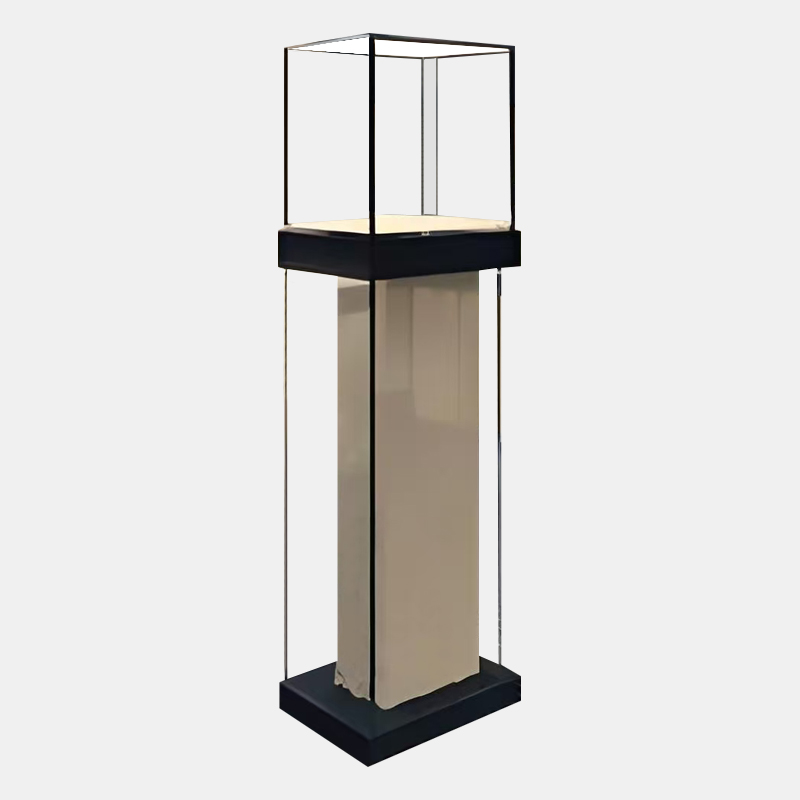 MS-101 Freestanding Museum Pedestal Display CaseCustomizable museum pedestal case for cultural relics and artworks, protecting collections from dust and light while presenting them with a clear visual effect.View Product →
A two-metre glass tower is not one product; it is four sub-assemblies stacked in the right order. Reversing that order in the shop drawing is how projects end up cutting the plinth on site to hide a cable.
Shrinkage in a boutique rarely comes from forced entry. It comes from a drawer that never locked, a key that opens four cabinets in three zones, and a back panel that takes twenty minutes to remove, so nobody checks the alarm tape. Security is therefore a specification, not an accessory.
Service access is the cheapest insurance available. A cabinet that can be cleaned, re-lamped and re-aligned in ten minutes stays presentable; one that needs a technician in a van slowly loses its alignment, its brightness, and eventually its place on the floor plan.
Quotes for commercial display cabinets diverge mainly on seven items: glass area and thickness, hardware count, lighting and driver grade, lacquer labour, geometry complexity, packaging volume for freight, and whether installation supervision is included. Two prices that look 30 percent apart are usually two different specifications, not two different margins. Ask each supplier to price the same tolerance sheet and the gap narrows.
Lead time is governed by drawing approval and glass tempering slots rather than assembly. A practical sequence is approval drawings, one approved sample or sample panel, production, pre-shipment QC photographs, then crating. Suppliers who skip the sample panel stage usually discover the colour problem after the last cabinet is finished.
For anything beyond a standard module, the useful first conversation is about structure and tolerances rather than colour. The customisation process is where curved glass, non-standard plinths and unusual lighting positions get priced honestly, and where a factory's real capability shows up in the shop drawings it returns.
 CM-H101 Tall Cosmetic Display CabinetTall transparent cosmetic showcase with shelving and dividers, customizable in materials, shapes, colours and sizes for organized retail display.View Product →
Short answers to the questions that surface most often during quoting and site measurement.


 ਪੰਜਾਬੀ
 English
 عربى
 русский
 中文简体