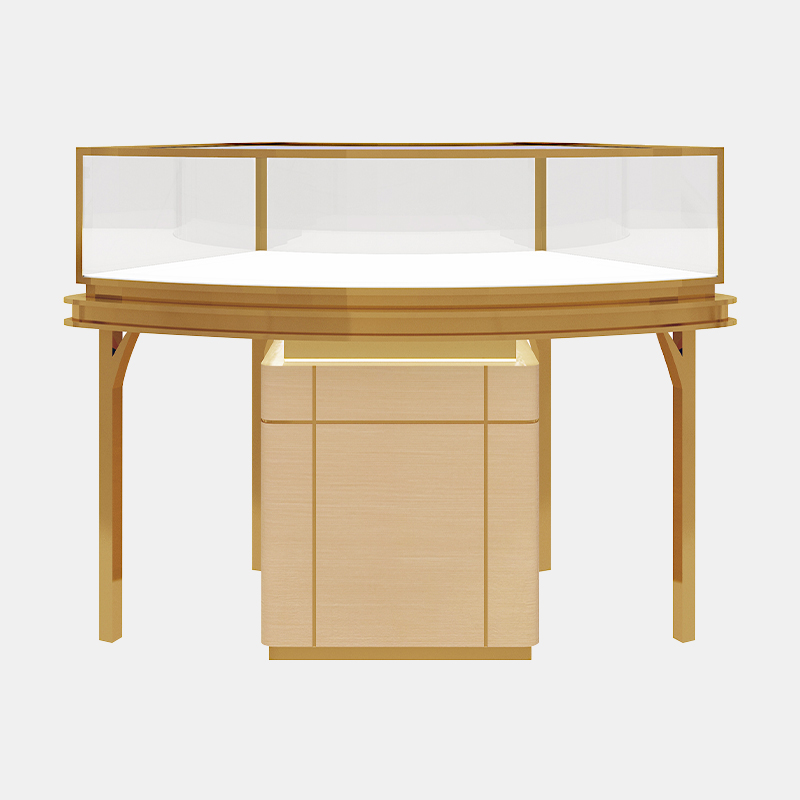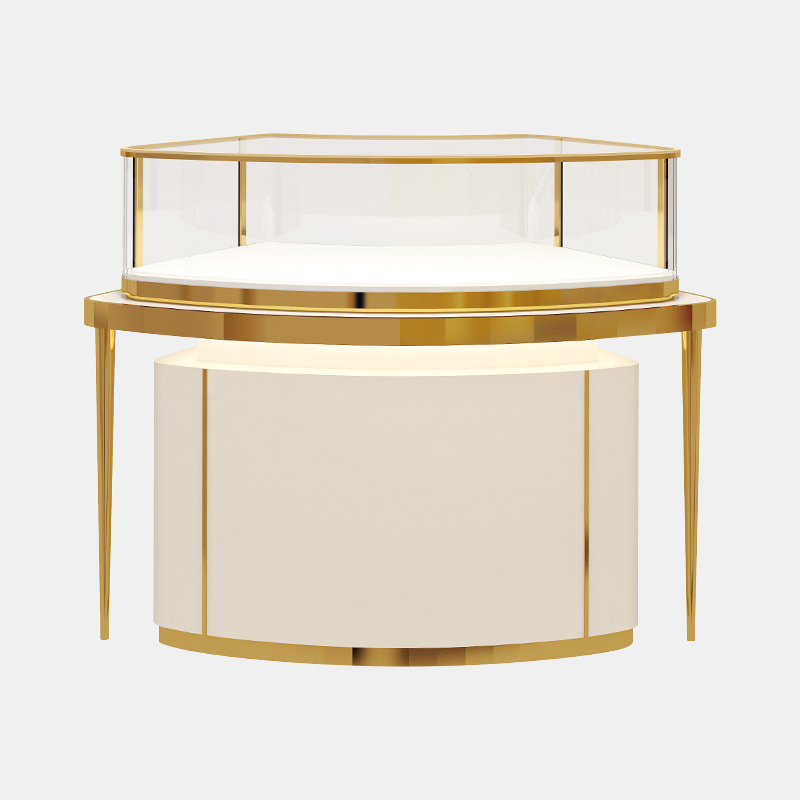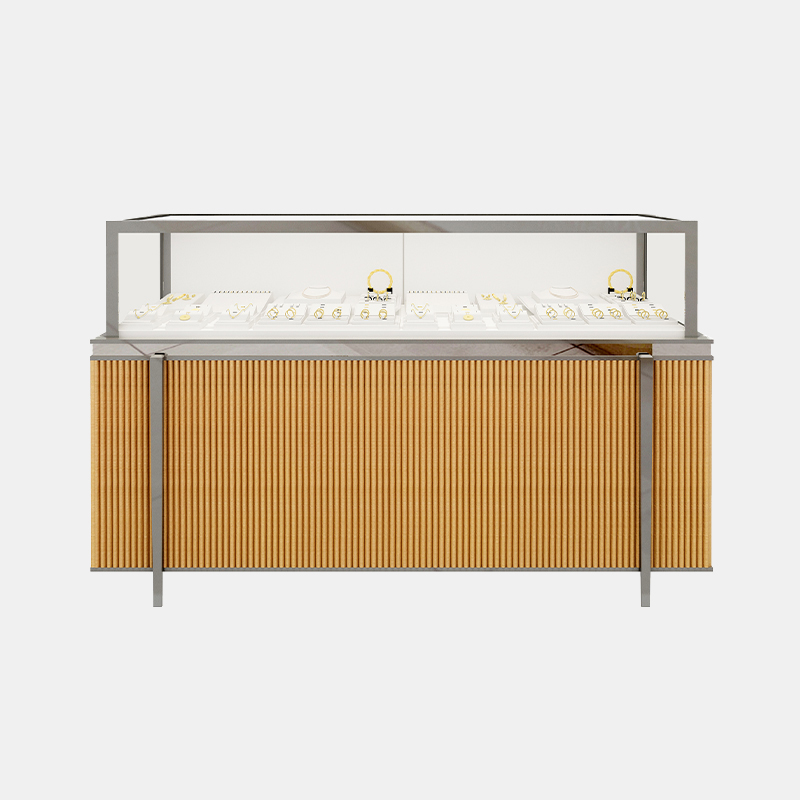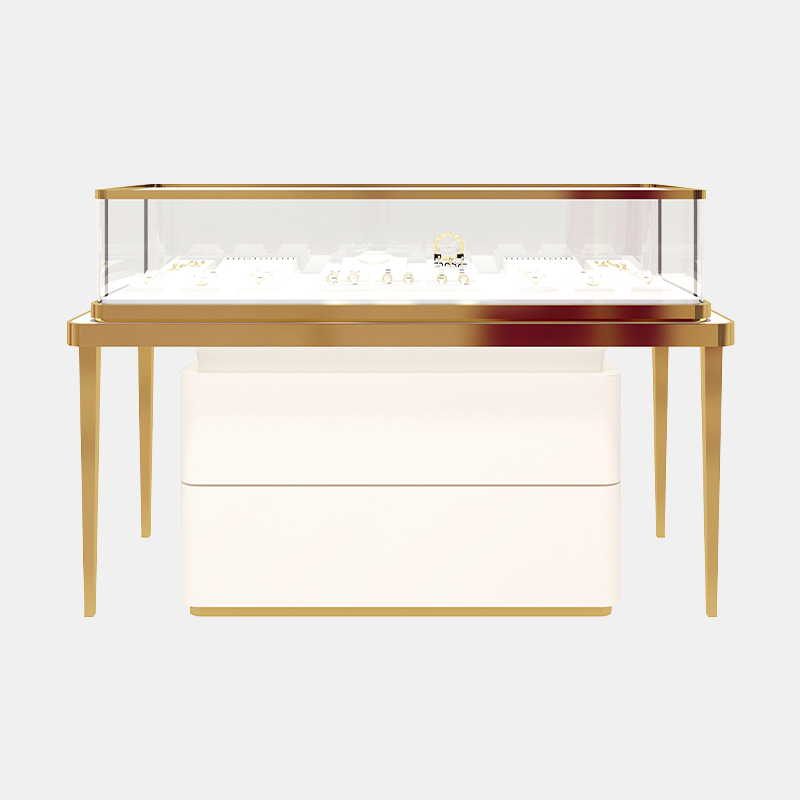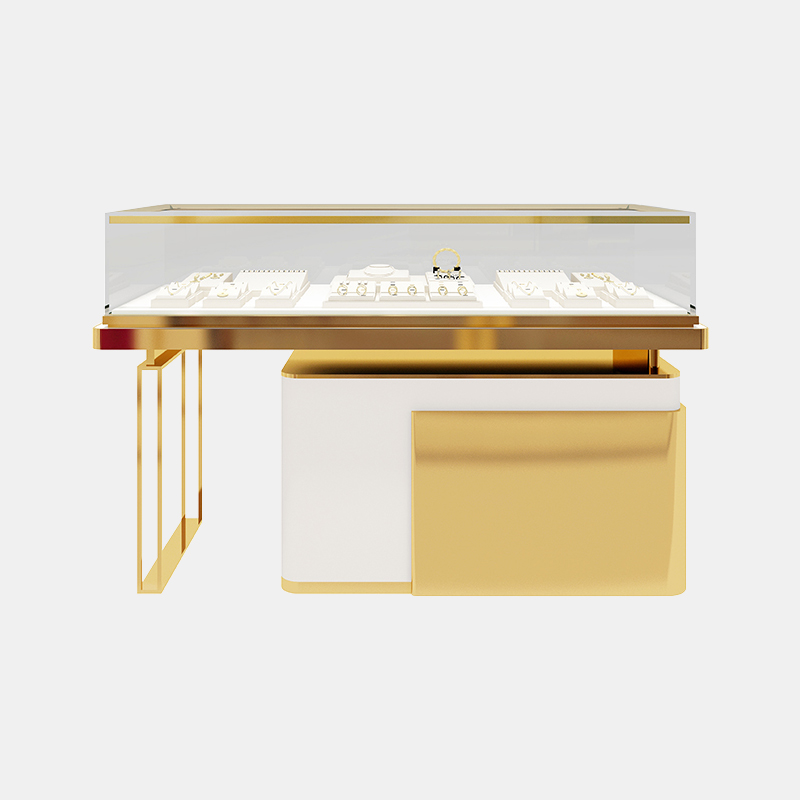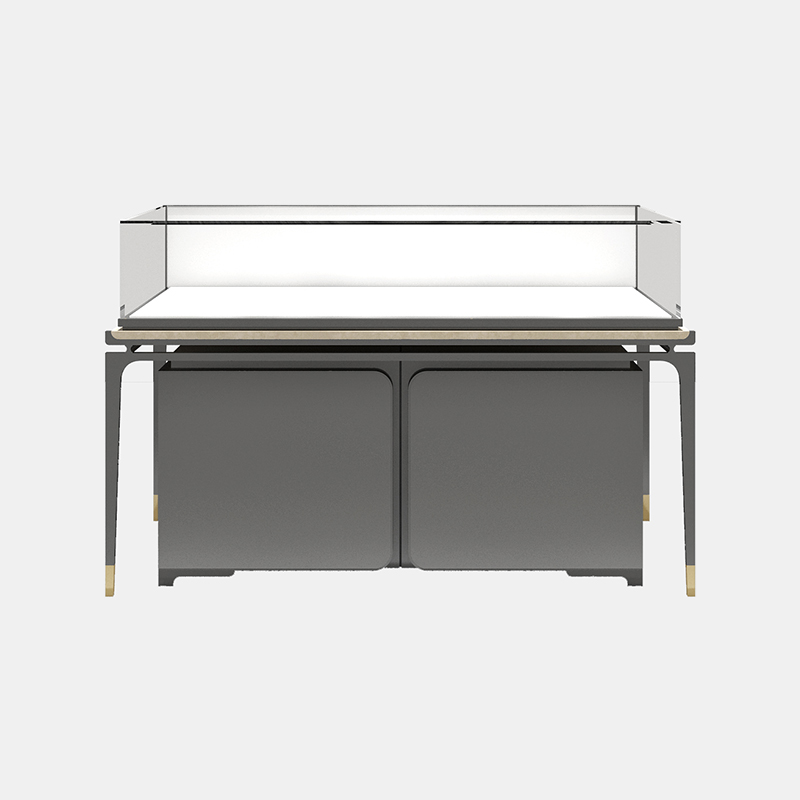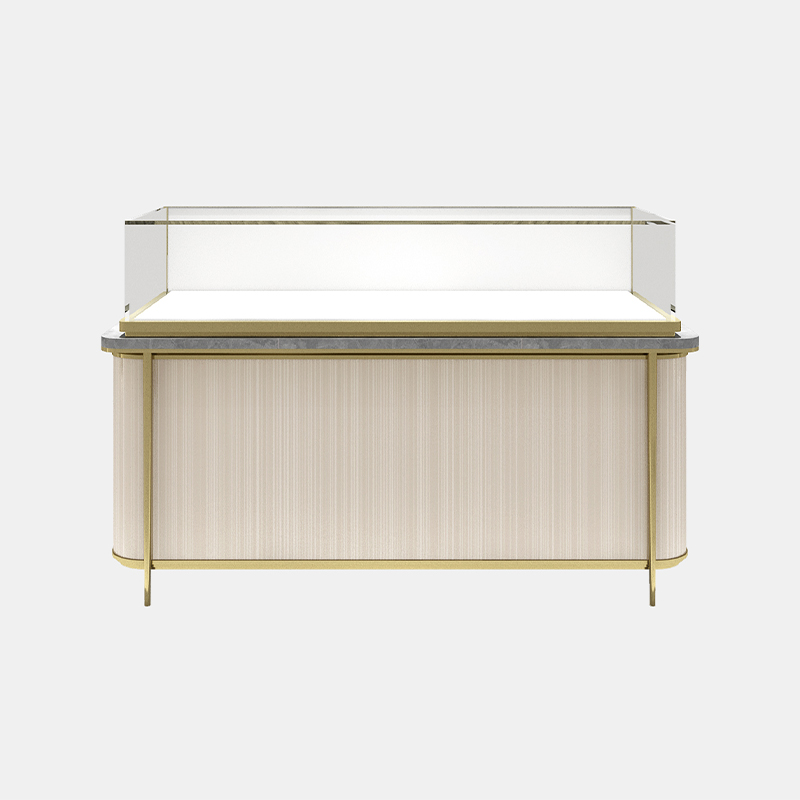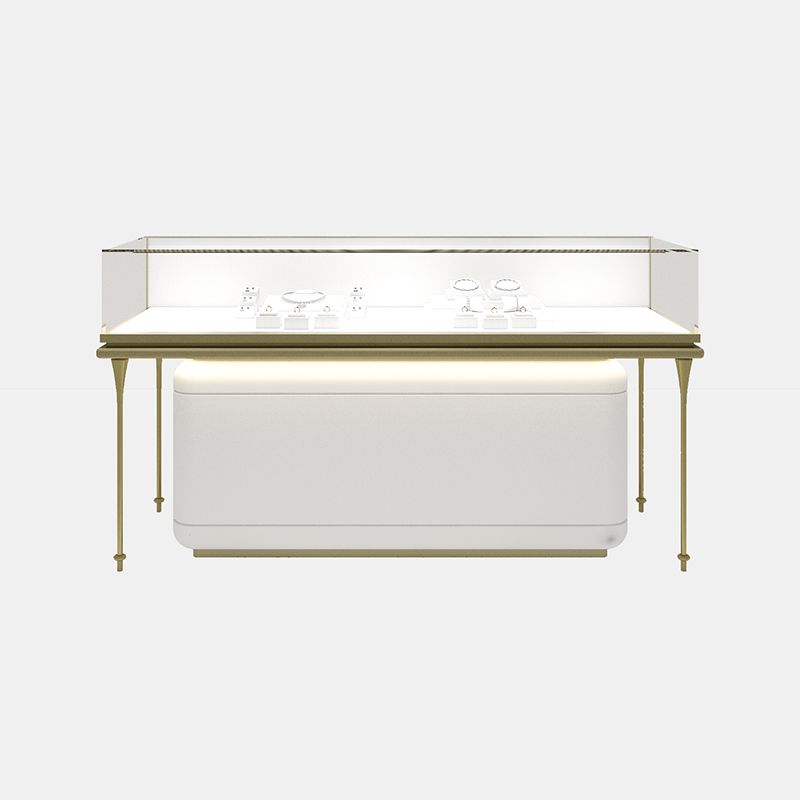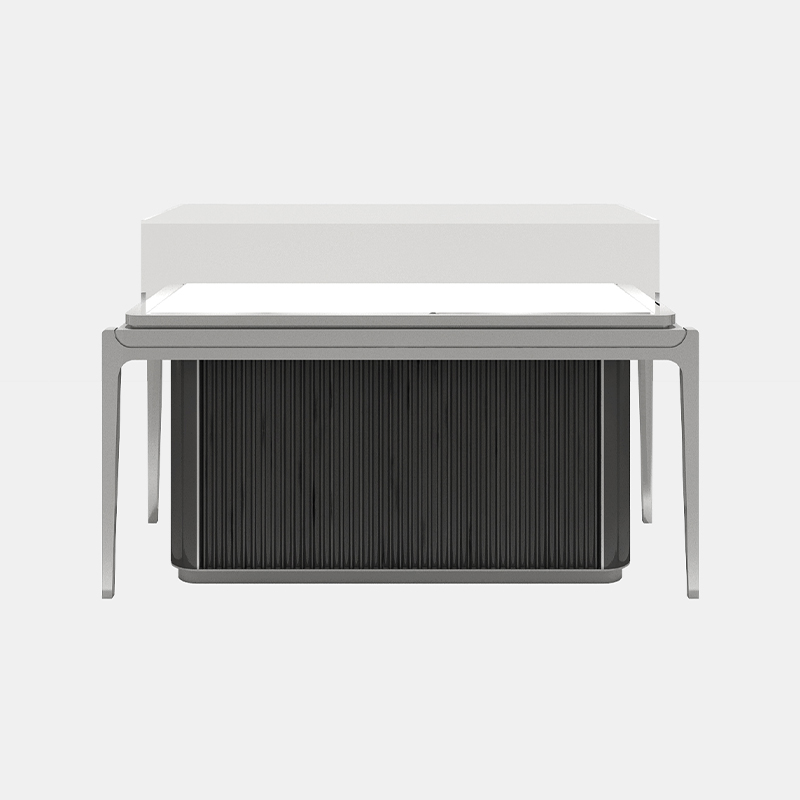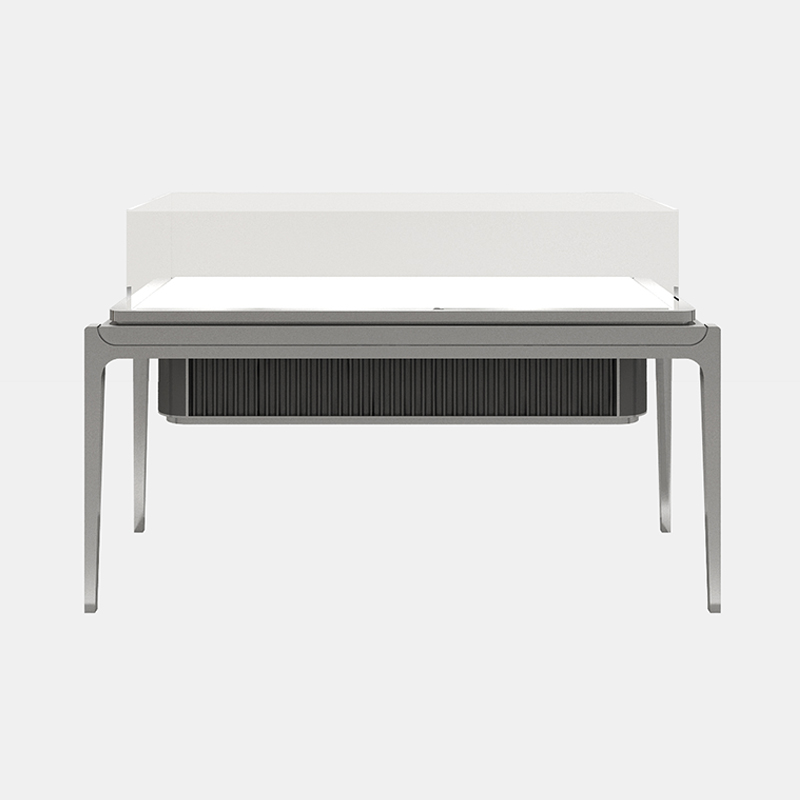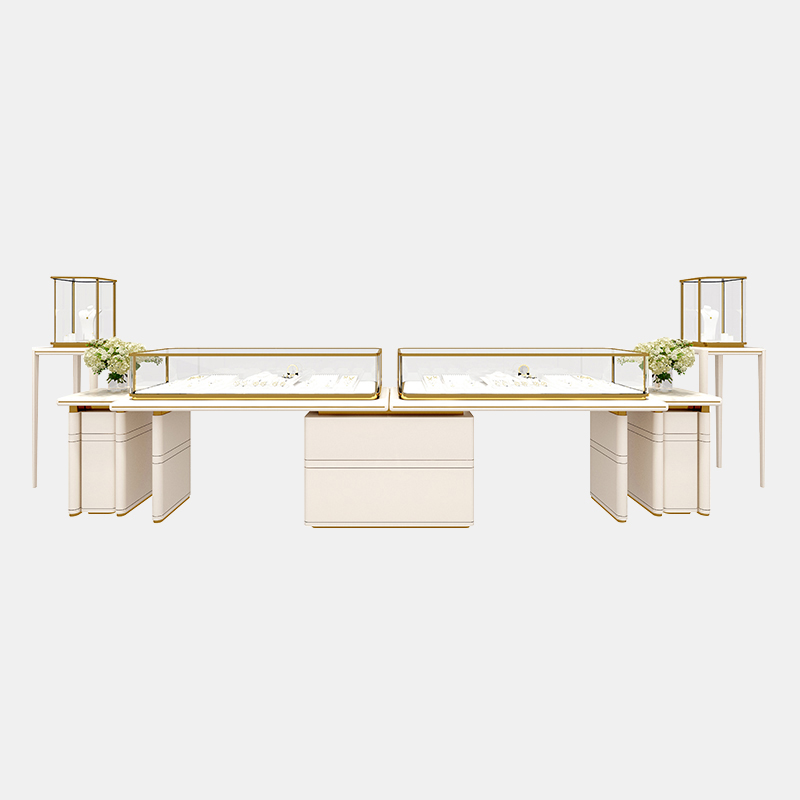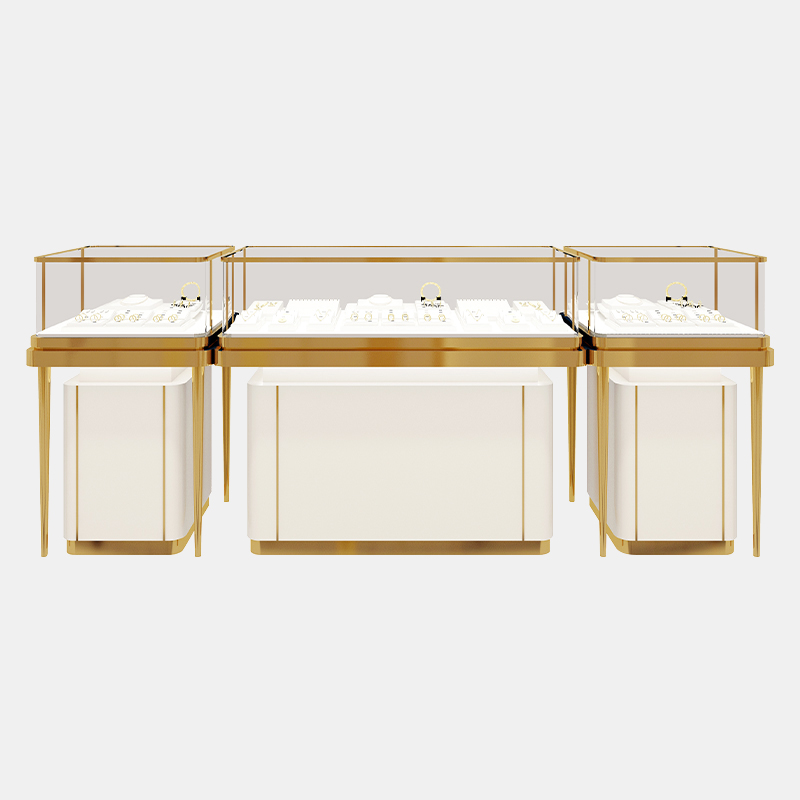












Walking through a jewelry store that feels right is never an accident. The spotlight hits a ring exactly where the customer's eye lands, the counter height invites a closer look, ...
READ MOREA customer walks into a clothing store, glances at the display table, and pauses. The folded shirts are neatly stacked, but at eye level the first thing they see is a mass of fold...
READ MORERETAIL FIXTURE PLANNING Choosing the Right Cosmetic Display Cabinet Starts Here A cosmetic display cabinet works best when it is matched to three things at once: the footprint ava...
READ MOREEvery purchase in a jewelry or watch store passes through the same gate: the display case. Before a customer touches a ring or tries on a watch, the case has already made the firs...
READ MOREA display cabinet is a fixed or freestanding retail fixture built to hold, protect, and present merchandise for customer viewing, usually combining a glass viewing area with a lockable base or back panel. Across commercial retail, display cabinets and display showcases serve the same core purpose: turning inventory into a secure, visible retail display that supports both product protection and sales presentation. A jewelry counter, a museum artifact case, and a watch showcase are all variations built on this same structure, adjusted for the value and size of the items inside.
The difference between a display case and a display cabinet is mostly one of scale and mounting. A display case often refers to a smaller countertop or wall mounted unit, while a display cabinet more often describes a larger freestanding fixture with a closed base for storage. A retail showcase, meanwhile, typically emphasizes the glass viewing portion used to highlight featured products near an entrance or checkout area.
Retail stores select between several established display cabinet formats depending on product category, counter layout, and store traffic flow.
A glass display cabinet remains the most common format across jewelry stores, electronics counters, and museum exhibits, since tempered glass panels allow full product visibility while keeping items secured behind a locked frame. A glass display case built with low iron glass reduces the green tint seen in standard glass, which matters for a glass retail display case where true color representation affects buying decisions on gold, gemstones, and watches.
Retail chains with a defined brand identity often move away from standard sizes toward custom display cabinets built to match store layout, lighting design, and product dimensions. Custom units are common in flagship stores, museum installations, and multi location retail rollouts, where consistent showcase dimensions across dozens of stores support faster fixture installation and a uniform in store look.
| Format | Typical Depth | Common Placement |
|---|---|---|
| Countertop display case | 18 to 22 inches | Checkout counters, small items |
| Freestanding display cabinet | 24 to 30 inches | Store floor, feature zones |
| Wall mounted showcase | 12 to 18 inches | Perimeter walls, back walls |
| Jewelry and watch showcase | 20 to 24 inches | Sales counters, entry displays |
Choosing a display cabinet starts with the product itself, then moves to counter space, lighting, and security needs.
Display case depth affects both how products are arranged and how much floor space a store gives up to fixtures. Jewelry and watch counters typically use a shallower depth in the 20 to 24 inch range to keep small items within easy reach, while general retail display cabinets for apparel or electronics often run 24 to 30 inches deep to hold larger product groupings. Measuring the walkway space in front of a planned counter before ordering helps confirm the cabinet depth will not crowd customer traffic.
Glass thickness, frame material, and lock type should match the value of the merchandise on display, while LED lighting temperature should match the material tone of the products, such as warm white lighting for gold jewelry and neutral white for silver or watches.
Retail chains and multi store buyers sourcing several units at once often work directly with a display cabinet manufacturer rather than a single unit retailer, since a wholesale display cabinets order allows consistent sizing, matched finishes, and centralized project scheduling across a full store rollout. Working with an established display case manufacturer also shortens the path from design drawing to finished, installed fixture, since production, hardware sourcing, and finishing happen under one process.
Zhejiang SUNTOP Commercial Display Products Co., Ltd is a China display cabinets and showcases supplier for jewelry, watches, museums, and retail stores, established in 2009 and focused on custom commercial display spaces. As a retail display manufacturer and retail display cabinet manufacturer, the company combines design planning, display cabinet and prop production, and decoration and renovation contracting management within a single process, helping clients build a display space that fits their brand positioning. The factory covers 25 acres, with floor space reaching 25,000 square meters and an annual production capacity of over 100 million, supporting both wholesale display cases orders and fully custom display cabinets projects for jewelry, watch, museum, and general retail clients.
A display cabinet is a retail fixture, usually with a glass viewing area and a lockable base, built to present and protect merchandise on a sales floor.
A retail display cabinet is a display cabinet sized and finished for a store environment, used to hold products such as jewelry, apparel, or electronics for customer viewing.
A display case is usually a smaller countertop or wall mounted unit, while a display cabinet more often describes a larger freestanding fixture with a closed storage base.
A retail showcase is a display fixture, typically glass fronted, used to highlight featured products near an entrance, counter, or checkout area.
They are used to present merchandise clearly while protecting it from handling and theft, commonly for jewelry, watches, museum artifacts, and general retail goods.
Start with product size and quantity, then match cabinet depth, glass thickness, lock type, and lighting to the product category and available floor space.
The best type depends on the product, though a glass display case is generally preferred for jewelry and watches, while wall mounted showcases suit apparel and general retail.
Size depends on product count and dimensions, with most retail counters using cabinets between four and six feet long and 20 to 30 inches deep.
Most retail display cabinets run between 20 and 30 inches deep, with jewelry and watch counters on the shallower end of that range.


 ਪੰਜਾਬੀ
 English
 عربى
عربى русский
 中文简体
中文简体