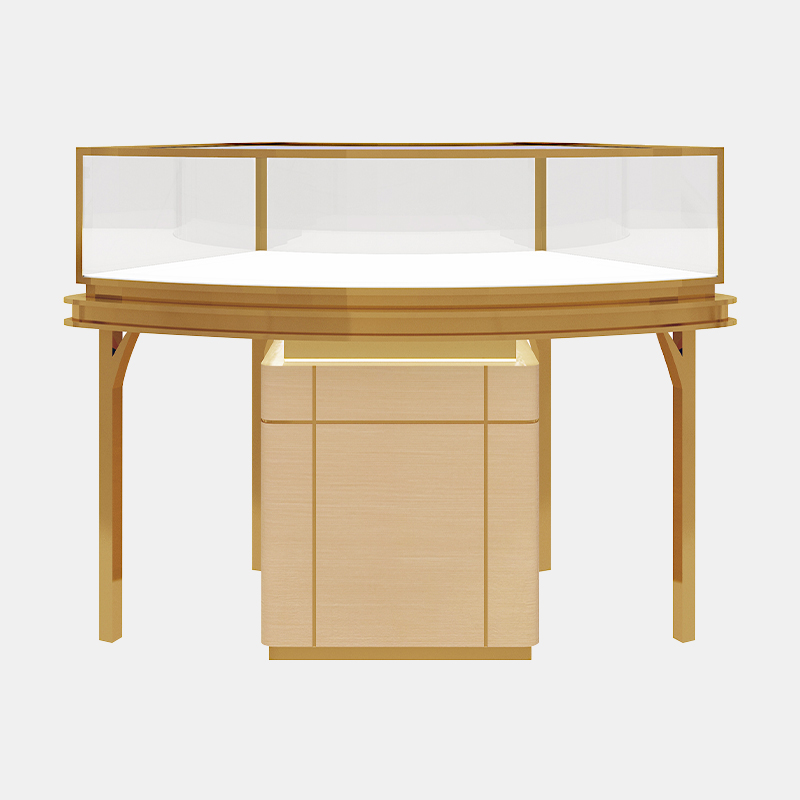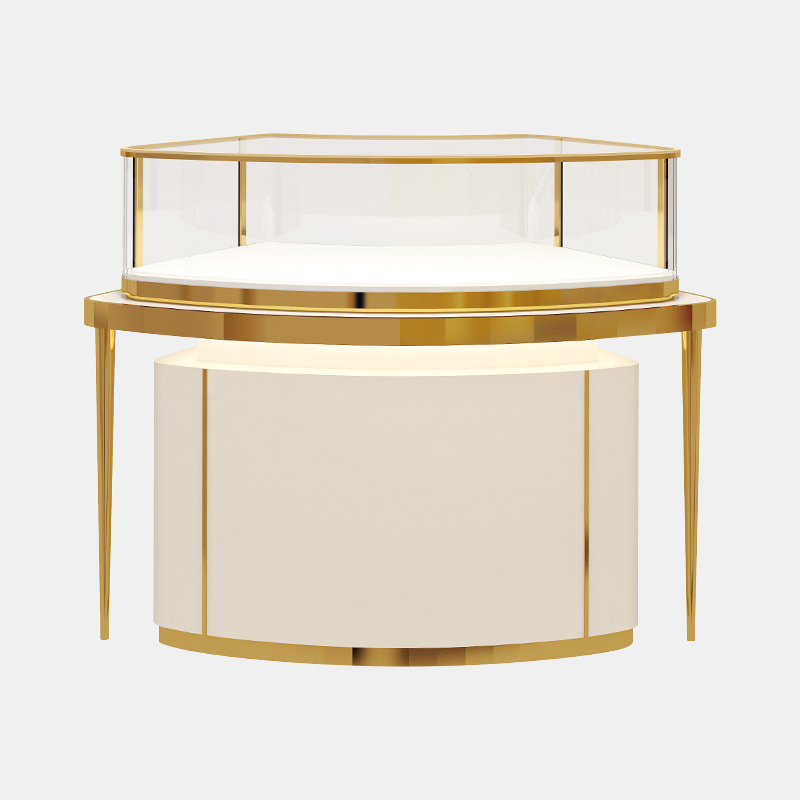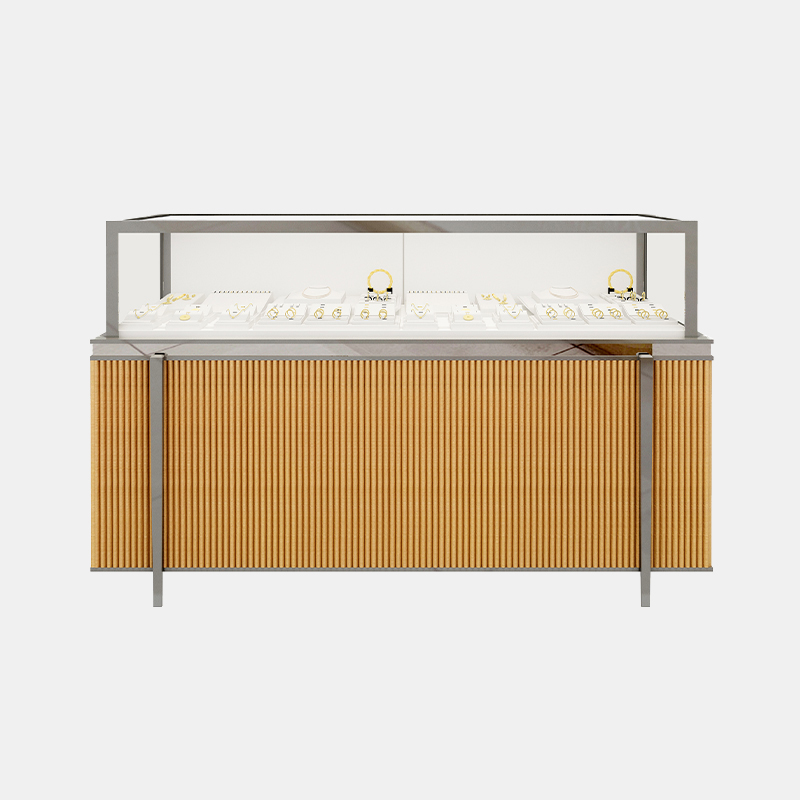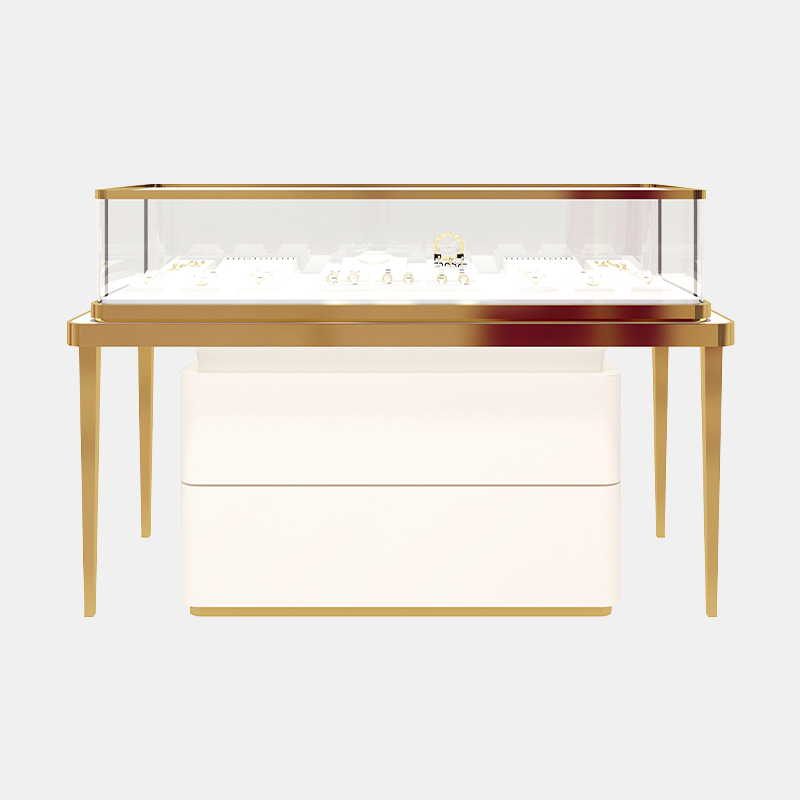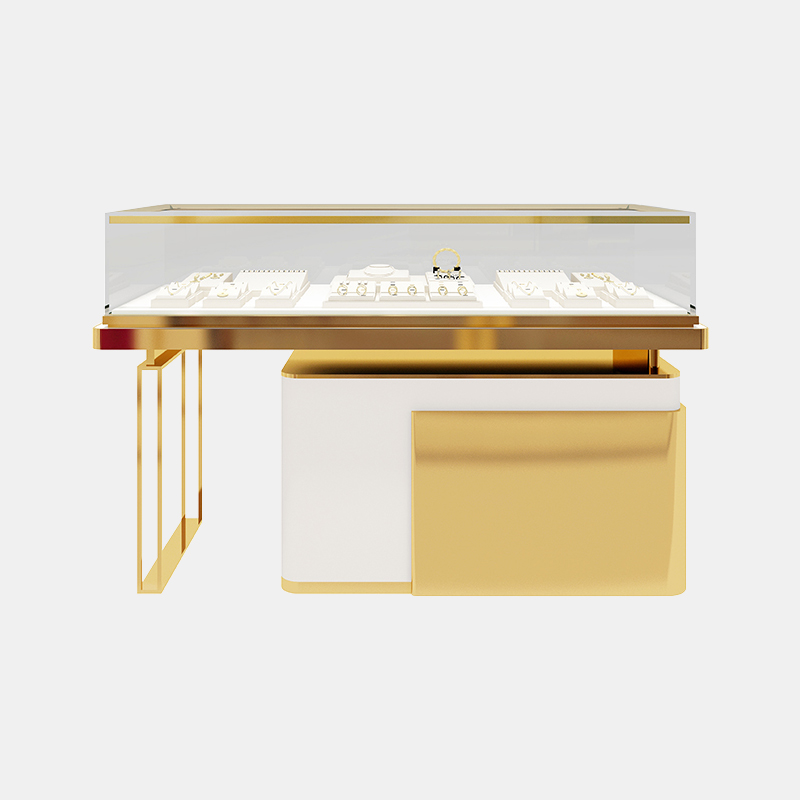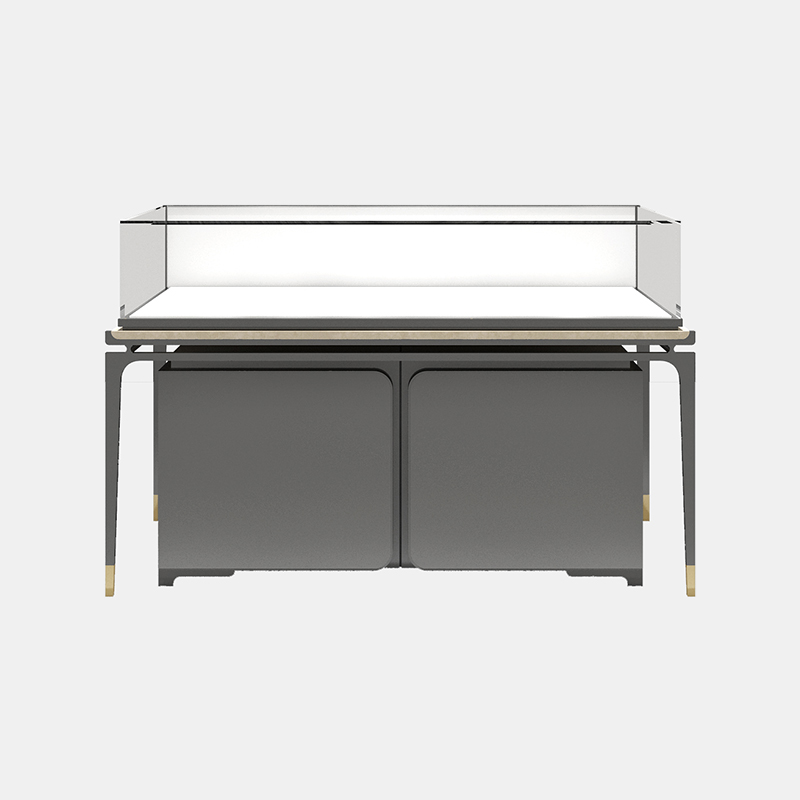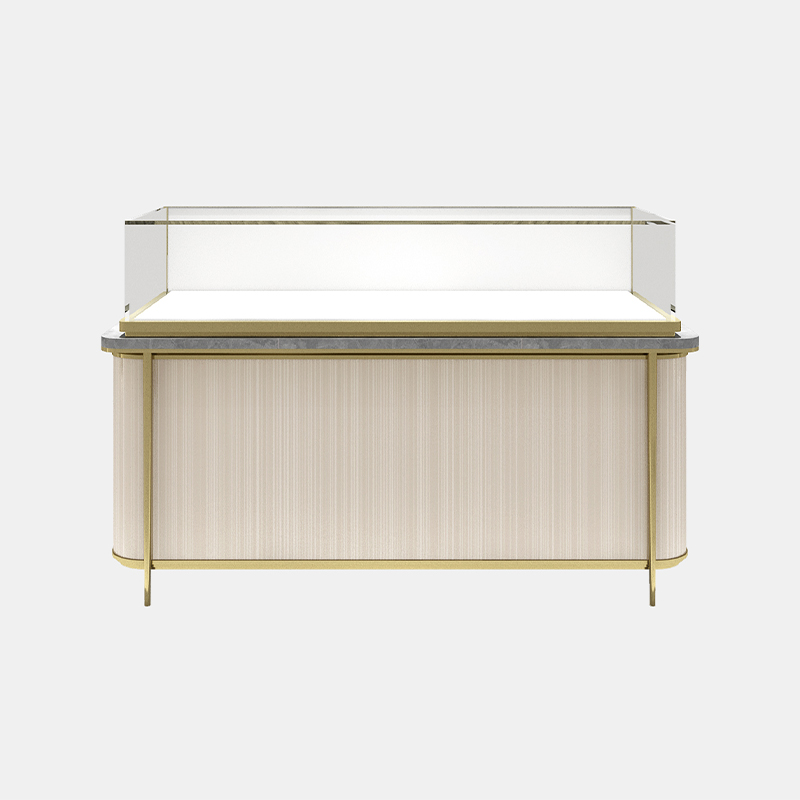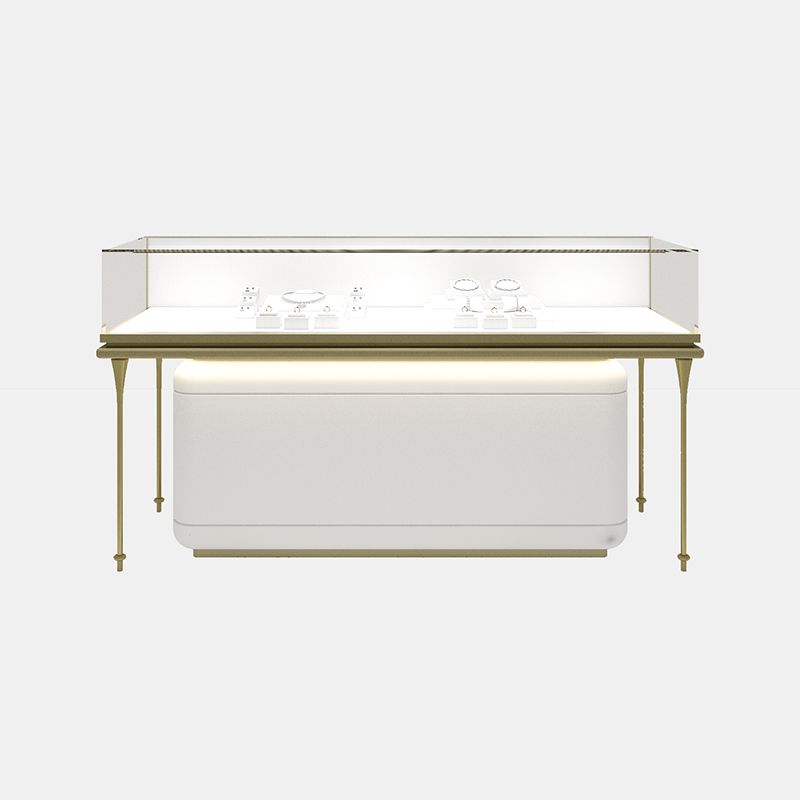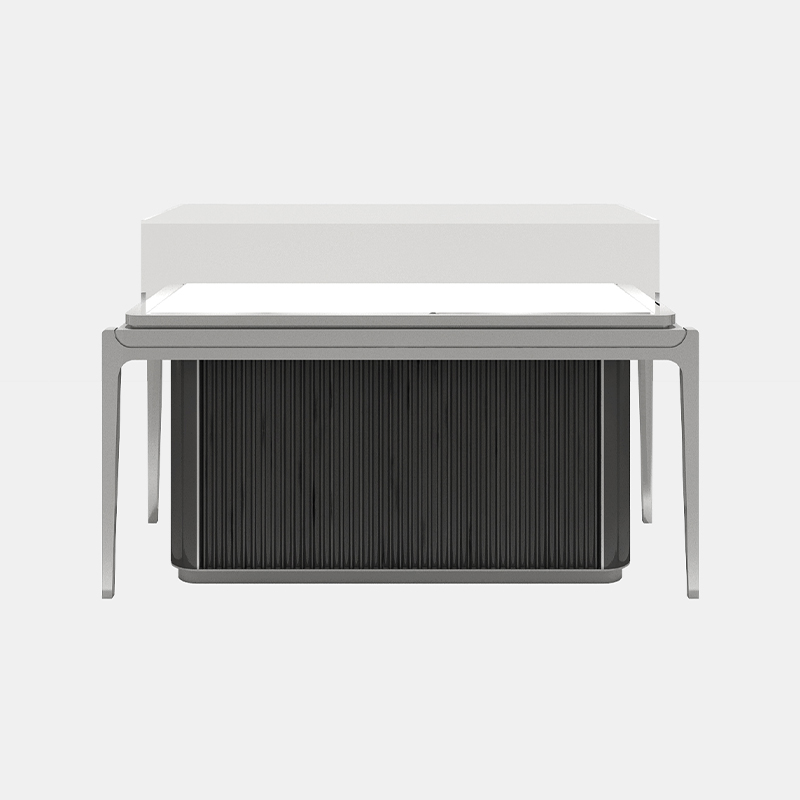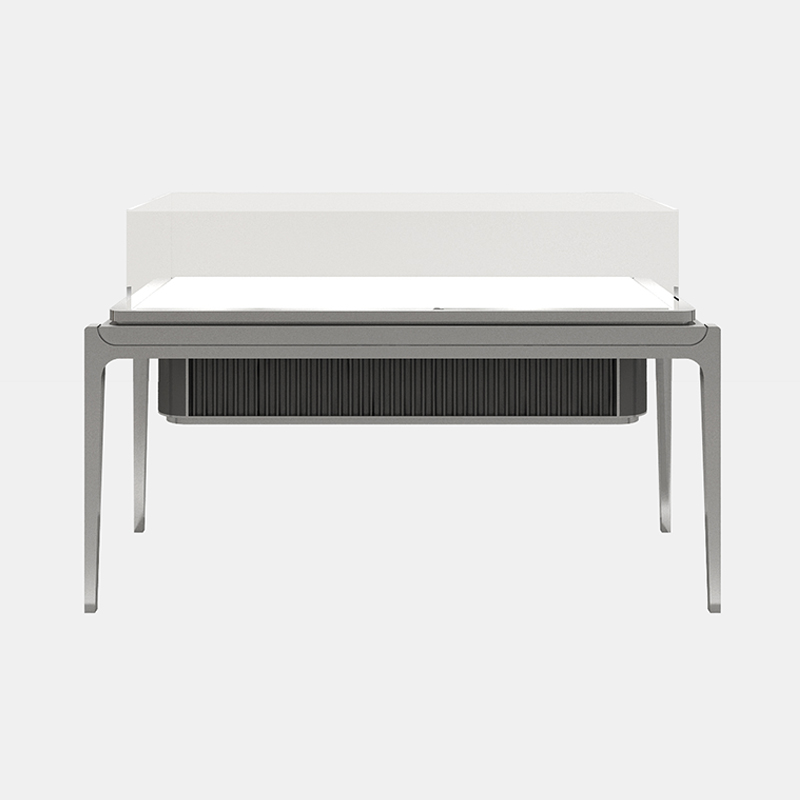
A jewellery retailer approves a glass cabinet display case from a photograph, receives forty units three weeks later, and finds three problems nobody priced in: the glass turns green when viewed from the side, the doors rub at the top corner, and the LED strip leaves a dotted shadow across the tray.
Here is the short version before the detail. On a glass cabinet display case, the glass itself is the least variable component. The frame, the lighting, the locking hardware and the sealing decide whether the case still looks premium in year five. Specify those four things before you negotiate price, and most of the expensive surprises disappear.
This guide works through them in the order that actually affects cost and performance: glazing type and thickness, frame material and assembly tolerance, lighting specification and heat, format-specific requirements, then maintenance and supplier verification.
Content
Glass is graded by what you cannot see. Standard clear float glass carries a green edge tint from iron oxide in the batch, and that tint shows up wherever two panes overlap or a panel is viewed at an angle. Low-iron, often sold as ultra-clear, reduces the tint and lifts visible light transmission from roughly 89 percent to about 91 percent, according to architectural glazing data. On a jewellery counter lit at 3,000 K, that difference decides whether a diamond reads icy or slightly yellow.
Safety and protection are separate questions from clarity, and they pull specifications in different directions:
| Glazing option | Typical thickness | Behaviour if broken | UV performance | Best fit |
|---|---|---|---|---|
| Clear float glass | 5 to 8 mm | Long shards, not classed as safety glazing | Blocks about 30 percent | Low-traffic wall units |
| Low-iron tempered glass | 5 to 8 mm | Granular fragments, safer in public areas | Blocks about 25 to 30 percent | Jewellery counters, watch towers |
| Low-iron laminated glass | 8 to 12 mm | Held by the interlayer, stays in the frame | Blocks about 99 percent | Museums, cosmetics, fragile stock |
| Acrylic sheet | 5 to 10 mm | Cracks and scratches readily | UV grades block up to 98 percent | Travelling displays, light fixtures |
Thickness follows span, not status. Counters and towers commonly use 5 to 8 mm tempered glass; a panel longer than about 1.2 m without a mid-frame support usually moves to 10 or 12 mm. A 6 mm panel across a 1.5 m unsupported span flexes visibly when a customer leans on it, no matter how good the frame is.
Two cases can use identical glass and look five years apart, because the difference sits in the frame. Grade 304 stainless steel resists corrosion well enough for humid retail environments. Grade 201 costs less but discolours faster in coastal cities and near perfume or cosmetics counters. Where steel is specified, ask for the grade in writing and inspect the weld seams, because grinding marks left unpolished become rust points.
Lacquer finishes live or die on surface preparation. A piano-white finish that has not been sanded between coats and properly sealed shows permanent fingerprints within months. Wood veneer framing needs edge banding on every visible edge, not only the front face.
Mechanical details cost less than doors and glass, yet they drive long-term cost:
Lighting is usually the first item buyers cut and the first thing customers notice. Three numbers control the result: colour temperature, colour rendering index (CRI) and illuminance. Retail cases for diamonds and gold generally run between 3,000 K and 4,000 K at a CRI of 90 or above. Below CRI 90, reds and skin tones look flat and gemstones lose fire.
Heat is the hidden cost. Older halogen systems pushed heat into the glass and the merchandise, while modern LED strips run cool enough to sit inside a frame channel. What still goes wrong is placement: a bare strip aimed straight down creates hotspots and visible dots on a velvet tray, whereas a diffused channel or recessed profile spreads light evenly.
Museums work to a different rule set. Conservation lighting guidance commonly caps exposure at about 50 lux for highly light-sensitive objects such as textiles and watercolours, allows roughly 150 lux for moderately sensitive paintings and wood, and up to about 300 lux for robust stone, metal and ceramics.
Counter height typically sits between 900 mm and 950 mm, with tall towers between 1,800 mm and 2,200 mm. Trays, removable inserts and mirrored or suede back panels change the perceived value of the same piece. Because these cases are opened dozens of times a day, soft-close hinges and a lock that can be operated one-handed matter more than the finish.
Open-selling formats need tiered glass shelves, backlit brand panels and surfaces that survive daily alcohol wiping. Glass-to-glass joints should be sealed so powder and liquid cannot migrate into the frame cavity.
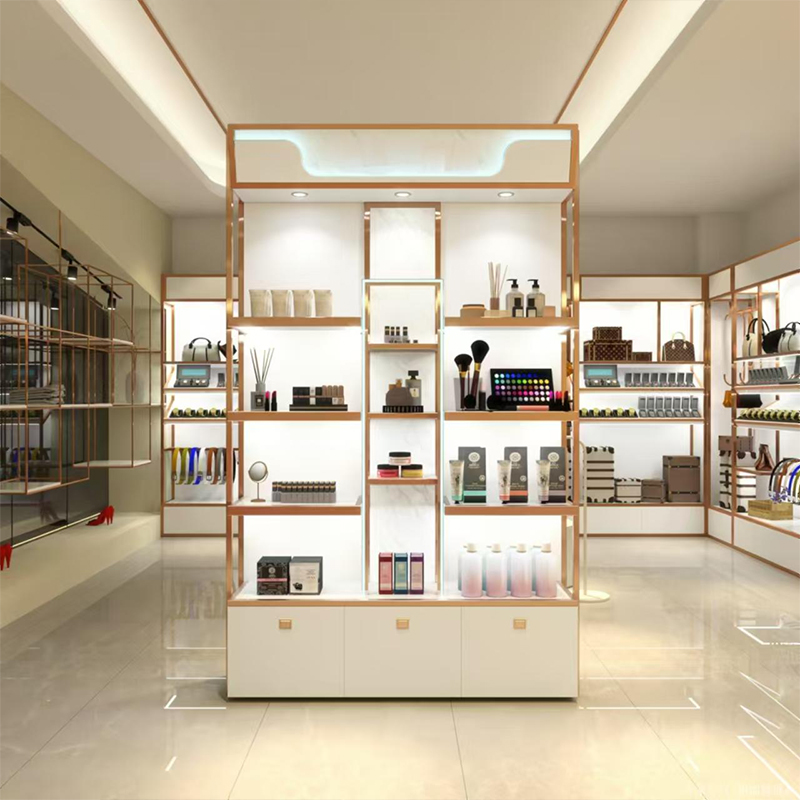 CM-H102 Cosmetic Glass CabinetThe Cosmetic Glass Tall Cabinet uses high-transparency toughened glass and a solid metal frame to create a towering display space capable of displaying large quantitie...View Product →
Here the case is a conservation device rather than a sales fixture. Look for a sealed cavity with a gasket, a silica-gel compartment to buffer humidity, laminated UV-filtering glass, and a lock that does not require a visible keyhole. A freestanding pedestal case is the standard choice for single objects viewed from all sides.
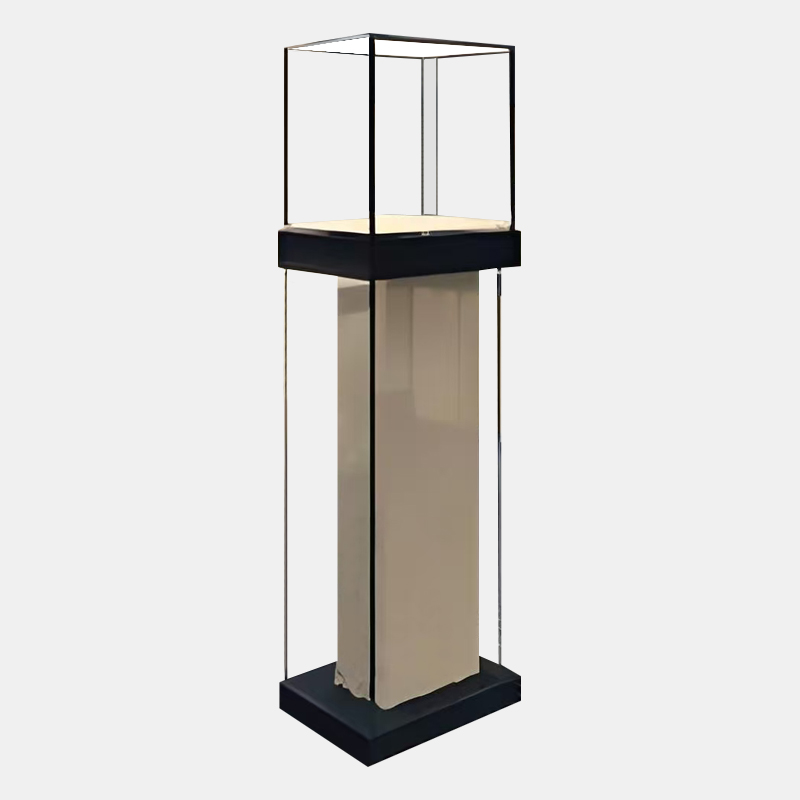 MS-101 Freestanding Museum Pedestal Display CaseA museum display cabinet is a special piece of equipment designed for displaying cultural relics, artworks, and other precious collections. It not only plays a role in...View Product →
Irregular floor plans, curved shopfronts and multi-brand walls rarely accept a standard module, which is why non-standard geometry is usually handled through custom display case projects with drawings signed off before production begins.
Most complaints about glass cases trace back to handling rather than manufacturing. A short routine protects both clarity and finish:
Zhejiang Suntop Commercial Display Products Co., Ltd. was founded in 2009. Its factory covers 25 acres with 25,000 square metres of building area and an annual production capacity of 300 projects. Main customer types include jewellery, cosmetics, watches and museums. The company works to a highly specialised standard and treats every display space cabinet as a brand statement, aiming to express the client's concept and value through the finished space. After 16 years in the display props industry, Suntop has earned provincial high-tech enterprise and credit enterprise awards and holds relevant industry technology patents that underwrite product quality.
Verify four documents before paying a deposit: the glass specification sheet covering type, thickness and tempering standard; the frame material grade; the lighting data including CRI, colour temperature and wattage; and the drawing tolerances. A supplier who cannot produce them at quotation stage will not be able to prove anything at delivery either. This pre-purchase checklist for display cabinets covers the questions worth asking in the first meeting.
Counters and towers normally use 5 to 8 mm tempered glass. Panels longer than about 1.2 m without mid-frame support usually move to 10 or 12 mm to control flex.
Tempered glass qualifies because it breaks into small granular pieces. Laminated glass also qualifies, and it stays in the frame after impact, which is why museums prefer it.
Yes. Cam locks, central locking bars and glass-door locks are all common. Ask how keys are managed across a multi-store rollout, since lock replacement is disruptive later.
Standard float glass blocks only about 30 percent. Laminated glass with a UV-filtering interlayer blocks roughly 99 percent below 380 nm, which protects textiles, paper and dyed materials.
Dust first with a dry microfibre cloth, wipe with mild pH-neutral detergent in water, then buff dry with a second cloth. Skip abrasives and ammonia on acrylic or filmed glass.
Inspect edge chips, door alignment, lock operation, gasket seating, levelling feet and LED uniformity across every shelf before signing the delivery note.


 ਪੰਜਾਬੀ
 English
 عربى
عربى русский
 中文简体
中文简体