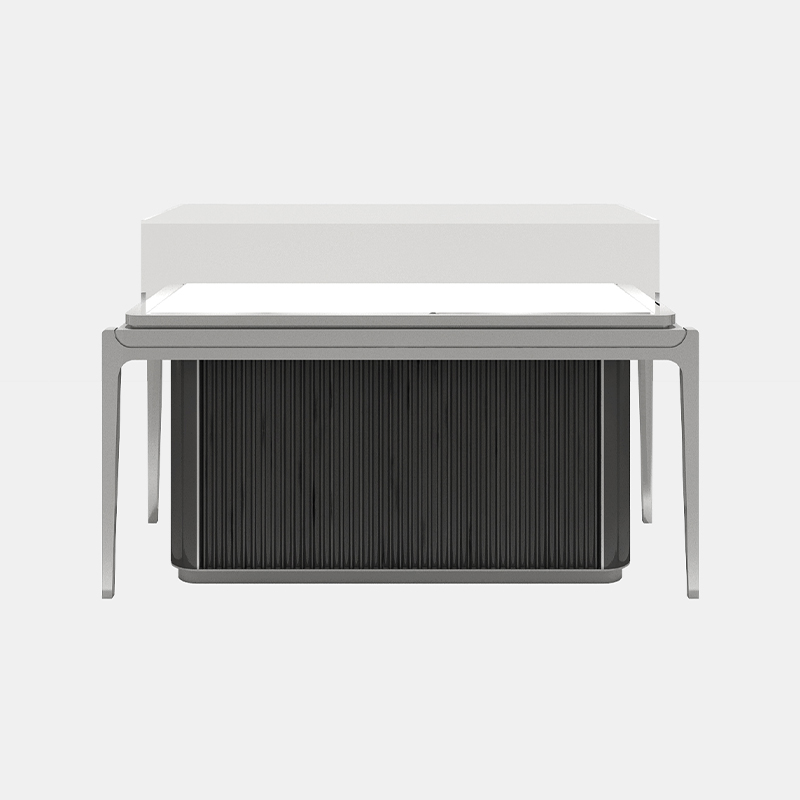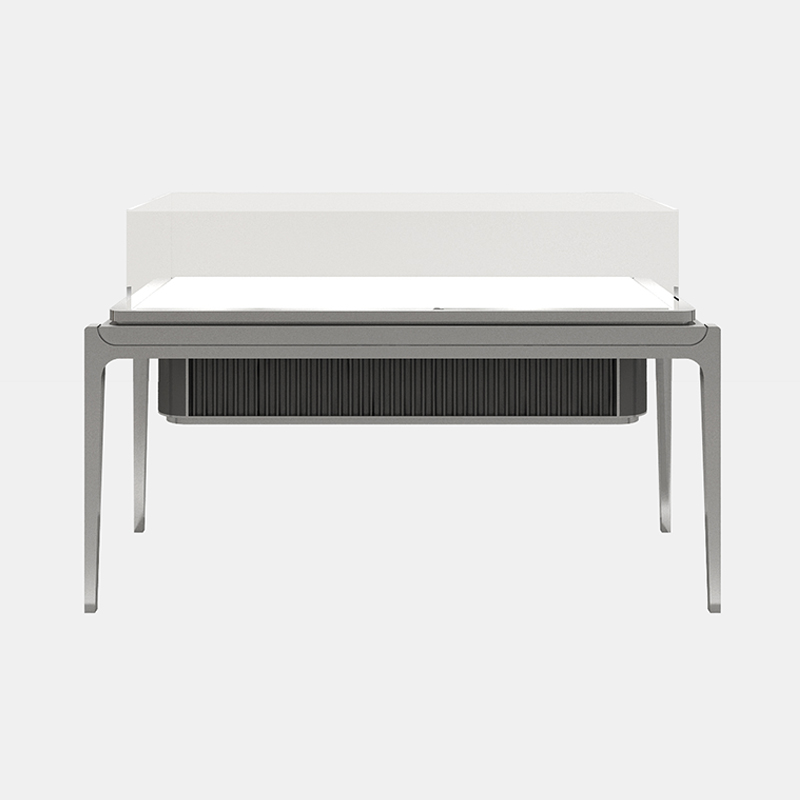
Content
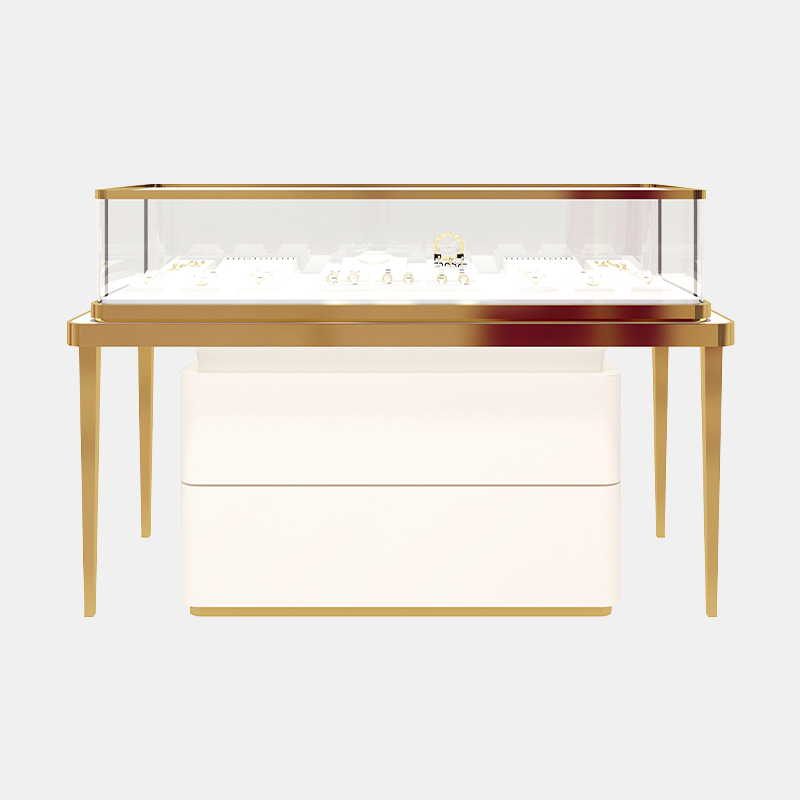
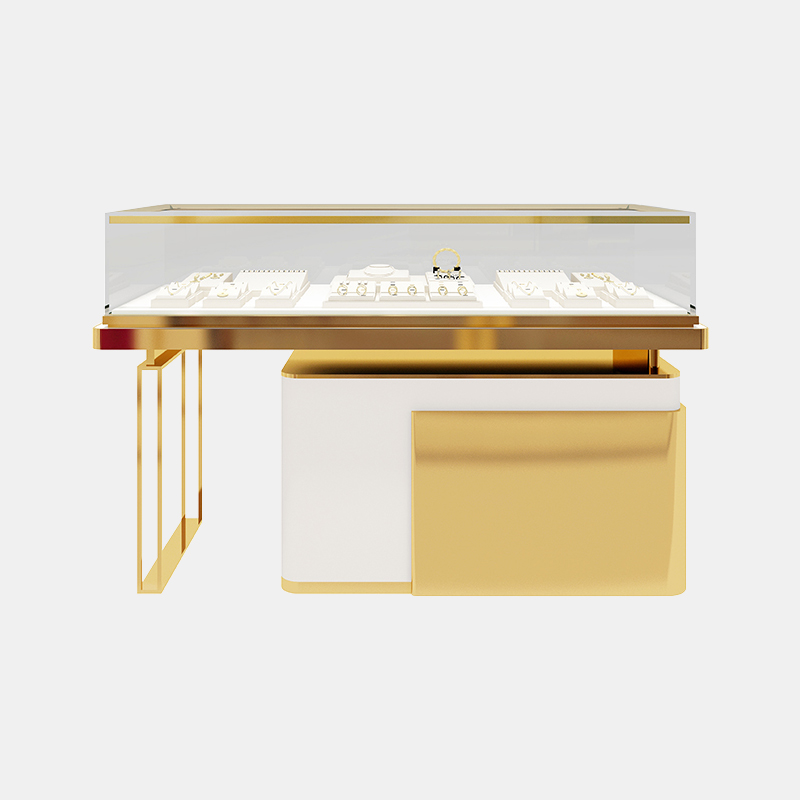
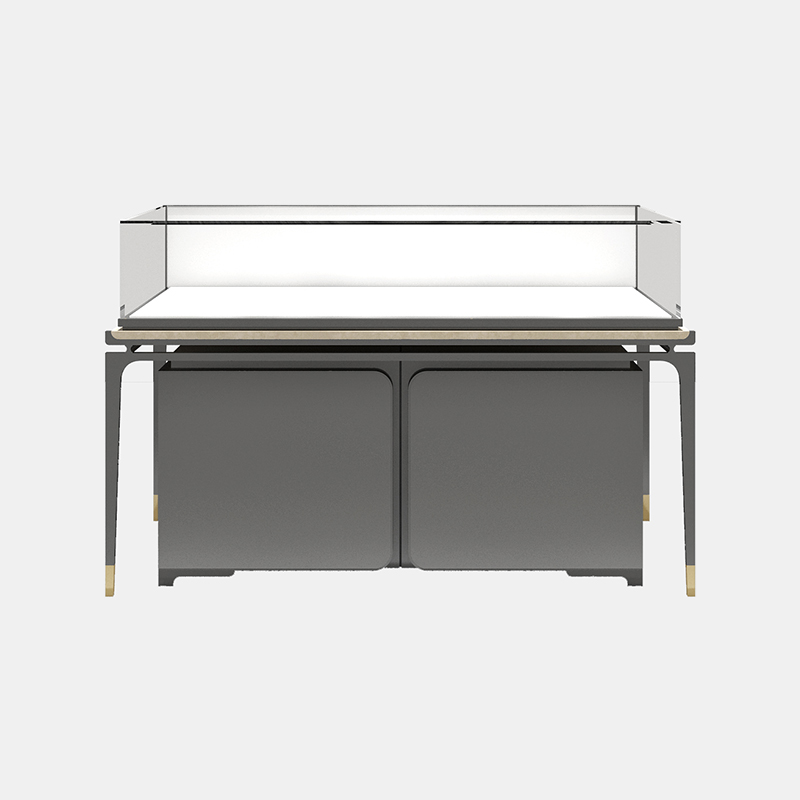
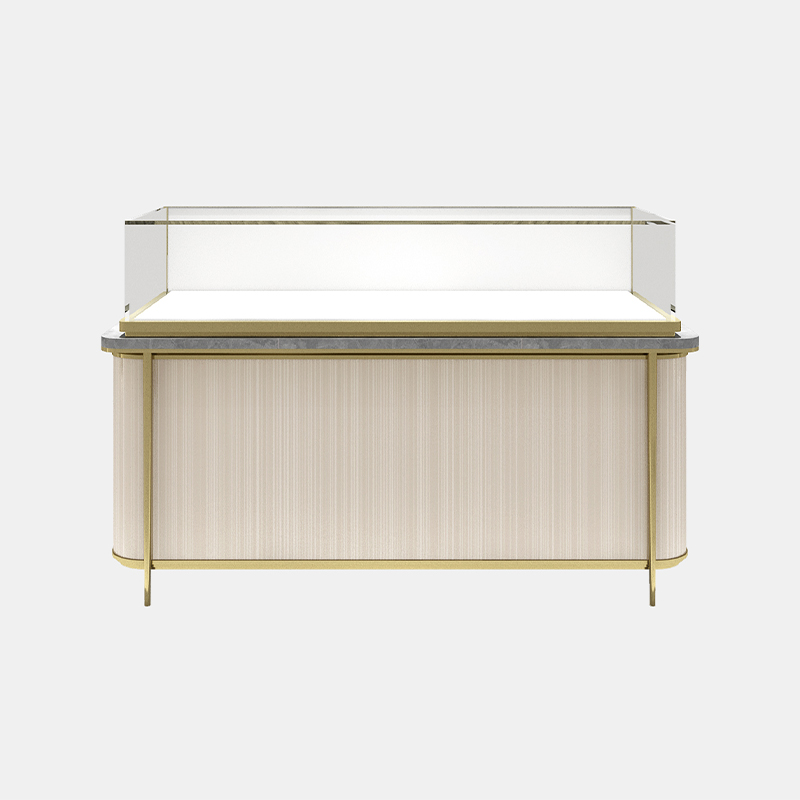
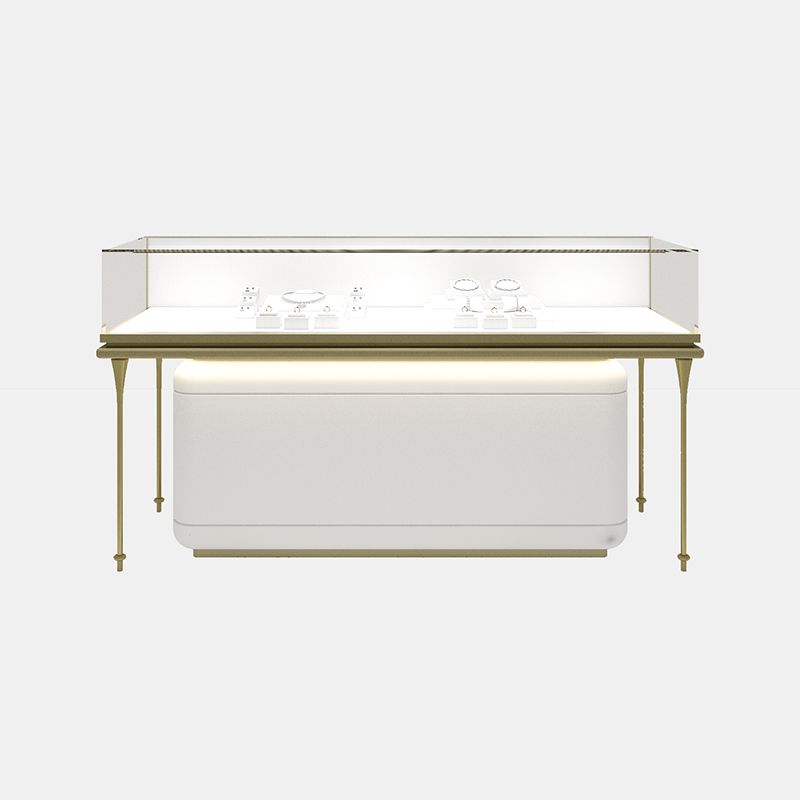
Most sourcing problems trace back to five checkpoints: frame material and joinery, glass type and panel thickness, the lighting system and its color temperature, the lock and security hardware, and cabinet dimensions measured against the real store footprint. A jewelry showcase that looks flawless in a supplier photo can still underperform on the sales floor if any one of these details is mismatched to the merchandise mix, the foot traffic pattern, or the existing store decor.
The sections below walk through each of these checkpoints in practical detail, along with finish options, modular configuration, manufacturer production scale, and logistics support, so a wholesale buyer can compare quotes and samples against a clear checklist rather than guesswork. Wherever it helps, a chart, table, or diagram is included to make the comparison easier to scan at a glance.
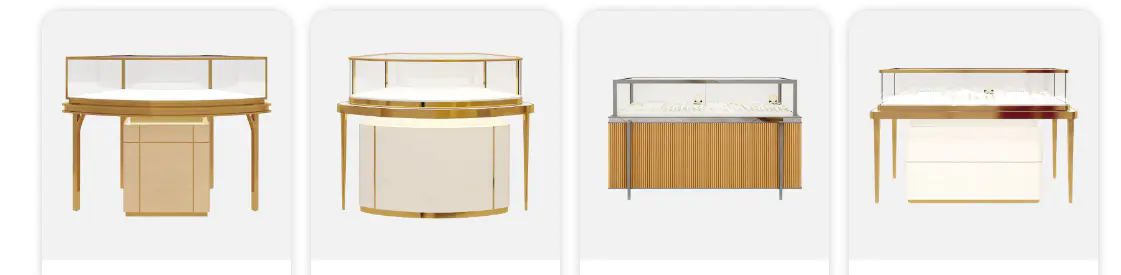
The frame is the load-bearing skeleton of any jewelry display cabinet, and it does more to determine how the piece holds up under daily handling than almost any other single component. Three frame approaches are common across the wholesale market for jewelry cabinets: engineered wood panels finished with a veneer or laminate, solid wood frames reinforced with joinery, and metal frames built from stainless steel or powder-coated steel tube. Each option carries a different balance of weight, rigidity, and visual warmth.
Engineered wood panel construction, typically MDF or high-density particleboard faced with a wood veneer or melamine laminate, is the most widely used base structure because it machines cleanly, holds screws and hinges well, and keeps the overall cabinet weight manageable for handling and shipping. Solid wood framing, often oak, ash, or rubberwood, is chosen when a retailer wants a heavier, more tactile feel at the counter edge. Stainless steel or powder-coated steel frames show up mostly in tower cases and wall towers that need a slimmer profile without losing rigidity, since metal can reach a similar load rating with a thinner cross-section than wood.
Typical spread of base-frame materials seen across mixed-format jewelry stores combining wall cabinets, island cases, and counter showcases. Figures are illustrative planning references, not a fixed formula.
When comparing samples from different workshops, a few hands-on checks reveal more than a spec sheet alone:
Glass is the second structural checkpoint, and it is where a jewelry display case earns or loses a customer's attention in the first few seconds of viewing. Two glass types dominate wholesale jewelry display cabinets: tempered safety glass and laminated glass. Tempered glass is heat-treated so that it breaks into small, rounded fragments rather than sharp shards if it fails under impact, and it is the more common choice for shelves, tops, and vertical panels because it resists everyday scratching and pressure well. Laminated glass sandwiches a clear interlayer between two glass sheets, so if the outer layer cracks, the interlayer tends to hold the pieces roughly in place instead of the panel separating, which some retailers prefer for showcase tops in high-traffic aisles.
Panel thickness matters as much as the glass type itself. A thin panel on a wide unsupported span can develop a visible bow over time even when the glass is undamaged, so it helps to ask a supplier what span-to-thickness ratio they use for shelves versus tops, and whether shelves wider than roughly 600 millimeters get an added support bar or thicker glass.
| Glass Type | Typical Thickness | Edge Finish | Common Use |
|---|---|---|---|
| Tempered Glass | 5 to 10 mm | Polished or beveled | Shelves, tops, sliding doors |
| Laminated Glass | 6.38 to 8.38 mm | Polished | High-traffic tops, security panels |
Lighting changes how merchandise reads to a walking customer more than almost any other line item on a quote. A jewelry showcase with dim or uneven lighting can make even well-cut stones look flat, while a case with even light along the shelf line draws the eye from several meters away.
Two lighting decisions matter most: where the light sits inside the case, and what color temperature it produces. Top-rail LED strips aimed down through the glass shelves are the most common configuration in a modern jewelry display case, since the light travels through each glass shelf and illuminates the shelf below it without a visible fixture in the customer's line of sight. Some cabinets add a secondary strip along the base to reduce shadow at the bottom shelf.
| Color Temperature | Typical Range | Best Suited For |
|---|---|---|
| Warm White | 2700K to 3000K | Yellow gold, rose gold, warm gemstones |
| Neutral White | 3500K to 4000K | Mixed jewelry counters, general retail |
| Cool White | 5000K to 6500K | Diamonds, platinum, silver, white gold |
Illustrative brilliance rating of diamonds and white metal jewelry under different light color temperatures, used only as a general planning reference.
Every jewelry display cabinet that stores loose stock overnight needs a locking system that staff can operate quickly during a busy shift. Three lock styles are common in wholesale units: cam locks fitted to sliding glass doors, hinged-door locks with a stem cylinder, and electronic keypad locks used on cabinets that also serve as secure back-of-counter storage.
Cam locks are the simplest and most widely used option for sliding glass panels because they are compact and do not require extra depth inside the cabinet frame. Hinged doors, more common on solid cabinet bases and stockroom-style units, typically use a stem-mounted cylinder lock that can be rekeyed if a store changes staff. Electronic keypad locks add convenience for staff who open a case frequently through a shift, though they add another component that a technician needs to be familiar with if the unit ever needs servicing.
When evaluating hardware on a sample unit, it helps to check the play in the sliding track with the door locked, since a track with too much lateral give can sometimes let a panel shift even while the lock itself is engaged.
Cabinet dimensions only make sense in the context of the floor they are going into, so it helps to measure the store before finalizing a wholesale order rather than after the cabinets arrive. A useful starting point is to separate a store into a walking aisle width, a fixture footprint, and a staff working zone behind the counter, then size the jewelry store display cabinet units to that footprint rather than to a catalog default.
As a general planning reference, smaller specialty counters tend to use a compact mix of wall and countertop cases, while larger format stores add island cases and freestanding towers to break up the floor and create multiple viewing angles.
Illustrative range of cabinet counts across store sizes, meant as a starting planning reference rather than a fixed formula, since merchandise category and aisle width both shift the right number.
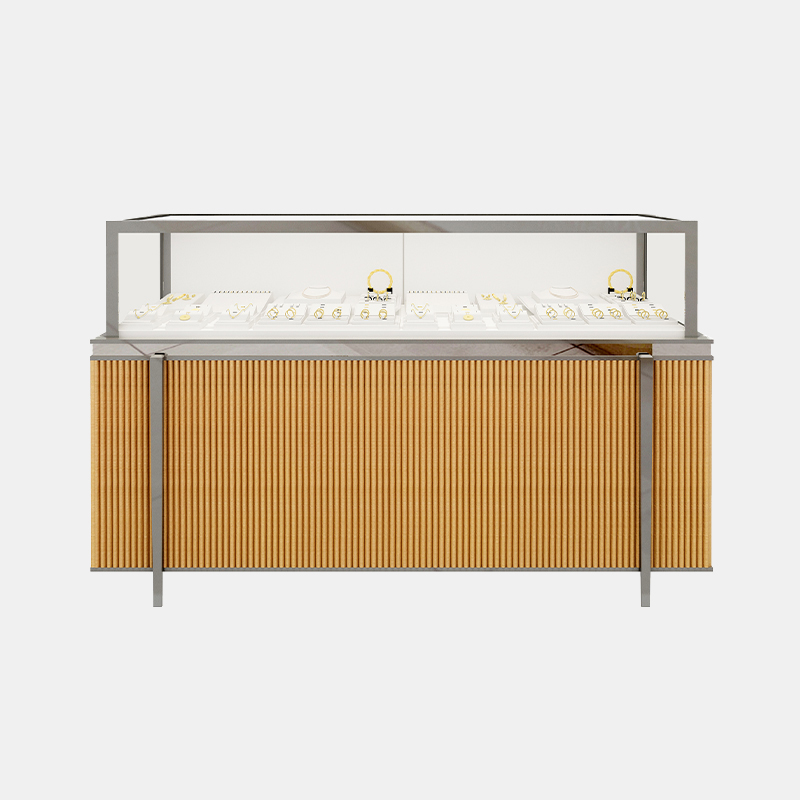
Finish and color are where a wholesale order starts to look like a specific brand rather than a generic case pulled off a shelf. Beyond the base wood tone, most workshops that build custom jewelry display cabinets can match a laminate or paint finish to a reference swatch, apply a brushed or polished metal trim, or wrap select panels in a fabric or leatherette insert to change the backdrop tone the jewelry sits against.
A few practical notes are worth checking before locking in a custom finish order:
Many wholesale buyers are opening more than one location, or expect to rearrange a single floor plan more than once over the life of the fixtures, which makes a modular jewelry display cabinet system worth checking for even on a first, smaller order. A modular system typically shares a common base module width, so wall cases, corner units, and island cases can be combined or rearranged along the same base dimension without custom-cutting new floor plates.
Core structural components found inside a typical modular jewelry display cabinet, from the base storage compartment to the top lighting rail.
When a system is genuinely modular, a base cabinet built this month should still line up with a corner unit ordered a year later. It is worth asking a supplier directly whether their base module width has changed across production runs, and requesting the exact width in writing before placing a second-phase order.
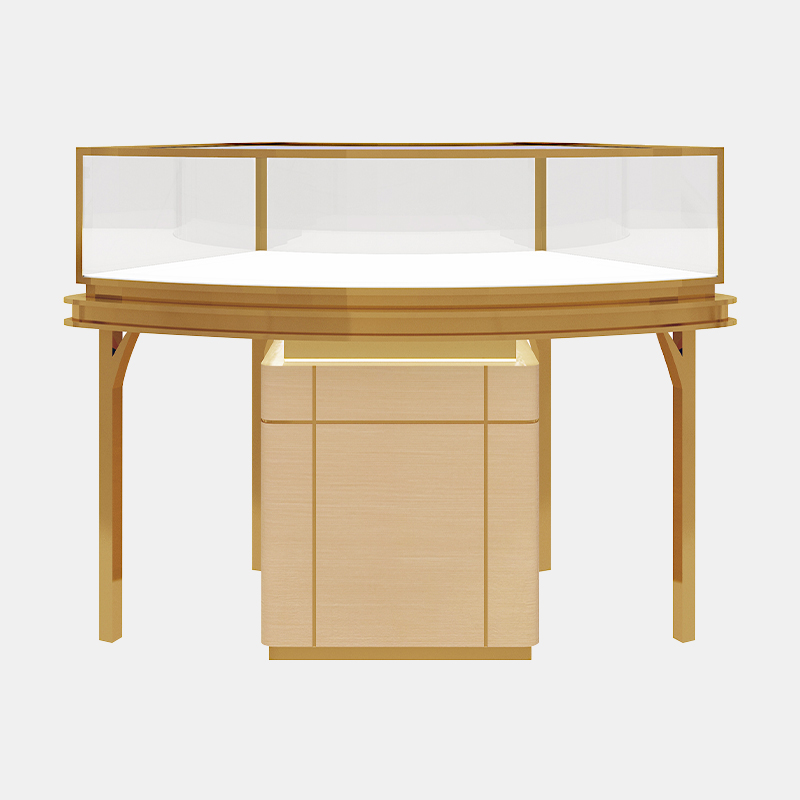
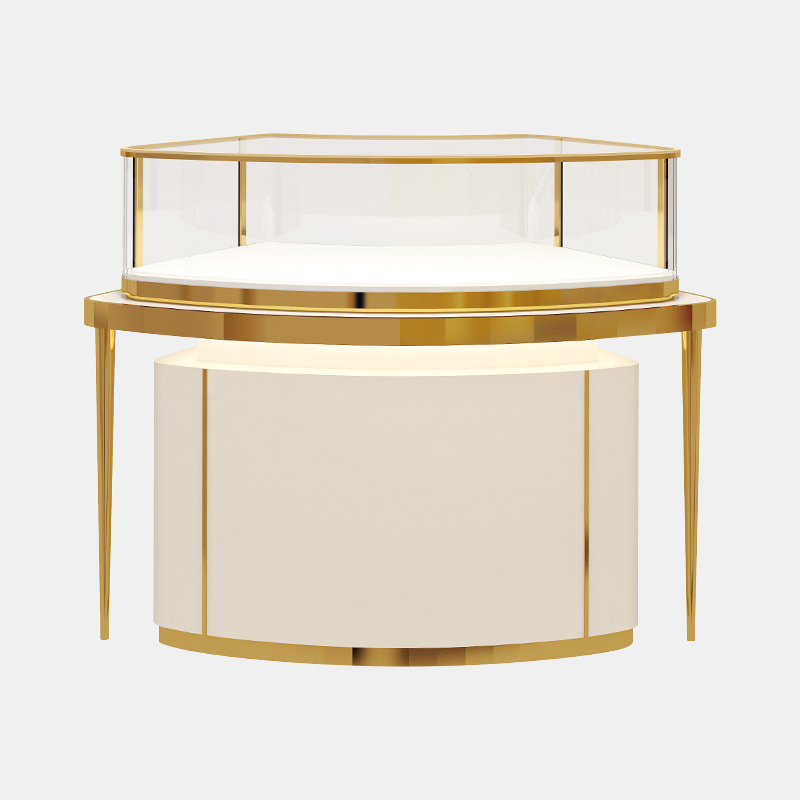
Not every part of a store benefits from the same case format. Four formats cover most floor plans: wall-mounted showcases fixed along a perimeter wall, freestanding island cases positioned in open floor space, corner display cabinets that fill an otherwise awkward angle, and countertop cases sitting on a service counter. The radar chart below compares three of the most common formats across five practical factors, intended to help narrow down which format fits a specific zone of a floor plan rather than to rank one format above the others.
Relative comparison of three common jewelry showcase formats on a simple illustrative scale, used to narrow down format choice rather than to rank one option above the others.
Countertop cases, left out of the chart for readability, generally sit between corner and island cases on storage and security while offering high visibility for a small footprint, which makes them a practical fit near a checkout station rather than as a main display anchor.
Production scale directly affects how consistent the finish and hardware feel from one cabinet to the next in a bulk order. A workshop running a handful of custom pieces at a time can turn out excellent one-off work, but larger multi-unit wholesale orders tend to benefit from a manufacturer with dedicated production lines for cutting, glass processing, finishing, and hardware assembly, since keeping each stage in-house tends to reduce the small variations that show up when parts are outsourced piecemeal between different subcontractors.
Zhejiang SUNTOP Commercial Display Products, for example, has operated a dedicated commercial display production facility since 2009, with a factory footprint of about 25 acres and roughly 25,000 square meters of production floor space covering cabinet assembly, glass processing, and finishing under one roof. A facility of that scale can typically move a mid-size wholesale order through production without handing off any single stage to an outside shop, which shortens the number of transfer points between raw material and a finished jewelry showcase ready for packing.
| Setup | Typical Facility | In-House Processes |
|---|---|---|
| Small workshop | Under 1,000 sqm | Cutting and assembly only |
| Mid-size manufacturer | 1,000 to 10,000 sqm | Cutting, assembly, partial finishing |
| Large-scale manufacturer | Over 20,000 sqm | Cutting, glass processing, finishing, assembly |
A jewelry display cabinet that looks flawless leaving the factory still has to survive a shipping container, a customs process, and a final delivery leg before it reaches the sales floor, so packaging deserves the same attention as the cabinet build itself. Foam-cornered wood crating for glass panels, separate padded boxes for removable shelves and hardware, and clearly labeled parts bags for fasteners all reduce the chance of a damaged or missing piece on arrival.
Before a shipment leaves the factory, it helps to confirm a short list of items directly with the supplier:
After a shipment arrives, ongoing communication becomes the main factor that determines how smoothly a second or third order goes. A supplier who responds promptly to questions about a hardware replacement part, a color-match request for a future expansion, or a measurement clarification for a new location tends to save a retailer far more time over a multi-year relationship than any single feature on the original quote.
A few questions come up again and again from retailers comparing a jewelry showcase or jewelry display case for the first time. Quick, practical answers to the most common ones are below.
A jewelry showcase is a display fixture, usually built with a glass viewing surface and internal lighting, used to present rings, necklaces, watches, and other small items at eye level or counter height while keeping them physically secured.
The terms are largely interchangeable in everyday use. Some retailers use jewelry showcase to describe a standing or wall-mounted fixture and reserve display case for smaller countertop units, but the construction and purpose overlap closely.
There is no single format that fits every store. Wall-mounted cases suit perimeter walls and maximize floor space, island cases work well in open areas with foot traffic on all sides, and countertop cases suit checkout zones. The right mix depends on the store layout and merchandise category.
Engineered wood with a veneer finish is the most common base material because it balances weight, cost efficiency, and finish flexibility. Solid wood adds a heavier tactile feel, while metal frames suit slim tower cases that need rigidity in a thin profile.
Tempered safety glass is the most widely used option for shelves, tops, and panels because it holds up well to daily handling. Laminated glass is sometimes used on showcase tops in high-traffic aisles because its interlayer helps hold the panel together if it is struck.
Top-rail LED strips positioned to shine down through each glass shelf are the most common setup, since they light the shelf below without a visible fixture in the customer's line of sight. Some cabinets add a base strip to reduce shadow on the lowest shelf.
Warm white in the 2700K to 3000K range tends to flatter yellow and rose gold, while neutral to cool white in the 4000K to 5000K range is often used for diamonds, platinum, and white gold, since cooler light lets clarity and sparkle stand out.
LED strips are widely used in jewelry display cabinets because they run cool to the touch, fit into narrow rail channels, and are available across a range of color temperatures to match different metals and stones.


 ਪੰਜਾਬੀ
 English
 عربى
عربى русский
 中文简体
中文简体