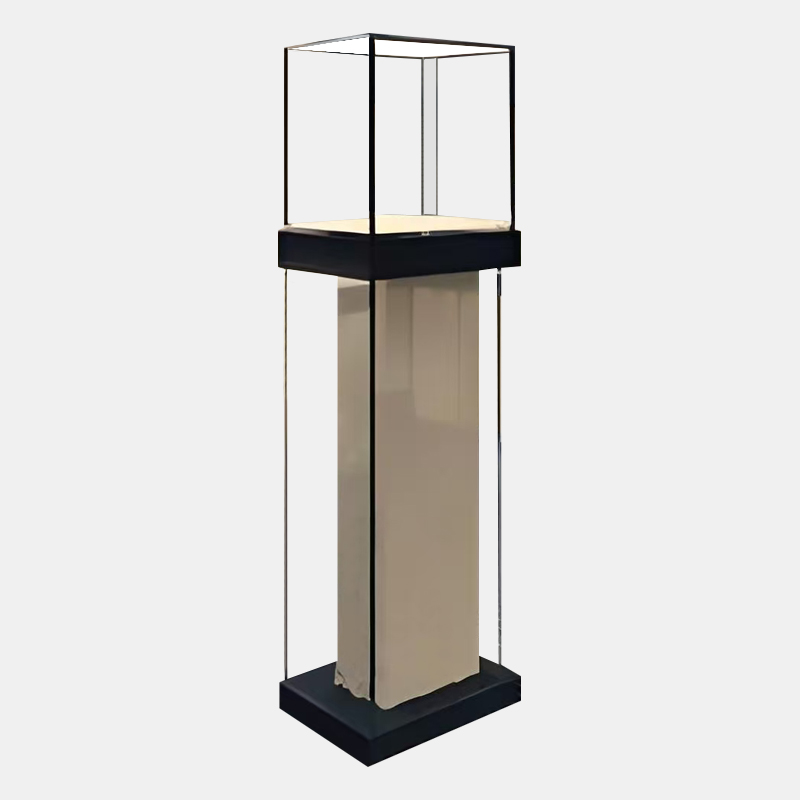
Museum display cases are specially designed to display and protect valuable artifacts, artworks, and historical materials in museums. They are usually made of transparent materials to ensure the visibility of the exhibits and are well-sealed to protect the exhibits from environmental factors such as light, humidity, and dust. Cabinets are designed with safety, stability, and aesthetics in mind to ensure the safety of the exhibits and the viewing experience of the audience.












Walking through a jewelry store that feels right is never an accident. The spotlight hits a ring exactly where the customer's eye lands, the counter height invites a closer look, ...
READ MOREA customer walks into a clothing store, glances at the display table, and pauses. The folded shirts are neatly stacked, but at eye level the first thing they see is a mass of fold...
READ MORERETAIL FIXTURE PLANNING Choosing the Right Cosmetic Display Cabinet Starts Here A cosmetic display cabinet works best when it is matched to three things at once: the footprint ava...
READ MOREEvery purchase in a jewelry or watch store passes through the same gate: the display case. Before a customer touches a ring or tries on a watch, the case has already made the firs...
READ MOREA museum display case is a specially designed enclosure built to display and protect valuable artifacts, artworks, and historical materials inside a museum. Cases are usually built with transparent glazing to keep the exhibit fully visible, while the frame and seals are engineered to limit exposure to light, humidity, dust, and handling. Museum showcases are designed around three goals at the same time: the safety and long term stability of the object inside, structural stability of the case itself, and a clear, well lit viewing experience for visitors standing on the other side of the glass.
A regular retail display case is built mainly for visibility and light security, while a museum display case is built around conservation science, meaning sealing quality, glazing type, and internal climate stability matter as much as appearance. A conservation display case adds a further layer of control, often including gasket sealed joints and materials selected to avoid releasing harmful compounds near sensitive objects such as textiles, paper, or metals.
Museums choose between several established showcase formats depending on the exhibit space, artifact size, and how closely visitors need to view the object.
Wall mounted showcases sit flush against a gallery wall and are typically viewed from one side, making them well suited for flat or panel style artifacts such as documents, textiles, and framed artwork. Freestanding museum showcases sit in the center of a gallery and are viewed from multiple angles, which makes them a common choice for sculpture, ceramics, and three dimensional artifacts that benefit from being seen in the round.
A conservation exhibition case is built for artifacts that are especially sensitive to light, humidity swings, or airborne pollutants, such as manuscripts, textiles, and archaeological metals. These cases usually add a tighter seal, inert internal materials, and in some installations a passive or active climate control system to hold internal humidity within a narrow target range across the exhibit period.
| Case Type | Typical Placement | Best Suited For |
|---|---|---|
| Wall-mounted showcase | Gallery wall | Documents, textiles, framed art |
| Freestanding showcase | Center of gallery floor | Sculpture, ceramics, 3D objects |
| Tabletop or pedestal case | Low platform or plinth | Small artifacts, coins, jewelry |
| Conservation exhibition case | Gallery wall or floor | Light and humidity sensitive artifacts |
Museum grade display cases typically use an aluminum or steel frame for structural stability, finished with a coating that does not off gas near sensitive materials. Gasket seals around each glazing panel and access door limit air exchange with the gallery environment, which is one of the main ways a conservation display case keeps internal humidity and pollutant levels more stable than the surrounding room.
Low iron laminated glass is a common choice for museum showcases because it avoids the greenish tint of standard glass and adds a layer of safety, since laminated glass holds together if it is ever cracked. UV filtering glazing is standard practice for light sensitive artifacts, with many conservation grade glass and acrylic products filtering more than 99 percent of ultraviolet radiation passing through the panel, which significantly slows the fading and deterioration that ordinary window light can cause over years of display.
| Material | Main Benefit | Common Use |
|---|---|---|
| Low iron laminated glass | True color, impact safety | Viewing panels, doors |
| UV filtering acrylic | Light damage reduction | Light sensitive artifacts |
| Powder coated aluminum frame | Structural stability, low off gassing | Case frame and base |
| Gasket sealing strip | Air exchange control | Panel and door joints |
UV radiation is one of the fastest ways to fade pigments, weaken paper fibers, and degrade organic materials on long term display. UV filtering glazing, combined with LED lighting that produces very little UV output compared to older halogen or fluorescent fixtures, is now standard practice across most new museum showcase installations, allowing curators to keep light sensitive material on view for longer rotation periods.
Sealed museum display cases slow the exchange of air between the case interior and the surrounding gallery, which helps buffer short term humidity swings caused by visitor traffic, seasonal changes, or building HVAC cycling. In many conservation exhibition case installations, silica gel or other buffering material is placed inside the case to further stabilize relative humidity around the artifact, reducing the risk of warping, cracking, or corrosion over years of display.
Production of a museum grade display case usually starts with a structural frame built and finished before glazing is fitted, followed by gasket sealing, hardware installation, and a final fit check against the exhibit drawing. A custom museum display case manufacturer typically produces a full scale sample or prototype panel before committing to a full production run, allowing the museum to confirm glass clarity, seal quality, and finish color ahead of installation.
Built with a stable aluminum or steel frame and quality glazing, a well constructed museum display case commonly remains in active service for fifteen to twenty five years or longer, with routine maintenance of seals, hinges, and lighting extending that service life further. Museums planning a gallery renovation or a new wing often work with a museum showcase manufacturer early in the design process, since case dimensions, lighting runs, and climate systems are easier to plan alongside the architectural design than to retrofit afterward.
Zhejiang SUNTOP Commercial Display Products Co., Ltd is a China museum display case manufacturer and display showcase factory, established in 2009 and offering custom museum display cabinets and showcases for museums, alongside display solutions for jewelry, watches, and retail stores. As a professional China museum display case manufacturer and custom museum showcases factory, the company integrates design planning, display cabinet and prop production, and decoration and renovation contracting management, helping clients create a display space that better fits their exhibit positioning from initial concept through final installation.
The factory covers 25 acres, with floor space reaching 25,000 square meters and an annual production capacity of over 100 million, supporting both fully custom single gallery projects and larger multi case museum showcase programs within the same production facility.
A museum display case is a sealed, transparent enclosure built to display and protect artifacts from light, humidity, dust, and handling while keeping them clearly visible to visitors.
A good case combines tight sealing, UV filtering glazing, stable frame construction, and lighting that supports viewing without adding heat or UV exposure to the artifact.
A museum showcase is another common term for a museum display case, referring to the glass enclosed fixture used to exhibit artifacts, artwork, or historical objects.
A museum case is built around conservation needs such as sealing, UV filtering, and humidity stability, while a regular display case is built mainly for visibility and general security.
Most cases combine an aluminum or steel frame with low iron laminated glass or UV filtering acrylic, sealed with conservation grade gasket material.
Cost depends on size, glazing type, sealing level, and whether the case is a standard model or a fully custom conservation build, so requesting a quote against a specific exhibit drawing is the most reliable way to budget a project.
Production typically starts with a structural frame, followed by glazing installation, gasket sealing, hardware fitting, and a final quality check against the exhibit drawing.
A well constructed case commonly stays in service for fifteen to twenty five years or longer, especially with routine maintenance of seals, hinges, and lighting.
They limit exposure to UV light, buffer humidity swings through sealed construction, and reduce dust and handling risk by keeping the artifact behind secured glazing.
Using UV filtering glazing on all viewing panels, combined with low UV LED lighting, is the standard approach to reducing UV related fading and material breakdown.
Low iron laminated glass with UV filtering properties is generally preferred, since it shows true color, adds impact safety, and reduces light related damage over time.


 ਪੰਜਾਬੀ
 English
 عربى
عربى русский
 中文简体
中文简体