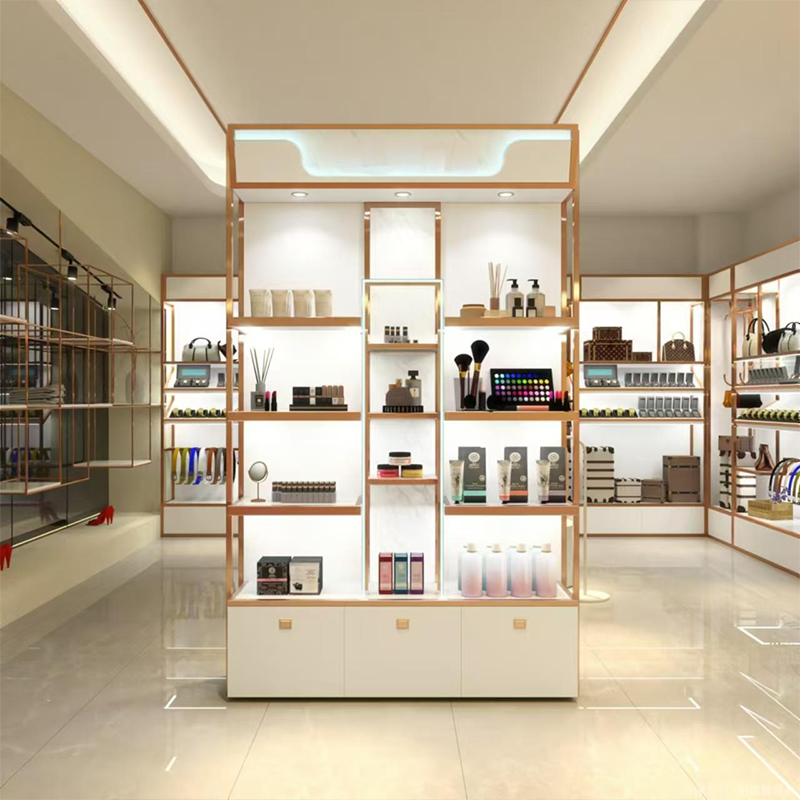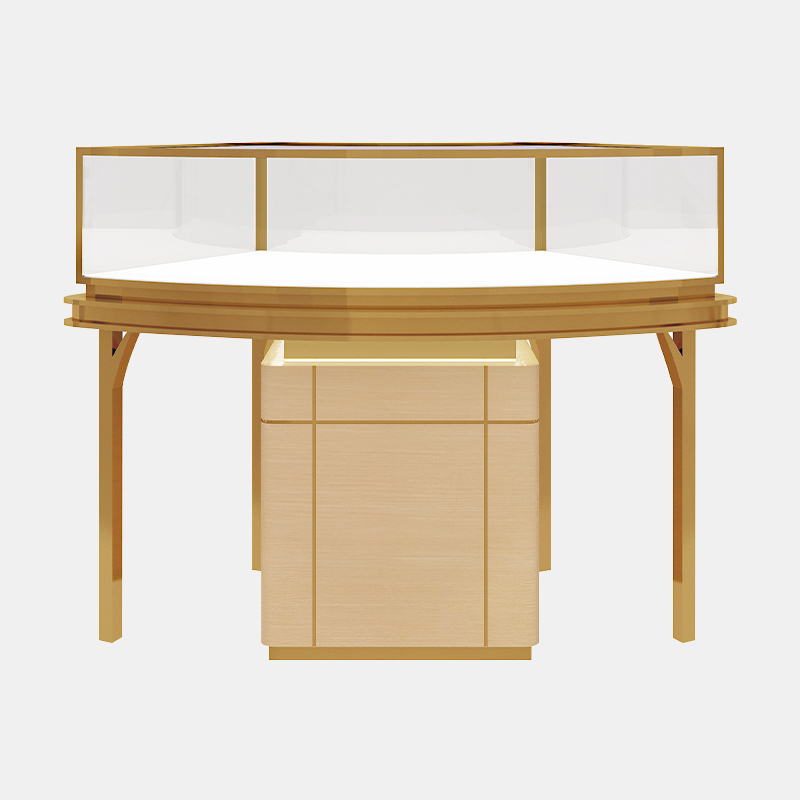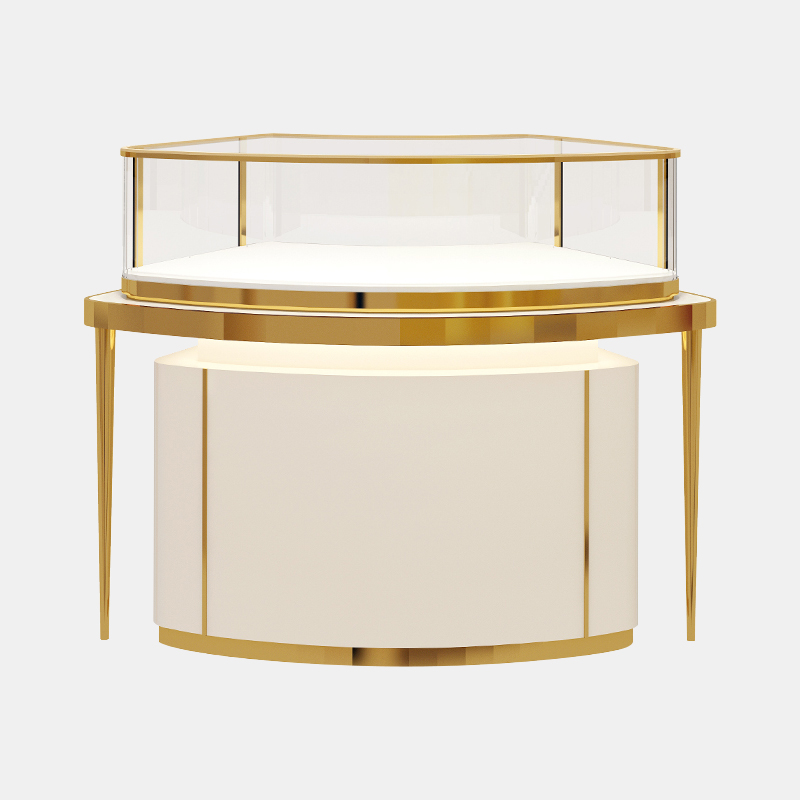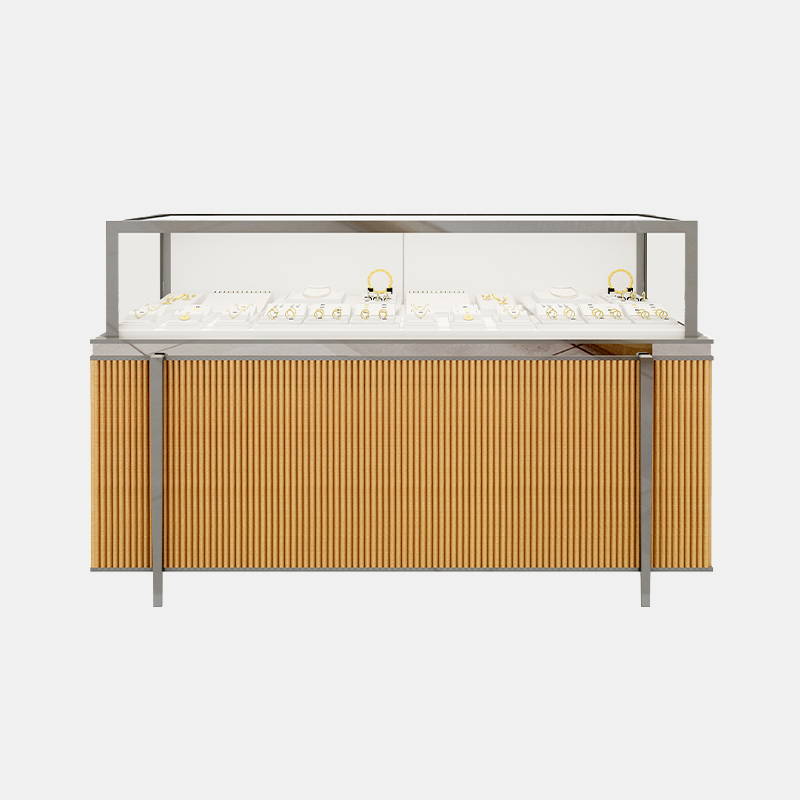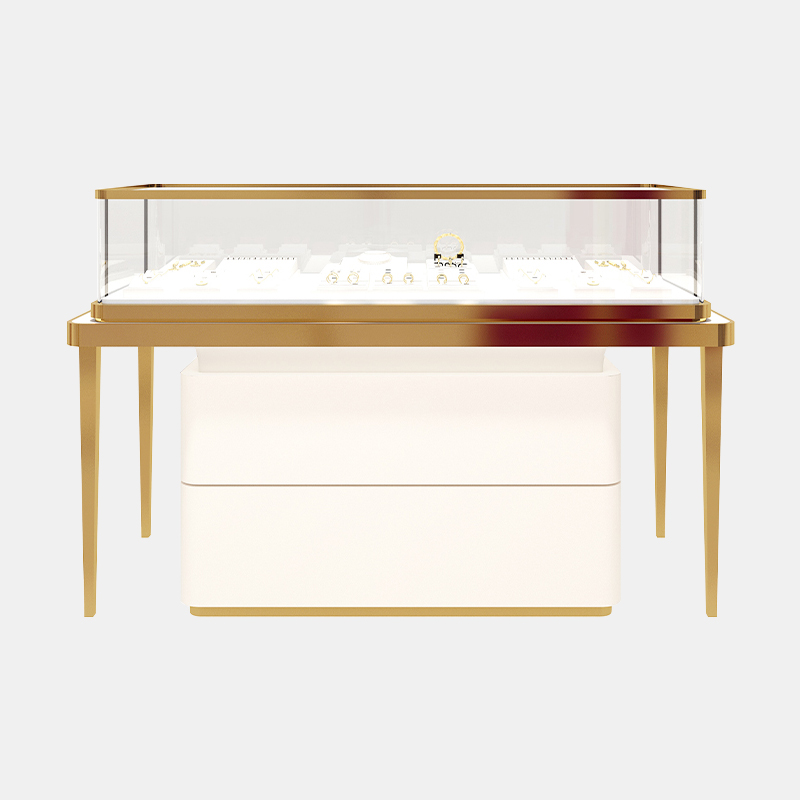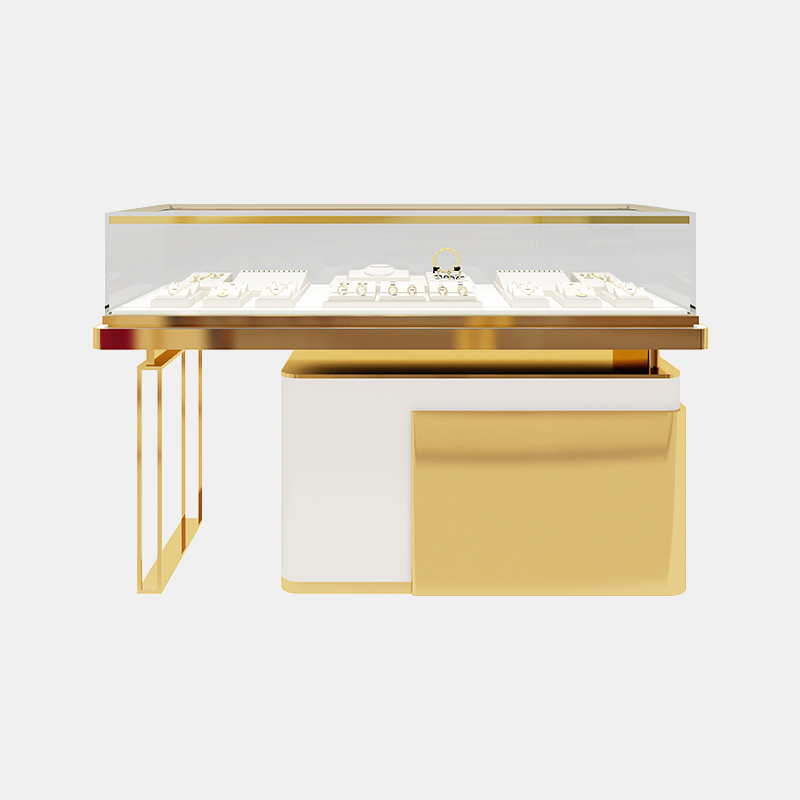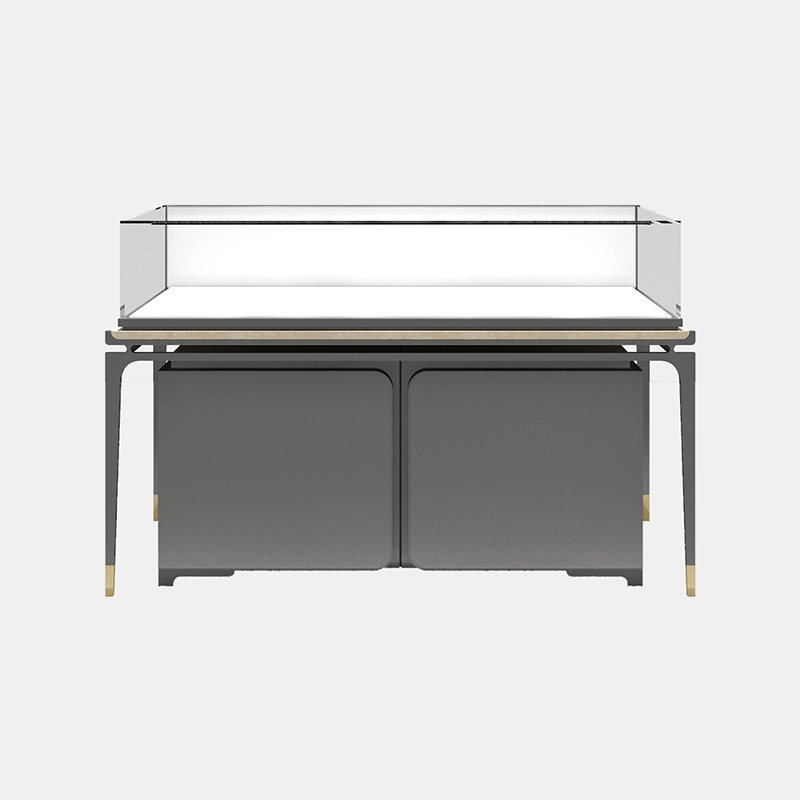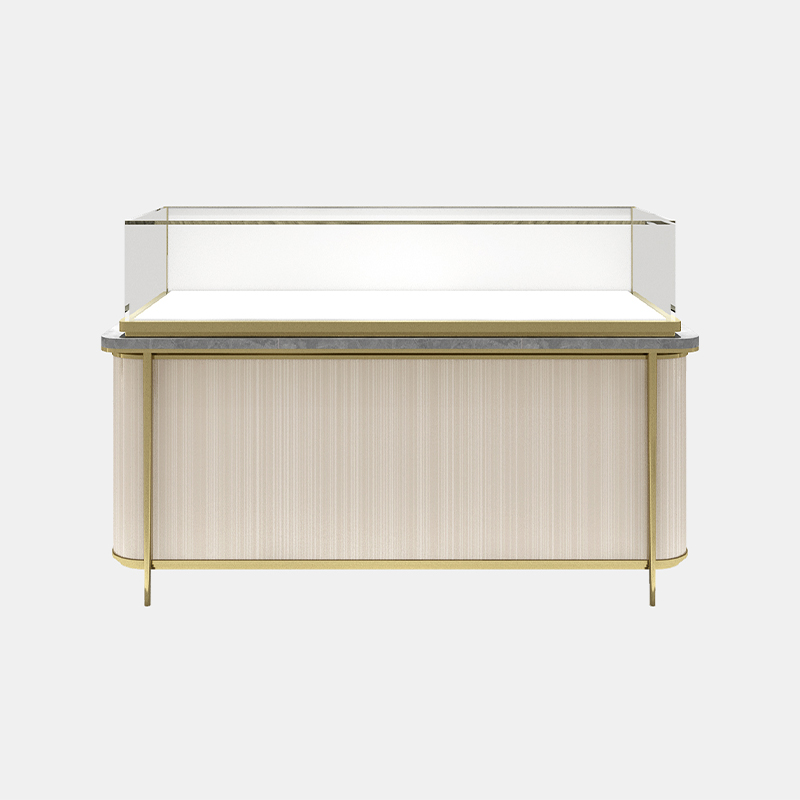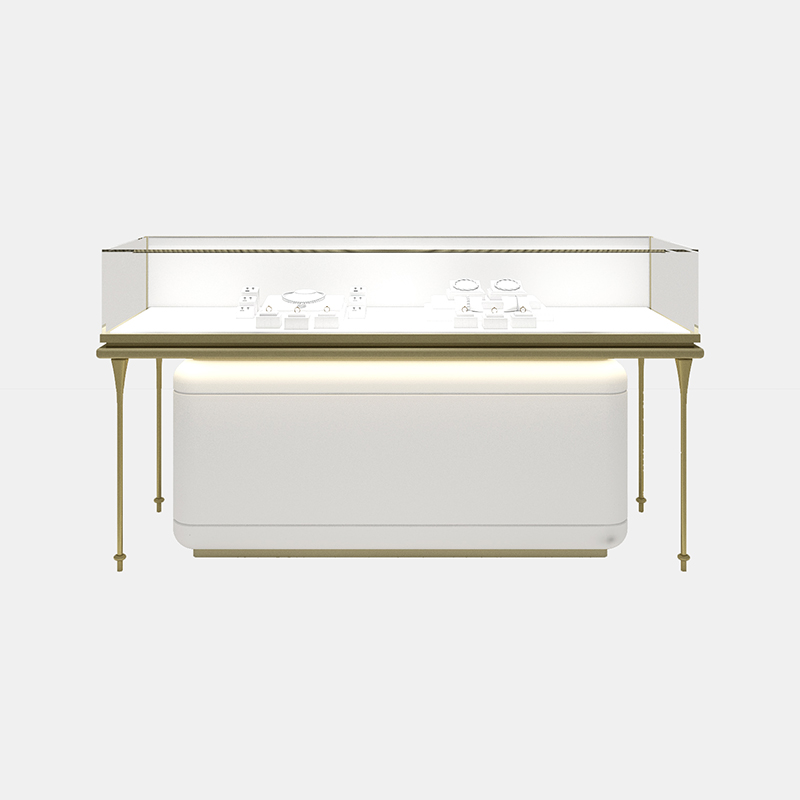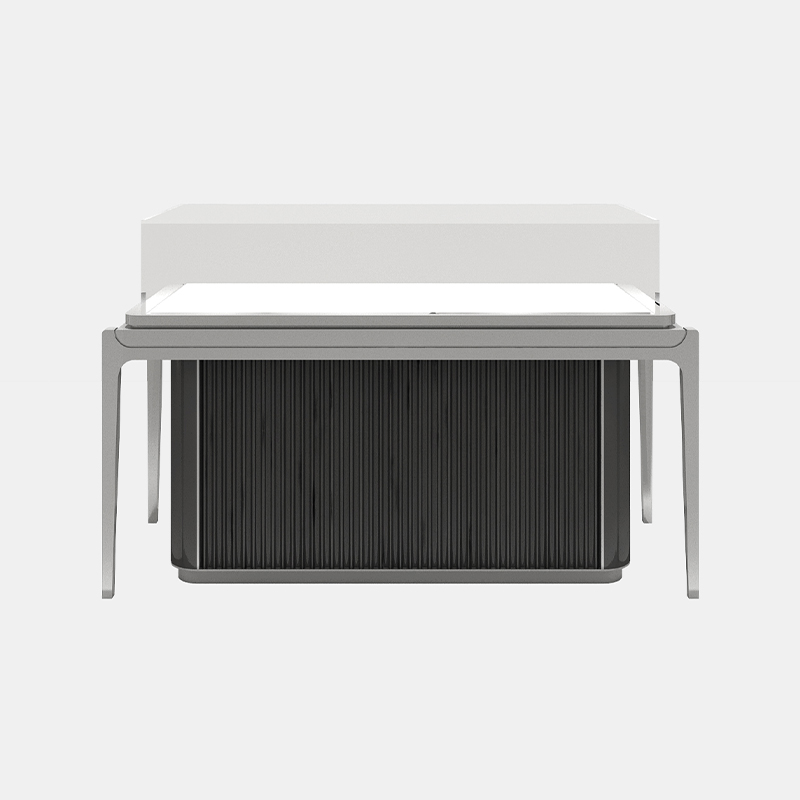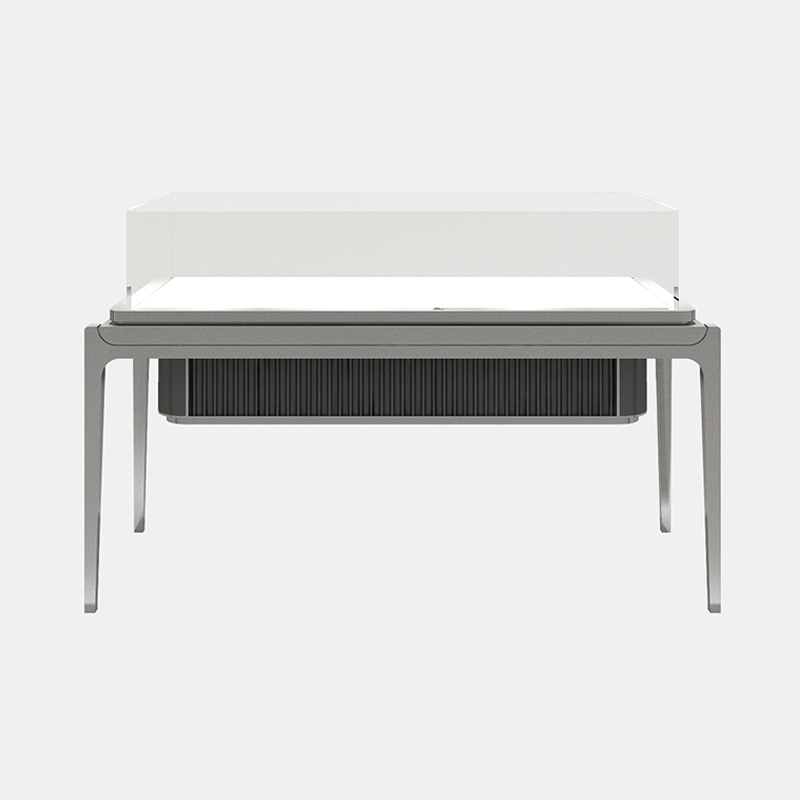
A shopper picks up a foundation tester, turns her hand under the light, and decides in roughly four seconds. If the shade reads grey or muddy, she puts it down — and the formula never had a chance. In beauty fit-outs that underperform, the usual culprit is not the product but the case: a green-tinted glass front, a 3000K lamp, or a shelf that drops the tester into the customer's own shadow.
The practical conclusion: a cosmetic display case is a lighting instrument inside a storage box. Fix the glass and the light first, then design the drawers, the plinth and the brand panel around them. Reverse that order and you end up re-merchandising a beautiful cabinet that makes every lipstick look slightly brown.
What follows is how those decisions work on a real project — the specifications that change the result, the case types different store formats need, and the details that only surface as problems after installation.
Content
Beauty cases are judged on three things, in this order: colour truth, product protection and brand presence.
Colour truth comes first because cosmetics are bought on shade match. Unlike a jewellery showcase, where a customer looks through glass at a finished piece, a cosmetic case invites handling: caps come off, testers are swatched, product goes back on the shelf. The case has to make the product accessible without putting it in shadow.
Product protection is where cosmetics diverge sharply from other retail categories. Creams separate, lipsticks sweat, pencils dry out, and a display sitting under a hot puck light for eight hours a day will show it within a month. Stock rotation matters too: testers can sit in light for weeks, while sealed reserve stock belongs in a closed drawer away from the lamps.
Brand presence is the last job but the one most often over-weighted. A display case is usually the only piece of furniture the customer physically touches, so finish quality — an even edge band, a smooth lacquer, a door that closes quietly — reads as product quality whether or not the shopper makes that connection consciously.
Standard float glass carries a faint green edge, and against a white or pale-pink fixture that tint is visible: white becomes ivory, blush becomes beige. Low-iron (extra-clear) glass costs more and solves it. On a colour-critical counter, specify low-iron for the front and top panels at minimum; side panels can usually stay standard.
Safety follows the span. Tempered glass is the default for shelves and sliding doors; laminated glass is the better choice for large window fronts where a break must stay in the frame. A 6 mm shelf suits a 300–400 mm cosmetic span carrying normal stock, but a 500 mm shelf loaded with tester bottles should go to 8 mm or gain a centre support. Edge polish matters as much as thickness — a raw cut edge chips, and a chipped edge on white lacquer is impossible to hide.
Three numbers do most of the work. Colour rendering index should be 90 or above, with R9 above 50 when the range includes reds and berries, because a low R9 flattens exactly the shades that sell lipstick. A colour temperature of 3500–4000K keeps whites neutral without the blue cast of 5000K or the yellow of 3000K. Accent level should sit at roughly three times ambient so the product separates from the background without firing glare into a customer's eyes.
Beam angle and placement decide whether the specification survives contact with the shelf. Narrow 15–24 degree beams create the pool of light that makes a bottle glow; wide floods wash out texture and flatten cap details. Keep the lamp behind a diffuser and out of the sight line, and never aim a downlight so it lands on a customer's face when she leans in to test.
LED is now standard, but the driver still generates heat. Mount drivers outside the product compartment and ventilate the top rail. Where fragrance or cream testers sit under continuous light, run a 24-hour temperature check under summer conditions; sustained interior temperatures above about 30°C soften bullet lipsticks and shorten shelf life.
Most beauty fit-outs combine three or four case types, and each one carries a different job. The table below is the short version we use in project kick-offs, ordered by function rather than by size.
| Case type | Best for | Typical footprint | Lighting note | Watch out for |
|---|---|---|---|---|
| Counter-top tester unit | Foundation, lipstick and eye testers at the service point | 600–900 mm wide | Low-voltage strip under the top rail | Drawers too shallow to hold tester bottles upright |
| Wall bay with back panel | Brand wall, full shade range display | 1200–2400 mm run | Adjustable shelf lights, 15–24° beams | Back-panel joints showing under grazing light |
| Freestanding island | Aisle interruption and new-launch focus | 800–1200 mm square | Four-sided illumination, low glare | Cable route through the floor finish |
| Window or feature case | Seasonal campaigns and hero products | 900–1500 mm wide | Highest output, heat actively managed | Using it as stock storage |
| Shop-in-shop / cash wrap | Closing the sale, gift sets, loyalty display | 1500 mm and above | Even, low-glare ambient | Drawer locks and key control |
The most common layout error is treating the window case as a storage unit. Window cases carry the highest light load and the worst heat build-up; they should hold display-only product with reserve stock stored behind, never inside.
Beauty is a hygiene category, and cleaning regimes destroy finishes that look fine on a sample board. Alcohol-based sanitisers, acetone spills and daily glass cleaner attack lacquer and low-grade laminates within months, while powder-coated steel and solid-surface tops survive them. Specify sealed joints rather than butt joints wherever testers are handled, and moisture-resistant board with PVC or ABS edge banding anywhere a cloth will be wrung out. For freestanding islands in high-traffic malls, a stainless plinth protects the bottom 100 mm from trolleys and vacuum heads.
Material emissions matter more than buyers expect, because enclosed cases with warm lamps concentrate whatever the board gives off. Low-emission boards and water-based adhesives are worth specifying by name, particularly for fragrance bars where the case is effectively a sealed box.
Standard cases ship in days; custom cases ship in weeks, and the gap sits mostly in drawings and approvals rather than fabrication. A custom cosmetic display case runs through design, material sourcing, fabrication, finishing, assembly and packing, with the buyer's approval cycle stacked on top of all of it.
Two risks are worth planning for. First, tolerance: on a custom case a 2 mm reveal is a design decision, not an accident, and it has to be drawn rather than improvised on site. Glass-to-frame gaps, door swing and drawer pull clearance should all be confirmed before cutting starts. Second, site conditions: mall floors are rarely level, so adjustable feet or a scribed plinth are not optional extras. Lighting cables need a route to a socket that does not sit behind a fixed back panel. More detail on how bespoke drawings are handled sits in our custom display cabinet process.
Before approving a quote, work through this list. Every item is cheap to change on paper and expensive to change on site.
Zhejiang Suntop Commercial Display Products Co., Ltd. was founded in 2009. Currently, the company's factory covers an area of 25 acres, with a building area of 25,000 square metres, and annual production capacity reaches 300 projects. Main customer types include jewellery, cosmetics, watches and museums. The company adheres to a highly specialised spirit and strives for excellence in the creation of every display space cabinet, aiming to reflect each client's brand concept and value through high-quality display spaces. After 16 years of deep cultivation in the display props industry, Suntop has won provincial high-tech enterprise and credit enterprise awards and holds a number of relevant industry technology patents, providing a guarantee for product quality.
On a cosmetics project that means the chain stays in one place: layout drawings, case fabrication in glass, stainless steel, solid wood and lacquer, and the lighting specification agreed before a panel is cut. Recent beauty and counter work is collected in our cosmetics display case projects.


 ਪੰਜਾਬੀ
 English
 عربى
 русский
 中文简体