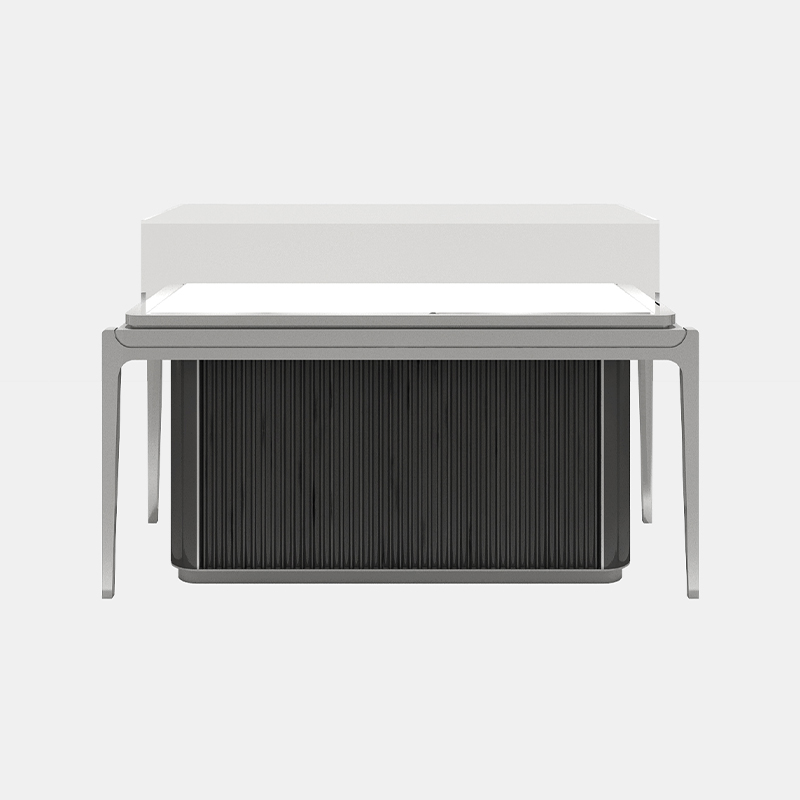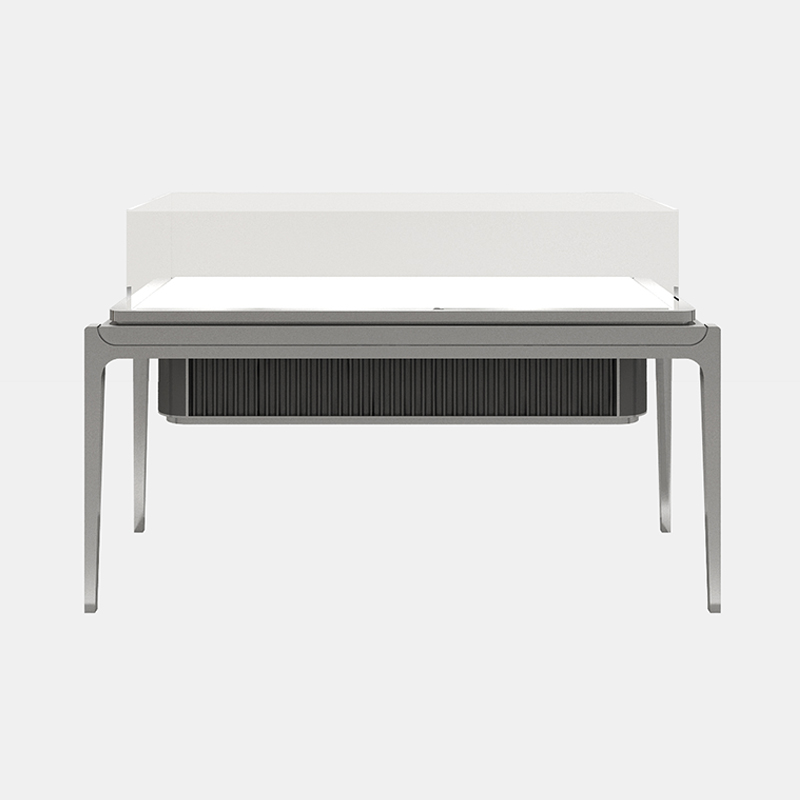
Jewelry merchandising is a system for directing attention and perceived value, not just a way to arrange stock. A customer passing a jewelry counter decides in roughly three seconds whether to stop, and that decision is shaped by the case, the lighting, the arrangement, and the materials long before any piece is picked up. The practical takeaway for retailers is simple: the display cabinet is the most controllable merchandising asset in the store, and getting the fundamentals right matters more than adding props or signage.
Content
Retail merchandising training programs consistently emphasize one goal above all others: expose as much inventory as possible to the customer's view while keeping a clear focal point in each case. Because jewelry is small, high-value, and easily lost against a busy background, the display case must do the focusing work itself.
Each case should lead the eye to one hero piece, with trays, risers, and angled pads creating depth without crowding. Lighting quality, glass clarity, and color contrast are consistently ranked as the strongest attention drivers in a display case, far ahead of signage and decorative props.
Relative importance (1-5), illustrative ranking based on common retail display guidelines.
Group pieces by collection first, then by price point. This makes it easy for the customer to find what they want and makes cross-selling more natural. A widely used merchandising rule is to keep roughly one third of each tray visibly empty - controlled white space raises perceived value, while an overstuffed case lowers it.
Lockable doors, tempered glass, and reinforced locking systems should never block the line of sight. Good jewelry merchandising keeps the security layer invisible: the customer sees the piece clearly and never feels shut out, while the salesperson retains controlled access.
Case selection is the first merchandising decision, and it depends on what is being sold and at what height the customer encounters it. The short version: low counter showcases support transactions, tall showcases support hero presentation, and combination layouts support flexible zoning.
| Cabinet type | Typical height | Best for | Key merchandising consideration |
|---|---|---|---|
| Low counter showcase | 900-1000 mm | Rings, earrings, bridal sets at sales counters | Customer leans in, so use raised trays and risers |
| Tall showcase | 1400-1800 mm | Necklaces, pendants, hero pieces | Eye-level zone of 1500-1600 mm receives the most attention |
| High-low combination | Mixed heights | Mid-sized stores with varied collections | Creates rhythm and separates price or collection zones |
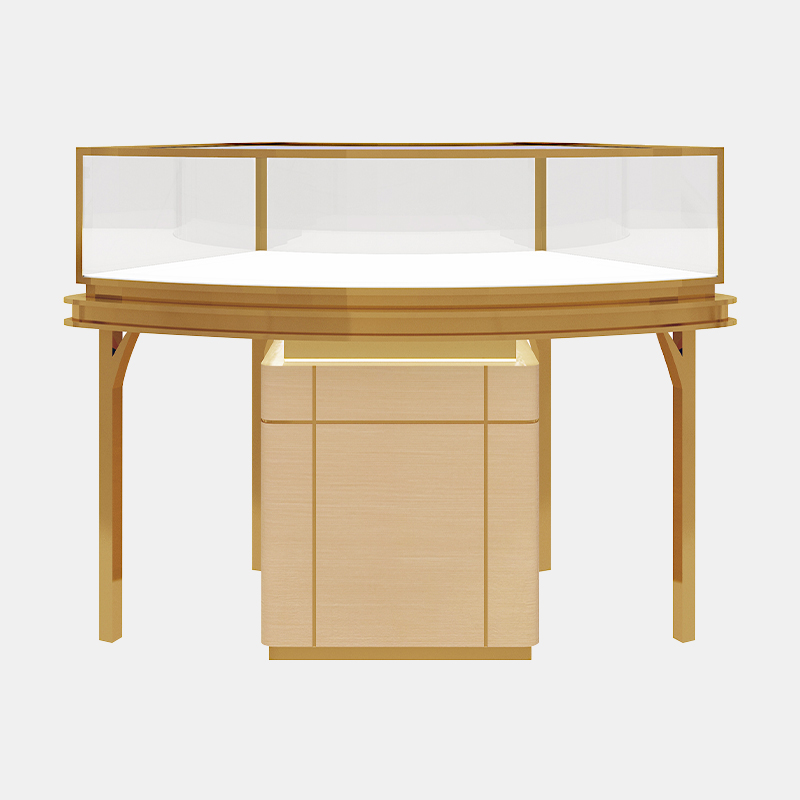
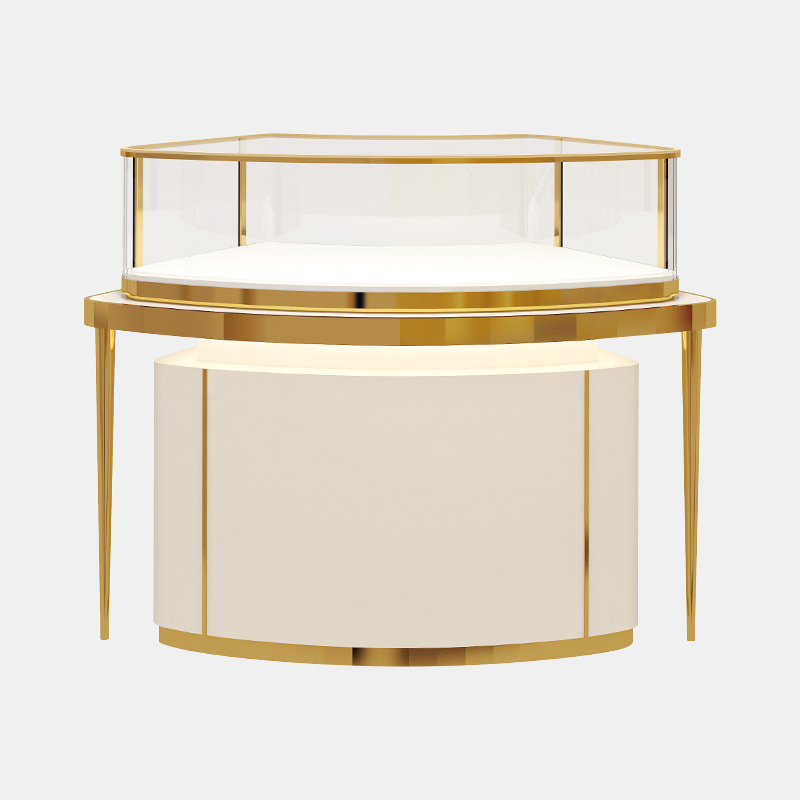
| Curved or shaped cabinet | Custom | Corners, islands, traffic-flow points | Softens sightlines and guides foot traffic naturally |
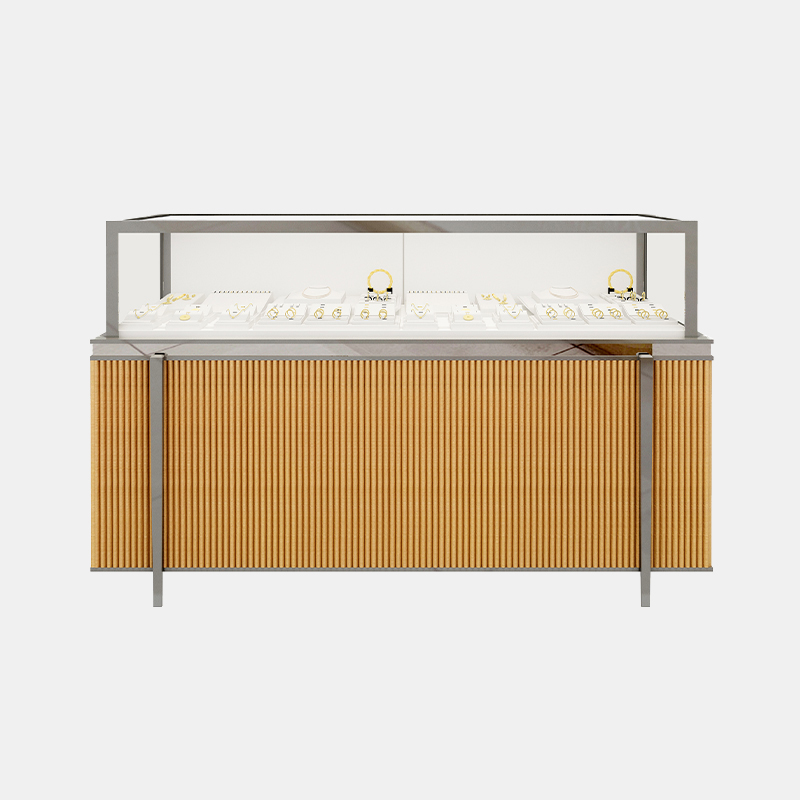
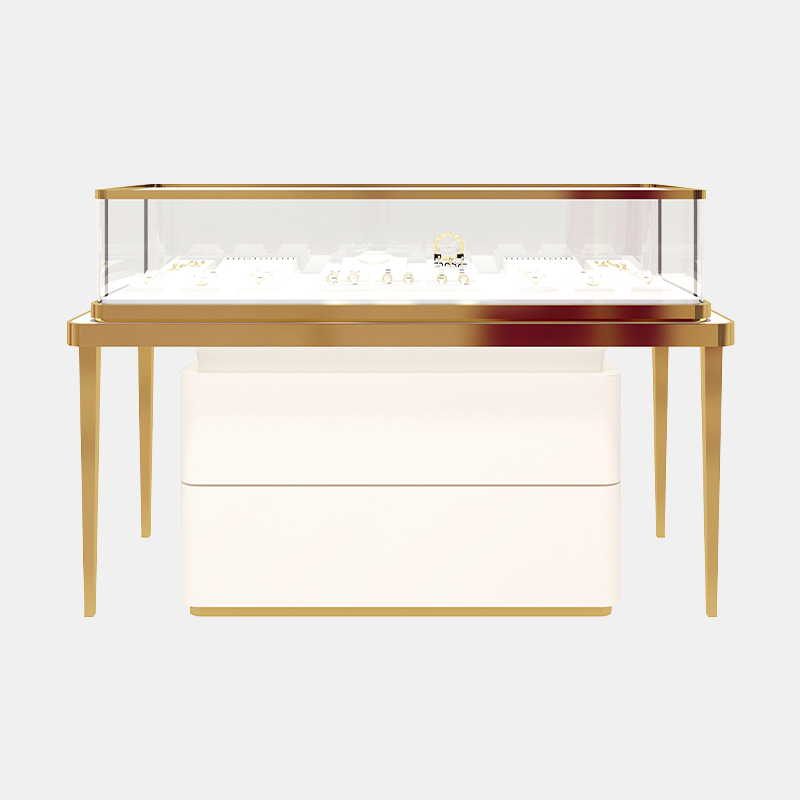
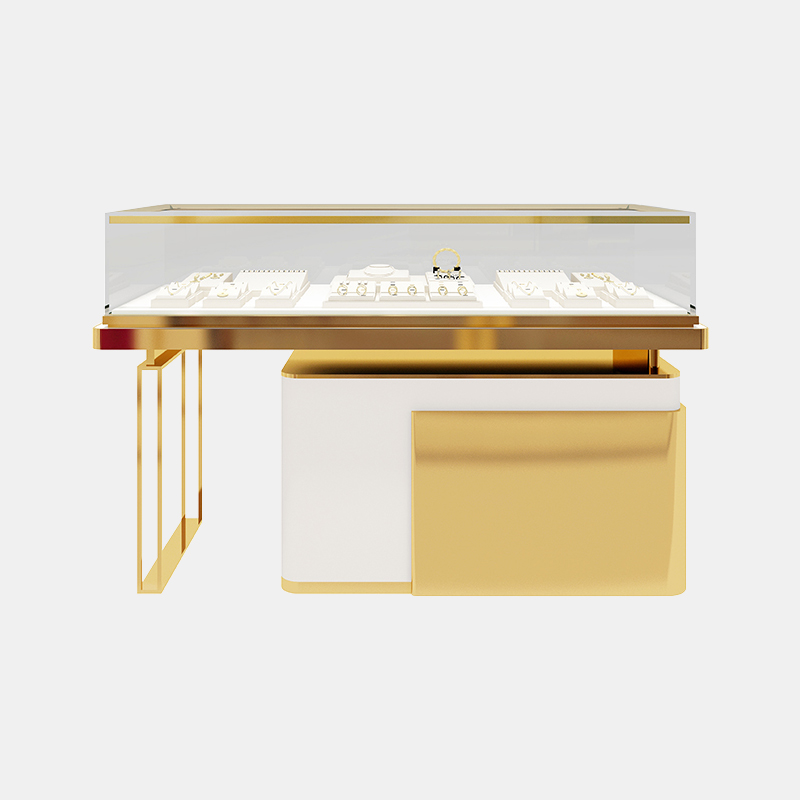
For a classic sales counter layout, a combination design such as the JRC101 jewellery combination display cabinet balances display area and storage in a single unit. Many retailers start with a standard type, then refine after observing which zones customers pause at longest.
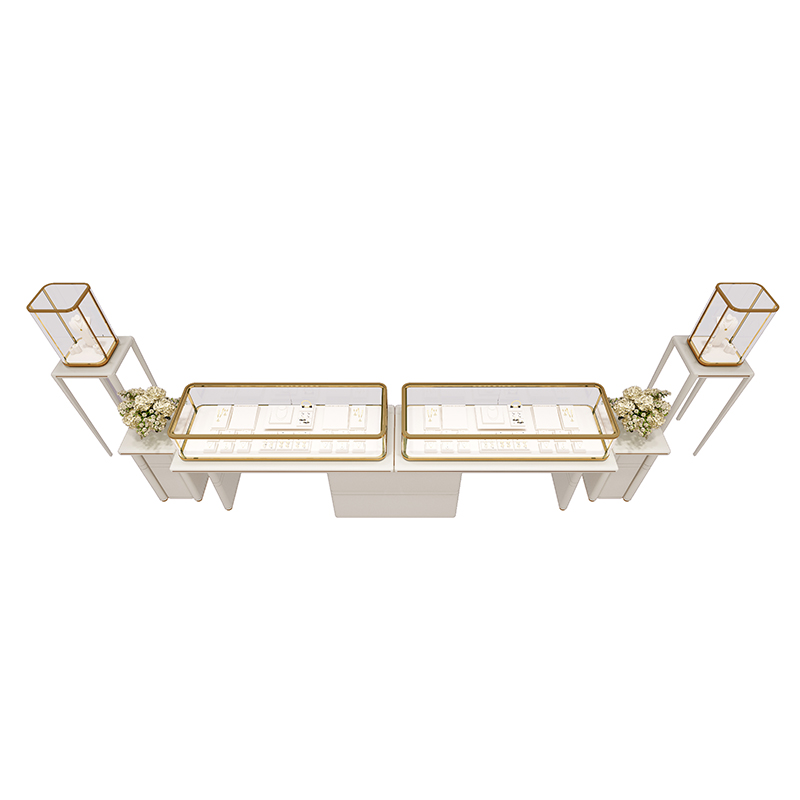 Wholesale JR-C101 Jewellery Combination Display Cabinet Suppliers, Factory - ZheSUNTOP Commercial Display Products is China JR-C101 Jewellery Combination Display Cabinet supplier and wholesale JR-C101 Jewellery Combin...View Product →
No other adjustment changes the perceived value of jewelry as quickly as lighting. The bottom line: use warm white light around 3000-3500 K for gold and warm-toned metals, a cooler white light around 4000-4500 K for silver and diamonds, and position the light source so the customer never looks directly into glare.
Illustrative relationship used in display lighting guidance; scales are relative perception, not measured photometric data.
Warm light enriches yellow gold, while cooler light flatters silver and white metals. A color rendering index (CRI) of 90 or higher is a common specification for jewelry display lighting, because it keeps gemstone colors true rather than muddy.
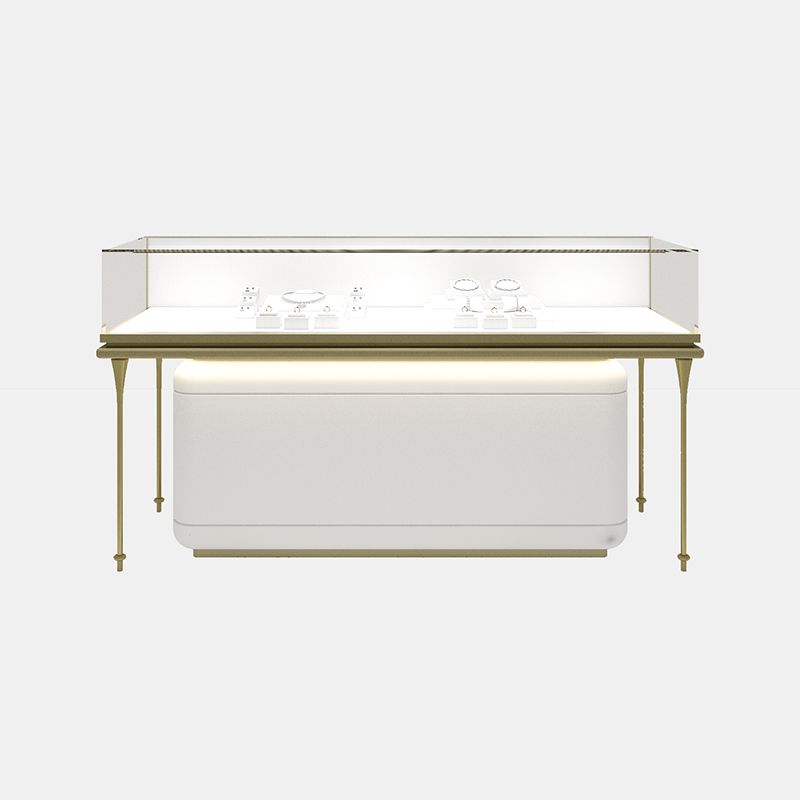
The light source should be hidden from the customer's direct line of sight. Recessed top lighting, angled strips, and adjustable spots give the merchandiser precise control over shine and shadow. Cabinets such as the JRS201 jewelry display cabinet with lighting system integrate the wiring at the factory, which avoids the uneven look of retrofit lamps. For a deeper breakdown, see why lighting is critical for a professional jewelry showcase.
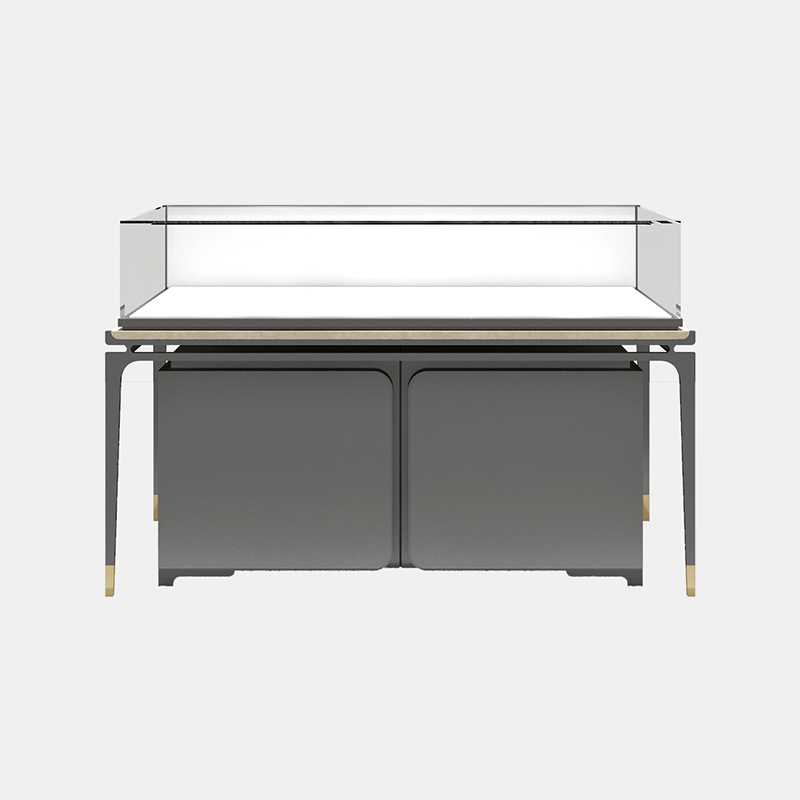 Wholesale JR-S201 Jewelry Display Cabinet With Lighting System Suppliers, FactorSUNTOP Commercial Display Products is China JR-S201 Jewelry Display Cabinet With Lighting System supplier and wholesale JR-S201 Jewelry D...View Product →
The human eye scans a jewelry store in a predictable pattern: eye level first, then below, then above. Put simply, hero pieces and best-sellers belong at 1500-1600 mm, while lower shelves should hold repeatable stock that customers can browse without bending.
In a low counter showcase, the customer stands while the goods sit near waist height, so internal risers and stepped trays close that gap. In tall cases, the middle shelf does the selling and the top shelf does the storing. The cabinet structure determines which zones exist at all.
Typical structure of a modular jewelry display showcase with integrated lighting.
Overcrowding is the most common jewelry merchandising mistake. When every tray is full, no single piece stands out. Leaving intentional empty space - roughly one third of each visible surface - gives the eye a resting point and makes the remaining pieces look more valuable.
Jewelry display cabinets must survive daily opening, closing, lighting exposure, and cleaning while carrying the visual identity of the brand. The short version: stainless steel is the most durable everyday choice, solid wood delivers warmth, and a lacquer finish produces the high-gloss look associated with premium jewelry, but each has trade-offs in maintenance and cost.
Qualitative comparison based on typical manufacturer specifications; ratings are relative, not laboratory measurements.
Stainless steel resists scratches and holds its shape under years of use, which makes it a common choice for high-traffic mall counters. Wood suits heritage or warm-toned brands but needs controlled humidity. Lacquer gives the smoothest, most reflective surface for high-end jewelry, and modern UV-cured lacquers are noticeably more scratch-resistant than older formulas. For a closer look at the durability argument, read about the advantages of stainless steel jewellery display cabinets compared with other materials.
Standard cabinets work well for standard stores, but jewelry retail is rarely standard. An irregular floor plan, a specific security protocol, a brand color that must appear in the lacquer, or a counter height dictated by the sales desk can all push the design toward customization. In short, a custom cabinet is justified whenever the store layout, security requirements, or brand identity cannot be satisfied by a catalog size.
Zhejiang Suntop Commercial Display Products Co., Ltd. was founded in 2009. Currently, the company's factory covers an area of 25 acres, with a building area of 25,000 square meters and an annual production capacity of 300 projects. Main customer types include jewelry, cosmetics, watches, museums, and other display-driven sectors. The company adheres to a highly specialized spirit and strives for excellence in the creation of every display space cabinet, aiming to perfectly reflect the customer's brand concept and value through high-quality display spaces. After 16 years of deep cultivation in the display props industry, Suntop has won the provincial high-tech enterprise and credit enterprise awards, and has obtained a number of relevant industry technology patents, providing a guarantee for product quality.
For brands that need a case built around exact dimensions, the customised jewelry display cabinets range covers sizes, materials, colors, and lighting configurations beyond the standard catalog. Suntop's customization services start with a drawing review and material selection before production begins. Real examples from completed jewelry store display projects show how the same brand identity is translated into wood, glass, metal, and light across different storefronts.
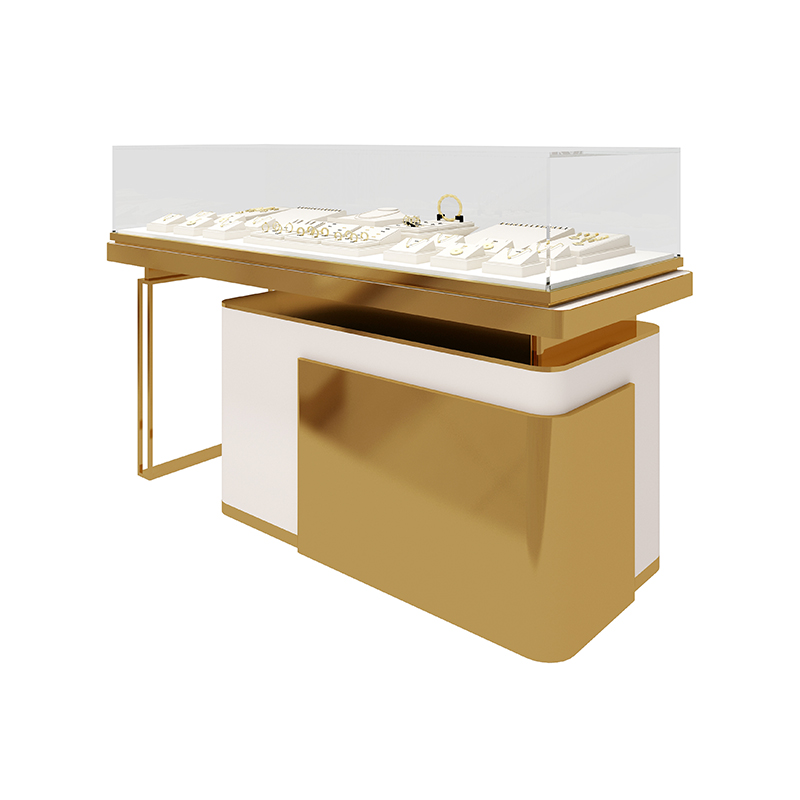 Wholesale JR-S105 Customised Jewelry Display Cabinets Suppliers, Factory - ZhejiSUNTOP Commercial Display Products is China JR-S105 Customised Jewelry Display Cabinets supplier and wholesale JR-S105 Customised Jewelry...View Product →
Use 3000-3500 K for gold and warm-toned jewelry, and 4000-4500 K for silver and diamonds. A CRI of 90 or higher keeps gemstone colors true.
Every two to four weeks is a practical rhythm. Frequent rotation keeps repeat customers engaged and lets slow-moving pieces be repositioned.
Enough to look stocked, with roughly one third of the tray surface left empty. A clear focal point in each case matters more than total piece count.
Yes when the layout, security protocol, or brand colors require it. Custom cabinets avoid forcing a standard case into an irregular space.


 ਪੰਜਾਬੀ
 English
 عربى
عربى русский
 中文简体
中文简体