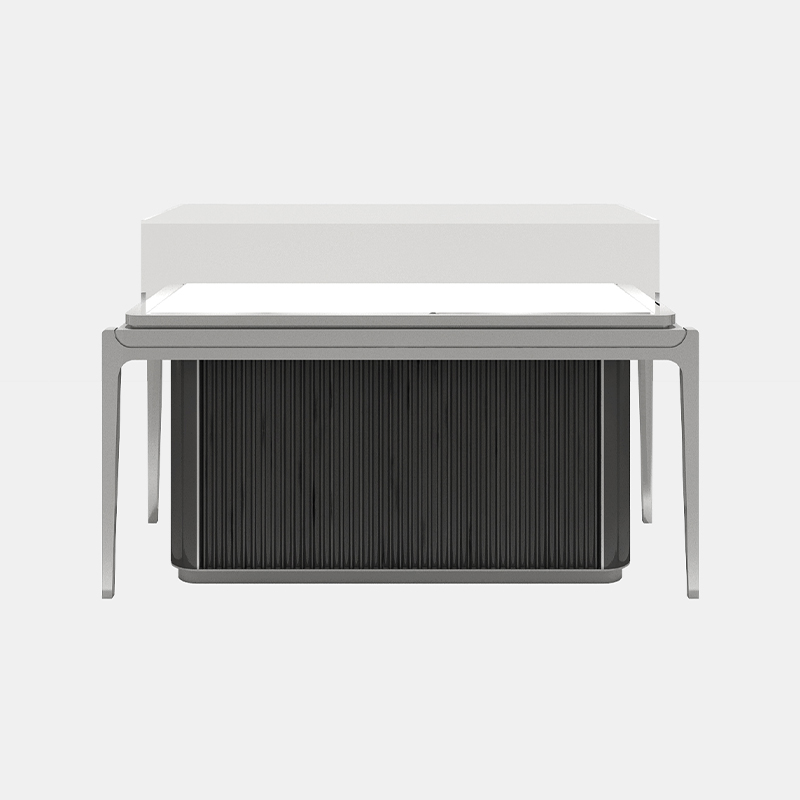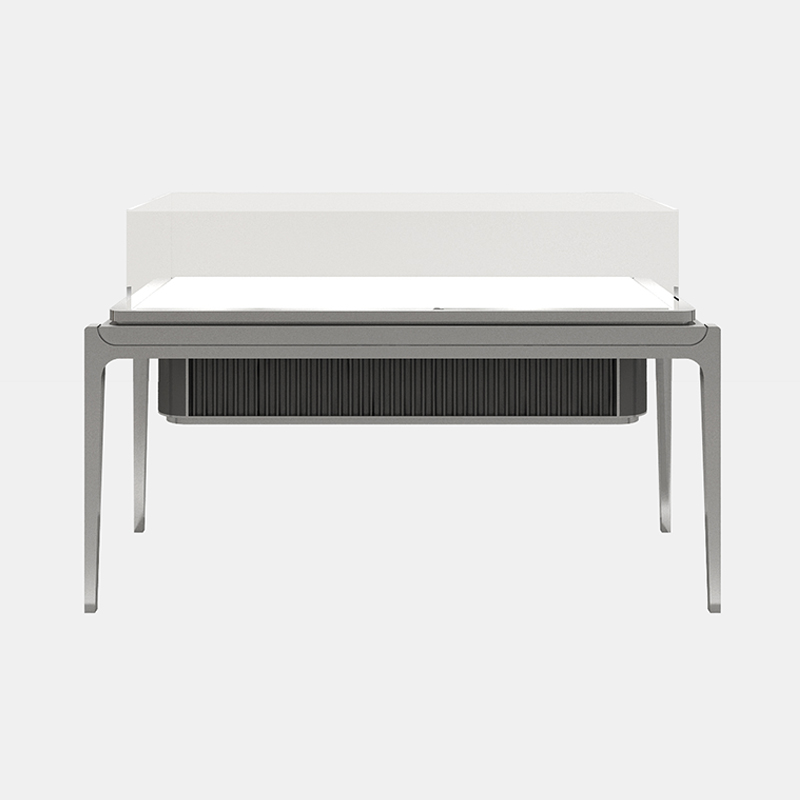
Picture a 900 x 600 mm shadow box display case with a 30 mm interior cavity. The contents are three ceremonial medals with folded ribbons, mounted on 5 mm foam board. Everything technically fits. But the moment the door closes, the ribbons are pressed flat against the glazing, and a display that should read as a dimensional object reads as a poster.
Push that cavity to 70 mm and the problem disappears. Same frame, same finish, same wall. Depth is the single specification that decides whether a shadow box works or fights its own contents, and it is the one buyers most often leave to guesswork. What follows covers the four specifications worth arguing about — interior depth, glazing and UV control, lighting, and mounting — plus the checks that prevent an expensive return.
Content
A shadow box display case is an enclosed presentation box with a shallow cavity, usually 40 mm to 150 mm deep, built to hold one fixed three-dimensional arrangement behind glazing. The frame carries the glass, the back panel carries the mount, and the cavity depth creates the soft drop shadow behind the object that gives the format its name.
A retail showcase is a different instrument: 300-600 mm deep, with sliding or hinged doors, adjustable shelves and a structure designed to be refilled daily. A shadow box holds one composition for months or years, so sealing, UV control and mount stability matter far more than access speed. Four components carry the whole specification.
The working rule is short. Measure the finished object at its tallest point, add 15-25 mm of air in front, and treat the result as the minimum interior cavity. Objects sitting directly against the glazing lose their shadow and trap moisture against the glass. The chart below shows the cavity depths most wall-mounted shadow boxes end up with in practice.
Two thresholds are worth memorising. Below 40 mm, the object is really a framed item — a coin, a single banknote, a pressed flower — and a shallow wall frame with a spacer will do the same job for less. Above 150 mm, a wall-mounted box starts to look like a box hung on a wall; a freestanding pedestal case or a recessed niche usually reads better in the room.
Retail and museum walls rarely arrive in standard sizes, and a shadow box that leaves an 80 mm uneven gap on one side is a visible defect, not a tolerance. Factory-controlled production can hold roughly ±2 mm on the frame and ±1 mm on the glazing rebate, which is what keeps the box sitting square inside its own opening.
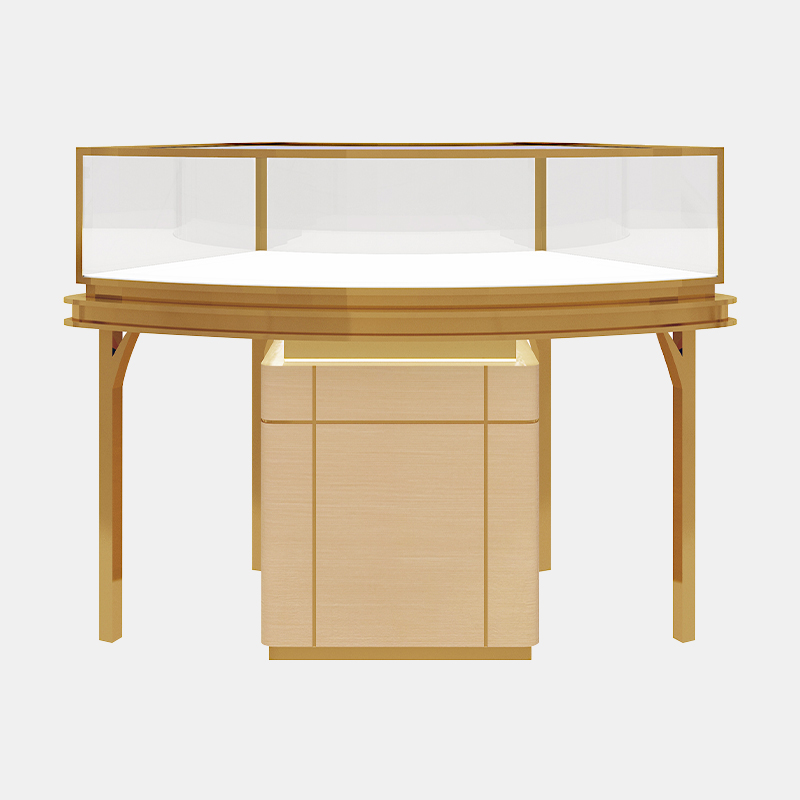
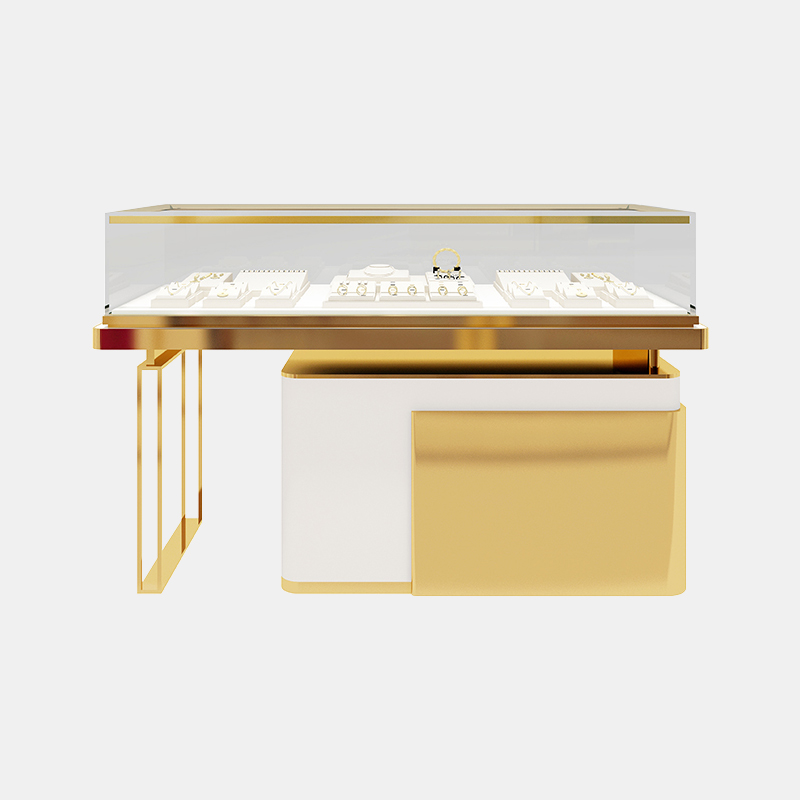
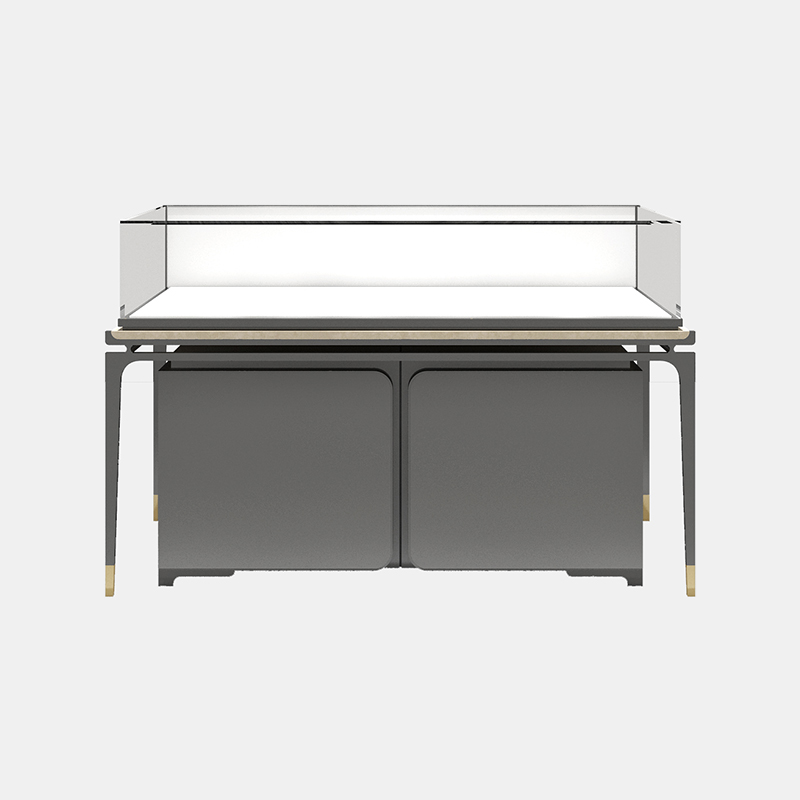
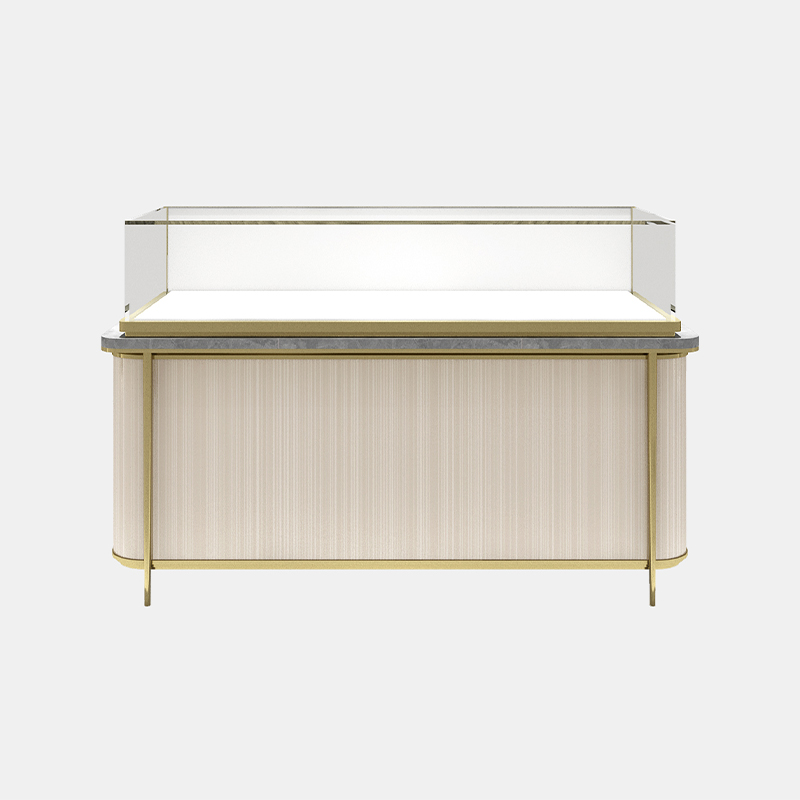
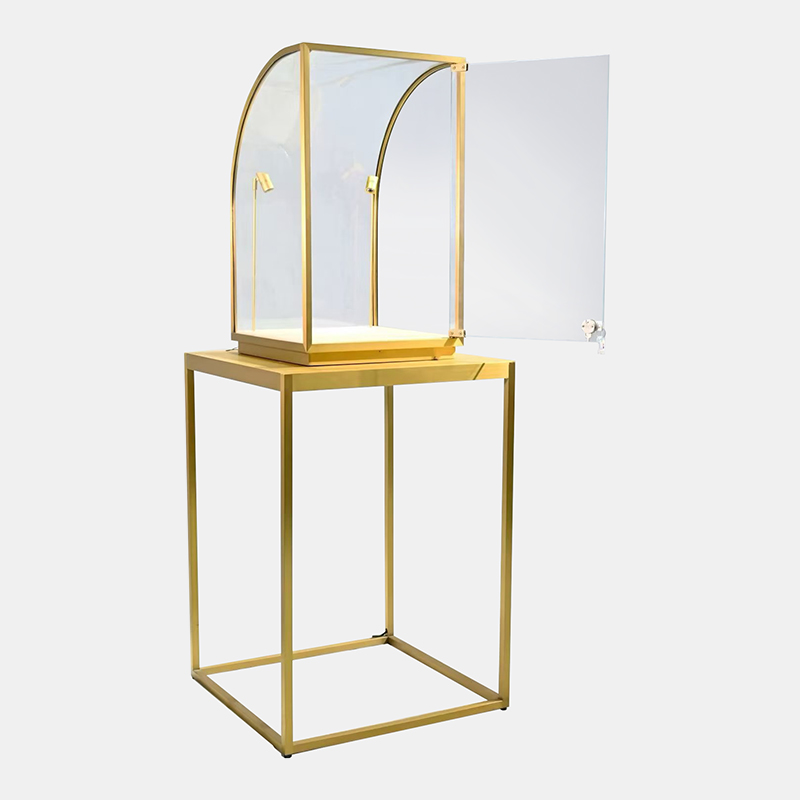 CM-101 Customised glass cabinetsCustom Glass Cabinet is a highly flexible and personalized display and storage solution, with the freedom to choose materials, shapes, colors, and sizes according to c...View Product →
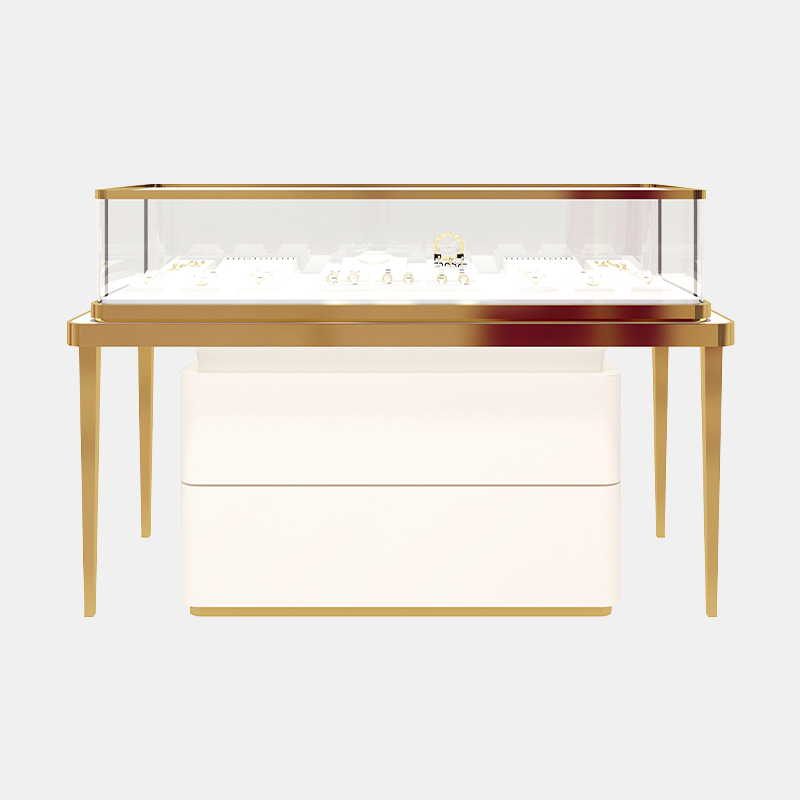
For non-standard openings and unusual cavity depths, the practical route is a made-to-measure unit rather than a catalogue size padded with filler panels. Our custom display cabinet service fixes dimension, cavity depth, glazing and finish in a single drawing set before anything is cut.
Standard clear float glass passes most ultraviolet radiation in the 300-380 nm band, which is precisely the band that fades dyes, bleaches textiles and yellows paper. Laminated glass with a UV interlayer, or acrylic with a UV-filtering coating, blocks the large majority of it. Conservation guidance from the Canadian Conservation Institute treats ultraviolet content above roughly 75 µW/lm as a risk for sensitive collections, so "UV filtering" belongs on the specification sheet as a number, not as a marketing word.
Glass wins on clarity and scratch resistance; acrylic wins on weight and impact. For a wall-mounted box that a customer opens a few times a year, laminated low-iron glass is usually the better long-term trade. Above roughly 1,200 mm wide, acrylic takes several kilograms off the wall and off the hanging hardware.
| Application | Interior depth | Glazing | Lighting | Mounting |
|---|---|---|---|---|
| Jewellery and small valuables | 60-90 mm | 5-6 mm laminated low-iron glass | 3000-4000 K LED, 50-150 lx | Continuous cleat on studs |
| Medals, coins, memorabilia | 40-70 mm | 4-6 mm glass or 5 mm acrylic | Optional, 50-150 lx | Cleat or French cleat |
| Museum and archive artefacts | 80-150 mm | 6 mm laminated UV glass, sealed | 50 lx, no UV in the beam | Pedestal or recessed niche |
| Retail window feature | 100-150 mm | 6-8 mm tempered laminated | 150-300 lx, dimmable | Fixed to building structure |
| Entomology and natural history | 40-60 mm | 4 mm glass, gasketed frame | 50 lx, cool beam | Sealed back, wall cleat |
Two mechanisms damage contents: ultraviolet radiation and heat. A 12 V LED strip produces very little heat at the strip itself, but the driver and transformer belong outside the sealed cavity, or the box becomes a small oven in summer. Colour temperature matters as much as intensity — 3000-4000 K renders gold, silver and textiles honestly, while 6000 K and above makes amber, ivory and skin tones look grey.
The practical target for a private collection is 50 lux at the object surface for textiles, watercolours, dyed leather and feathers. Oils, wood and ivory tolerate around 150 lux, and metals, ceramics and stone — effectively insensitive to light — can go to 300 lux. If the shadow box sits in a room with strong daylight, UV-filtering glazing plus a low-lux LED is not belt-and-braces; it is the baseline.
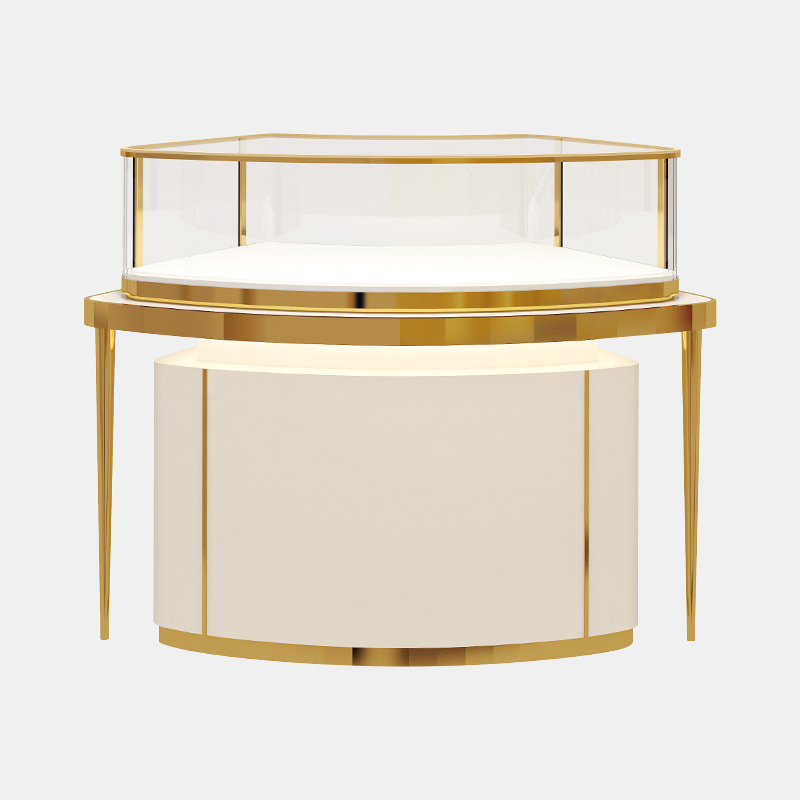
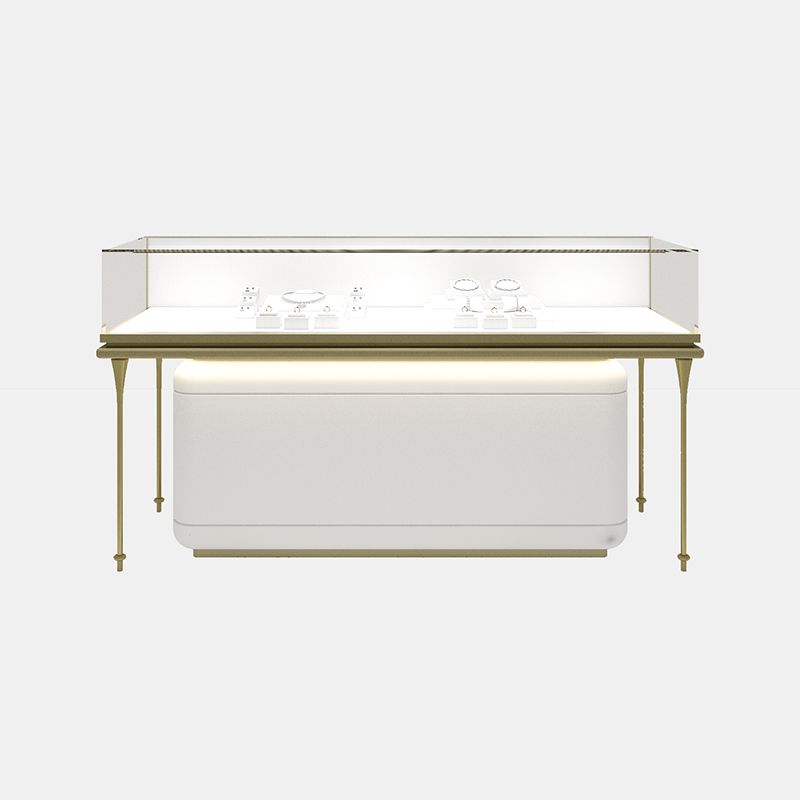
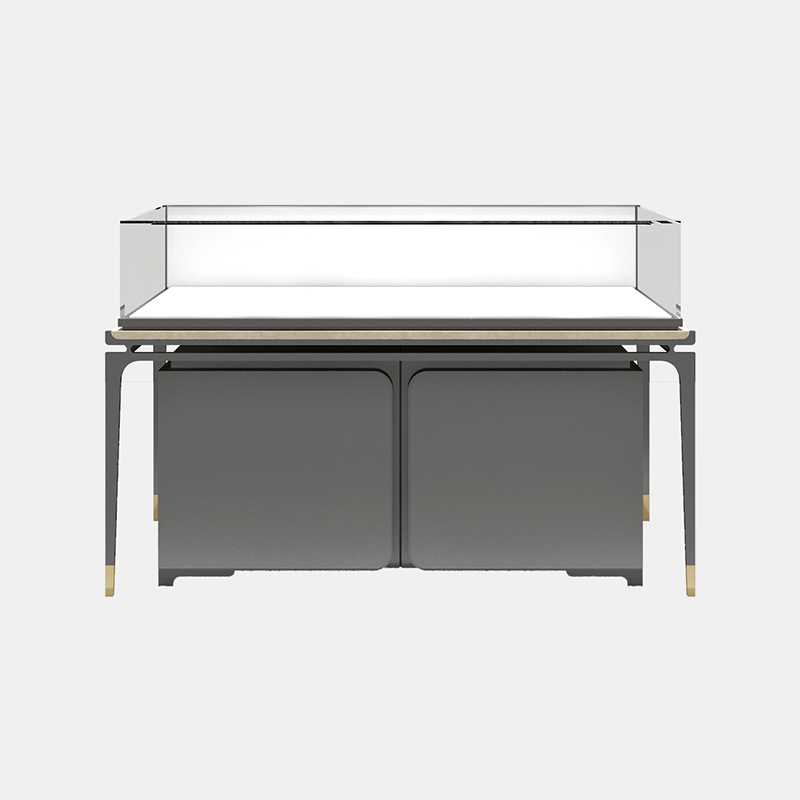 JR-S201 Jewelry Display Cabinet With Lighting SystemA Jewellery display case is a kind of display equipment specially designed for displaying and protecting precious jewelry. It is made of transparent glass, combined wi...View Product →
A factory-integrated lighting channel concealed in the top reveal, pre-wired through the carcass to an external driver, avoids the usual on-site compromise of surface-mounted strip lights and visible cable runs.
Float glass has a density of 2,500 kg/m³, so 6 mm glass weighs 15 kg per square metre. A 900 x 600 mm front pane is therefore about 8 kg of glass alone; add the frame, back panel and mount board and a mid-size wall box lands somewhere between 12 and 20 kg. That is comfortably within the capacity of two properly anchored studs, and well beyond the capacity of two plasterboard plugs.
Three details decide whether the box stays flat against the wall for years. First, hang on a continuous cleat or Z-bar rather than two picture hooks, so the load spreads and the box cannot pivot. Second, leave a spacer at the bottom so air can move behind the frame instead of staining the plaster. Third, if the box is deeper than 100 mm, the centre of gravity moves forward and the bottom edge should be restrained rather than left floating.
Most disputes in this product category trace back to the first item. A box quoted at 30 mm and needed at 70 mm is not a warranty claim — it is a redesign, and it costs roughly the same as building it correctly the first time.
Four settings account for most of the demand. Jewellery and watch retailers use shallow wall boxes for a single hero piece, usually with concealed lighting and a low-reflection glass. Museums and archives use sealed, low-lux boxes where the case is part of the preservation strategy rather than a background — the same logic behind our museum display projects, where gasketing, inert materials and light control are specified before aesthetics. Corporate and institutional clients display awards, medals and commemorative objects. Private collectors use them for watches, scale models, insects and fossils, typically above a desk or along a hallway.
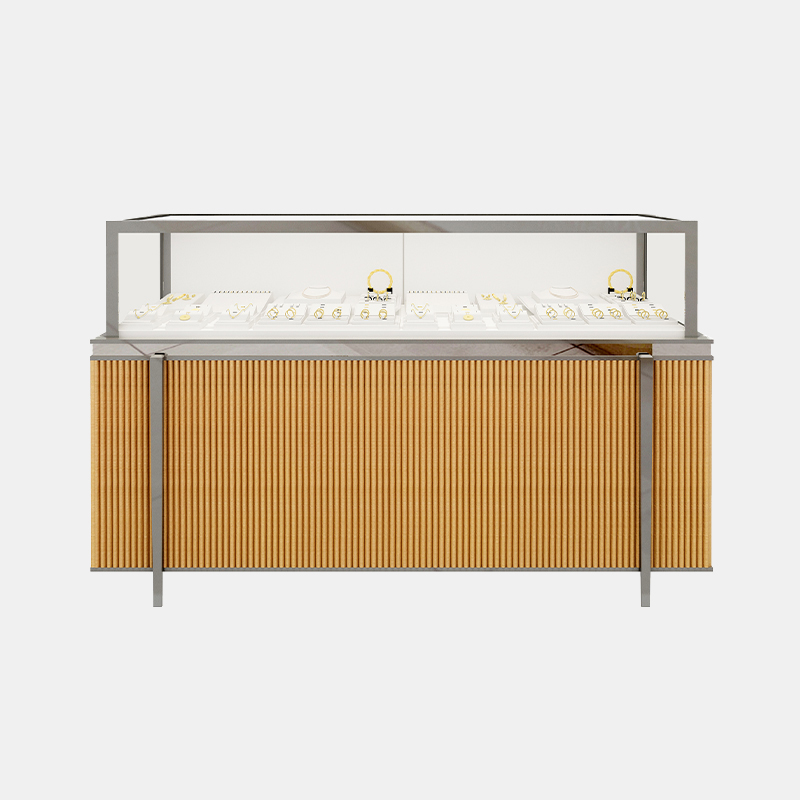
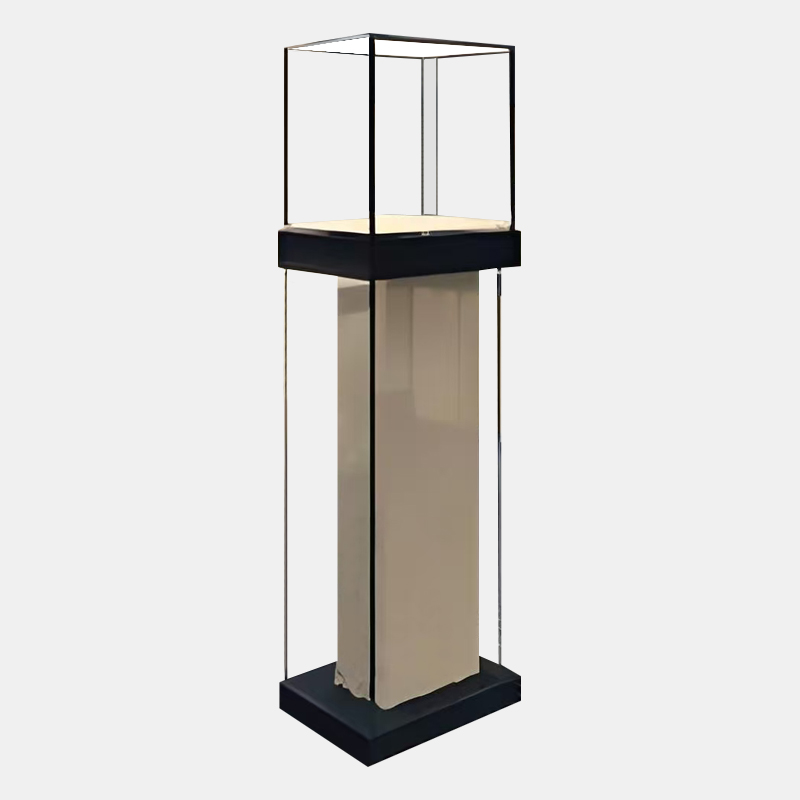 MS-101 Freestanding Museum Pedestal Display CaseA museum display cabinet is a special piece of equipment designed for displaying cultural relics, artworks, and other precious collections. It not only plays a role in...View Product →
Where a wall is not an option — plasterboard over battens, a listed interior, a lease that forbids drilling — a freestanding pedestal case places the same sealed, lit cavity at eye level without touching the building structure.
Zhejiang Suntop Commercial Display Products Co., Ltd. was founded in 2009. The factory covers an area of 25 acres with a building area of 25,000 square metres, and annual production capacity reaches 300 projects. Main customer types include jewellery, cosmetics, watches and museums. After 16 years of deep cultivation in the display props industry, Suntop has won provincial high-tech enterprise and credit enterprise awards and holds a series of industry technology patents covering cabinet construction and lighting integration, which underpins product quality on this kind of bespoke work. The company adheres to a highly specialised spirit and pursues excellence in the creation of every display space cabinet, aiming to reflect a client's brand concept and value through the finished display environment.
Measure the tallest point of the finished arrangement, add 15-25 mm, and treat that as the minimum cavity. Medals and coins need 40-70 mm, jewellery 60-90 mm, and museum artefacts often 80-150 mm.
Laminated low-iron glass gives better clarity and resists scratching. Acrylic is lighter and more impact resistant, and above roughly 1,200 mm wide it removes several kilograms from the wall.
UV radiation and visible light both cause fading. UV-filtering glazing removes most of the UV band, and holding illuminance at 50 lux for textiles, prints and dyed leather slows visible-light damage considerably.
Yes. A concealed LED channel in the top reveal, wired through the carcass to a driver mounted outside the sealed cavity, keeps both the cable and the heat away from the objects.
6 mm glass weighs 15 kg per square metre, so a 900 x 600 mm box with frame and back panel usually lands at 12-20 kg. Anchor a continuous cleat into two studs rather than using plasterboard plugs.
You should not need to — dust should not be entering. Clean the outer glazing only with a non-ammonia cleaner and a microfibre cloth, and open the case for interior work only in a dry, dust-free room.


 ਪੰਜਾਬੀ
 English
 عربى
عربى русский
 中文简体
中文简体