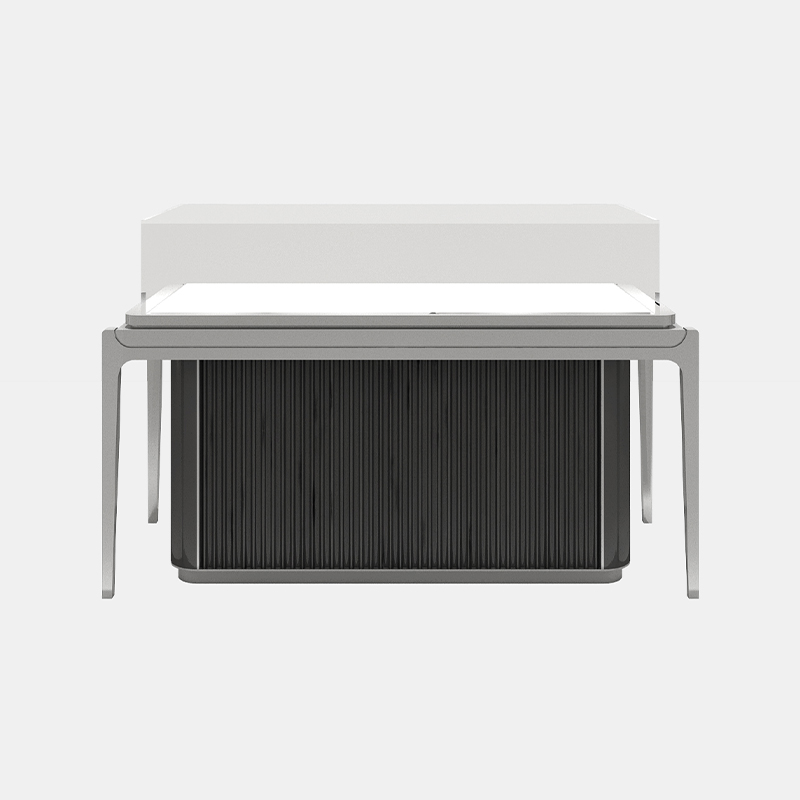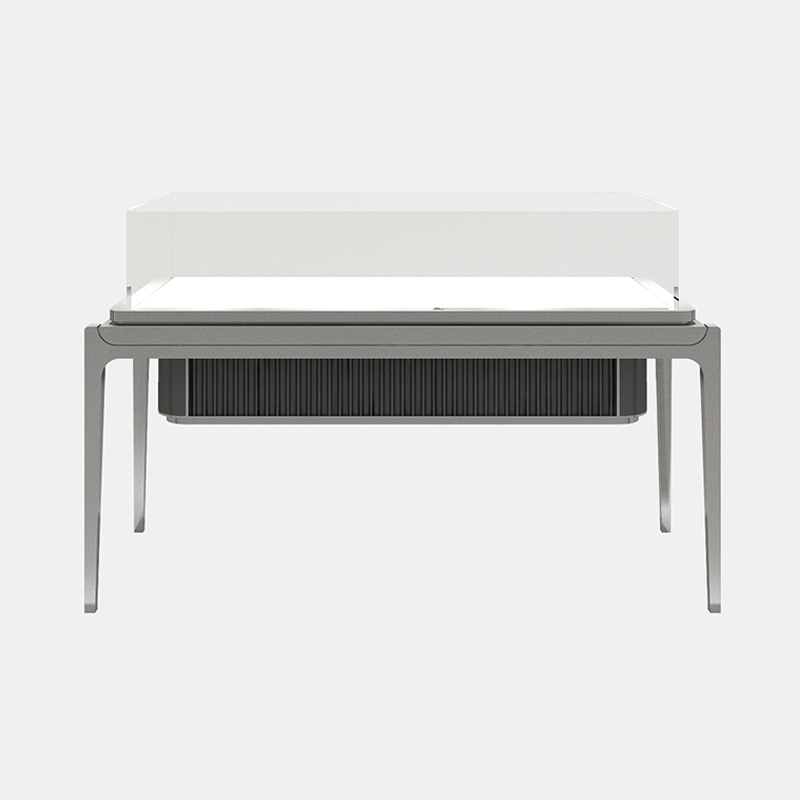
A retailer in Dubai once approved a custom display cabinet from a 1:10 drawing, 1,200 mm wide, 450 mm deep and 1,100 mm high, and still sent the finished unit back. The cabinet matched every dimension on the sheet. What it failed was everything the sheet never showed: the LED driver had no service access, the plinth sat higher than the showroom floor ramp, and the glass door opened into the aisle where customers stood.
That is how most custom display cabinet problems actually arrive. Not as design failures, but as interface failures between the cabinet, the room, the merchandise and the people who clean and maintain it.
The working rule is short: fix the interfaces first, compare quotes on specifications second, argue about finishes last. A cabinet with an ordinary lacquer finish and a properly planned interior will outlast and outsell a premium finish on a box nobody can service. What follows covers the specification lines worth writing down, the material and lighting decisions that drive cost, and the installation details that decide whether a project opens on time.
Content
Before a single material is chosen, three jobs compete for the same millimetres of space:
The room usually decides which job wins. A sealed museum case with humidity control is the right answer for a fragile textile; the same case in a cosmetics store is over-engineered, because staff restock it six times a day. Decide which job dominates before asking for a price, because that single decision moves the cost further than any finish choice.
Two quotes for the same 1,200 x 450 x 1,100 mm cabinet can differ by 40 percent and both can be honest. The gap sits in the lines nobody wrote down. Send every supplier the same sheet and ask for it back, filled in, line by line.
| Specification area | What to write into the brief | Why it changes price or outcome |
|---|---|---|
| Glass and optics | Type, thickness, edge finish, low-iron or standard, UV filter yes or no | Low-iron glass and polished edges add cost; standard float glass shows a green tint against white interiors |
| Carcass and substrate | Board emission class, steel grade and wall thickness (304 versus 201), welding and grinding standard | Grade 201 stainless costs less and pits in humid or coastal sites; board class affects indoor air quality compliance |
| Finish system | Lacquer type and number of coats, powder coat thickness, veneer and edge banding | A three-coat polyurethane finish resists cleaning chemicals; a single coat shows fingerprints and wears at handle points |
| Lighting | CRI, colour temperature, lux at shelf level, beam angle, driver brand and driver location | CRI below 90 dulls coloured stones and cosmetics; driver position decides whether servicing means emptying the case |
| Security | Lock type, glass specification, alarm or sensor preparation | Retrofitting an alarm after the carcass is welded is expensive; plan it before fabrication |
| Interior | Shelf count, adjustability, load rating, tray and riser system, lining material | Fixed shelves save money at quotation stage and cost more as soon as the assortment changes |
| Site interfaces | Plinth height and levelling method, cable entry, ventilation, weight per unit | Lift size, door width and floor levelness are the most common reasons a finished cabinet cannot be installed |
Anything a supplier will not put in writing, such as the steel grade, the driver brand or the glass origin, is the line to negotiate on. Not the total price.
Stainless steel is the material most often substituted quietly. Grade 304 at 0.8 to 1.2 mm wall thickness gives a cabinet that survives daily cleaning chemicals and coastal humidity. Grade 201 looks identical on day one and shows pitting within a year under the same conditions. Put the grade on the drawing and verify it on delivery with a magnet and an acid test kit.
Wood-based carcasses live or die on edge sealing. A consistent 1.5 to 2 mm gap across every door and drawer front is what separates a precise cabinet from an approximate one; uneven 4 to 5 mm gaps read as poor quality even when the panel itself is expensive. Board should be a low-emission grade, and cut edges must be sealed rather than simply banded.
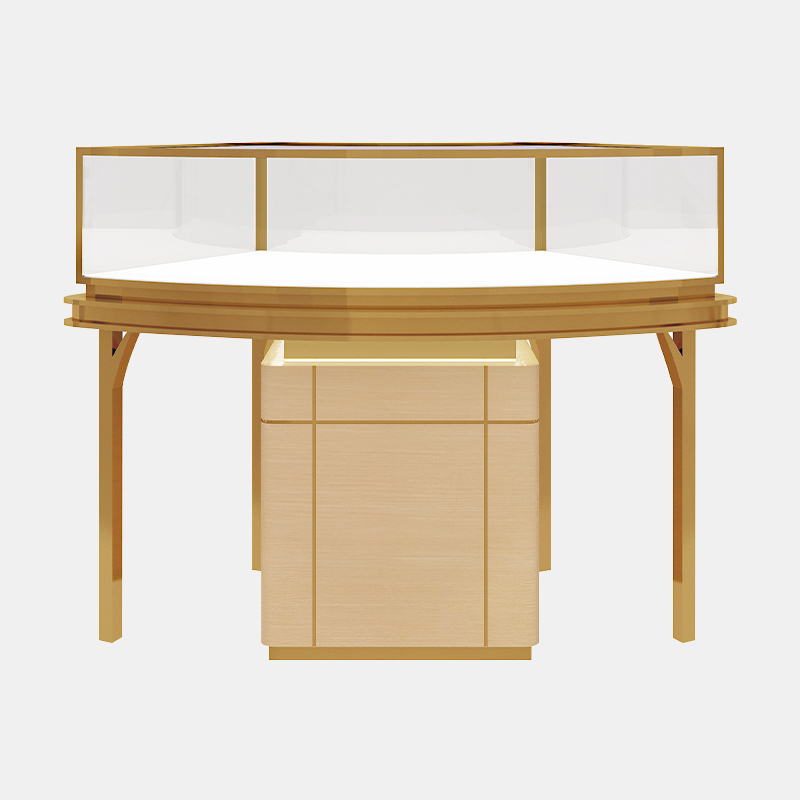
 CM-105 Custom Stainless Steel Display CabinetsFor humid or high-traffic retail floors, this customizable stainless steel cabinet offers a durable carcass option with flexible materials, shapes, colors, and sizes.View Product →
For humid or high-traffic floors, a stainless carcass is usually the cheaper decision over a five-year horizon. Lacquer is where budgets silently stretch. A polyurethane system with three coats and a respected cure time gives a surface that resists solvent cleaners and ring pulls; a single-coat finish on MDF looks perfect for six months and then records every trolley bump. If the cabinet will be cleaned daily with solvent-based products, say so at quotation stage, because it changes the sealer and not just the colour.
Lighting is the cheapest way to make an inexpensive cabinet look considered, and the fastest way to make an expensive one look cheap. Three numbers do most of the work: a colour rendering index of 90 or above, a colour temperature in the 3000 to 4000 K band, and a beam angle narrow enough, usually 15 to 24 degrees, to put light on the product instead of the customer's eyes. Keep the driver accessible from the rear or through the plinth, never behind a fixed back panel.
Glass follows the same logic. For retail, 6 to 8 mm tempered glass is the practical default. Laminated glass with a UV-filtering interlayer is the museum answer, where fading risk outweighs impact resistance. Low-iron glass removes the green edge tint that makes white and pale interiors look tired.
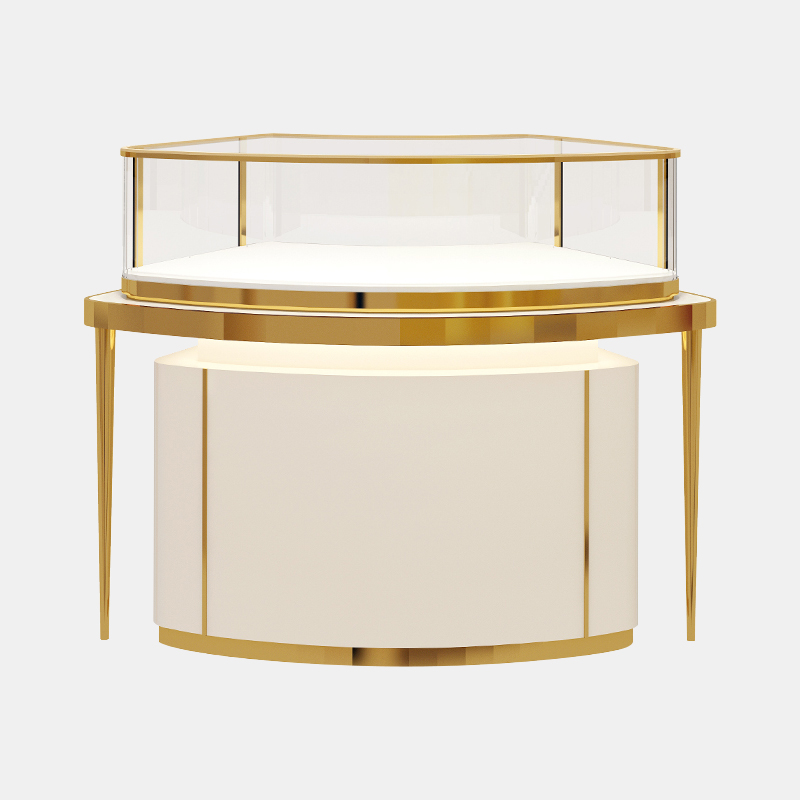
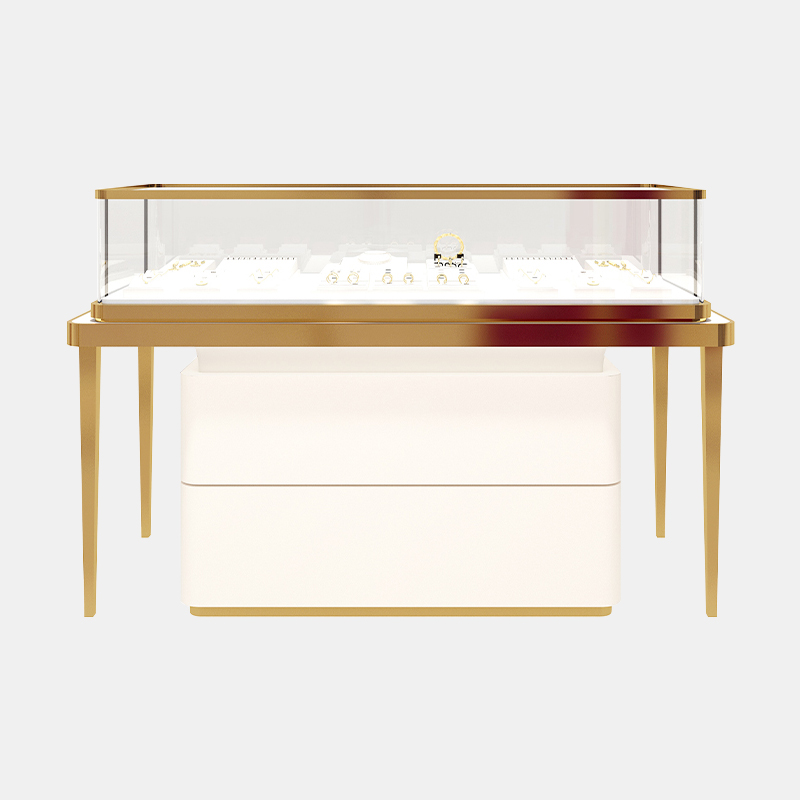
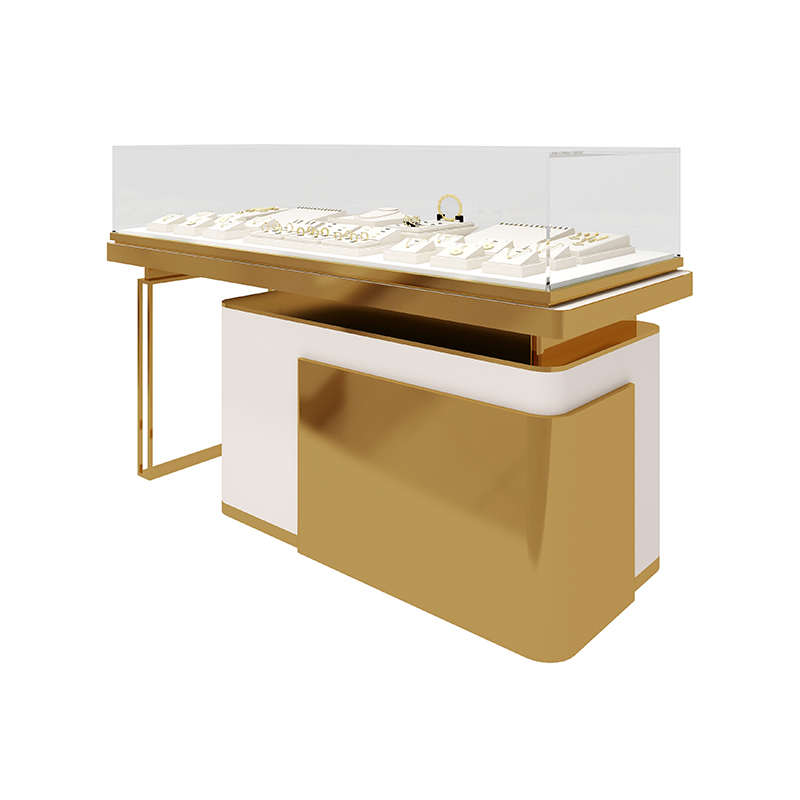 JR-S105 Customised Jewelry Display CabinetsA customizable jewellery showcase with polished detailing and flexible materials, shapes, colors, and sizes, suited to commercial or home displays where lighting and finish matter.View Product →
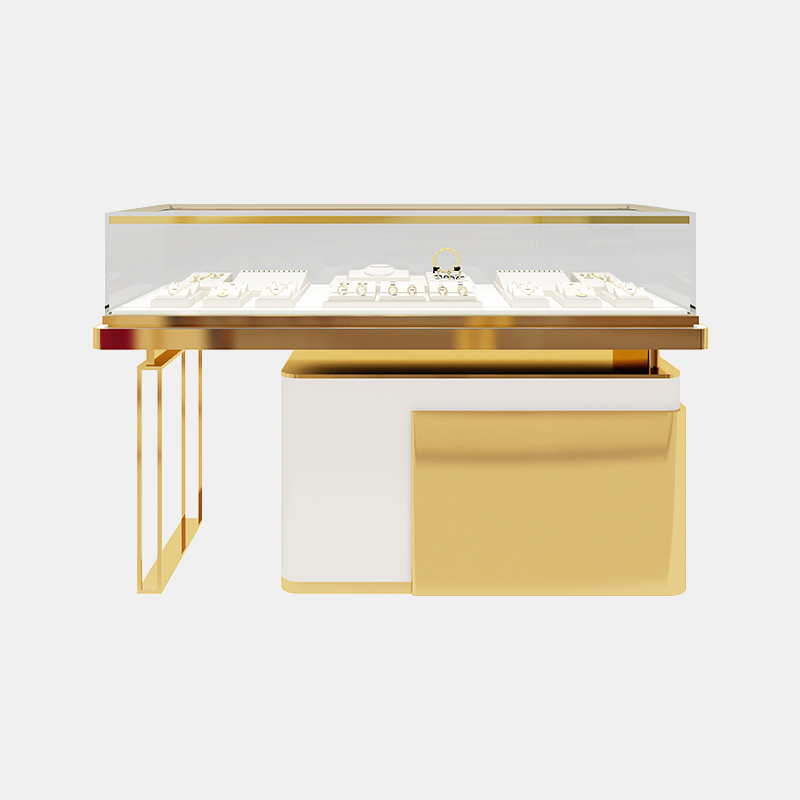
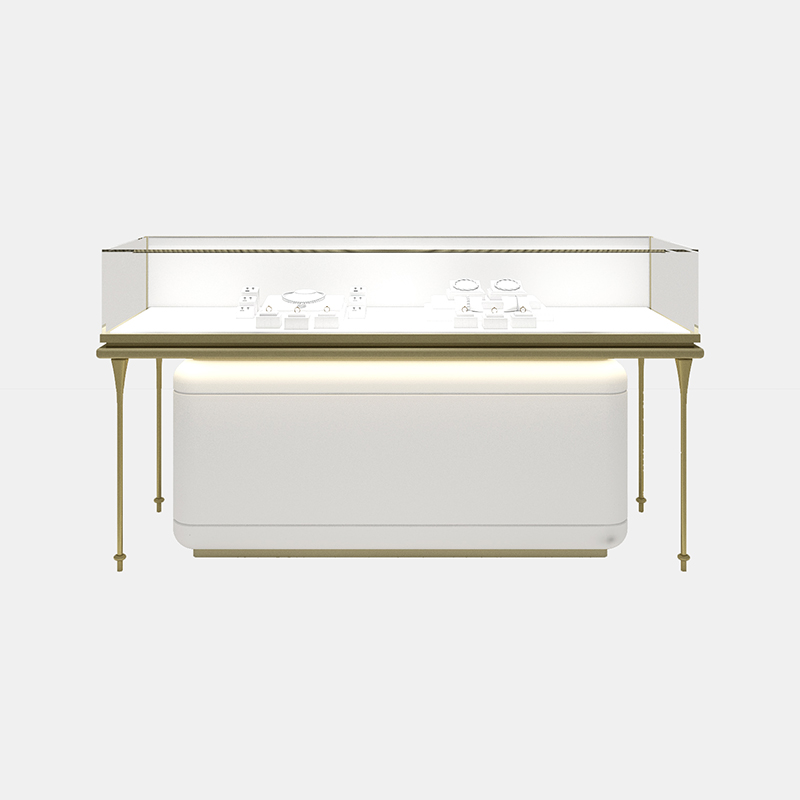
Jewellery cases add one more constraint: the lighting has to flatter metal and stone without heating the display pad. A separate driver cavity solves that, and also keeps service visits short.
Production is rarely the long pole. In a typical retail fit-out the cabinet takes five to six weeks in the factory, while approvals, glass sourcing and site readiness consume the rest. Plan backwards from the opening date, not forwards from the purchase order.
Site survey items that most often cause a delay: ceiling height against the tallest cabinet plus its packing, lift car dimensions and door clearances, floor levelness (a 5 mm slope under a 1,200 mm plinth is visible), distance to the nearest power point, and whether the store's air conditioning blows directly onto glass, which produces condensation on the inside face in humid climates.
On a full store roll-out rather than a single piece, it helps to see how the customization and project workflow is structured before you commit to a drawing schedule.
Custom tooling is not automatically the better answer. Four questions usually settle it:
Two or more yes answers justify a custom build. Fewer usually points to a standard carcass with custom interior fittings, which is faster to replace and cheaper to extend when a second store opens.
The difference between a good and a difficult supplier tends to appear in the factory rather than the showroom. Ask how the carcass is jigged, how door gaps are checked, and who signs the pre-shipment inspection.
Zhejiang Suntop Commercial Display Products Co., Ltd. was founded in 2009. Its factory covers 25 acres, with 25,000 square metres of building area and an annual production capacity of around 300 projects. Main customer types include jewellery, cosmetics, watches and museums. After 16 years in the display props industry, Suntop has received provincial high-tech enterprise and credit enterprise recognition and holds a number of relevant industry technology patents, which support product quality. The company describes its approach as highly specialised, with each display space built to reflect the client's brand concept and value.
Project references are the fastest way to judge fit, and the jewellery case portfolio shows how the same construction logic is adapted to different brand positions and store formats.
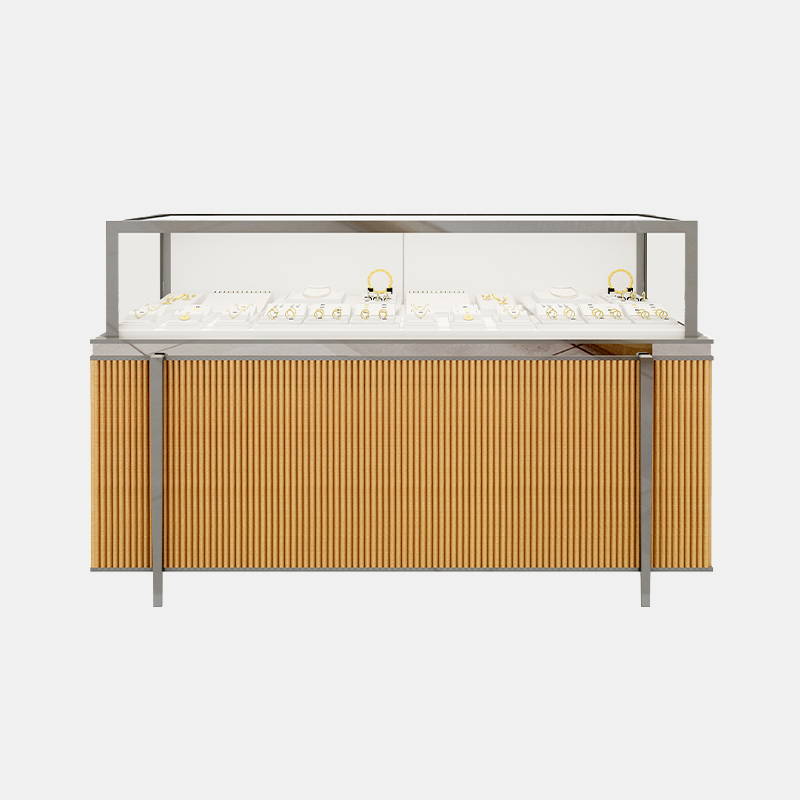
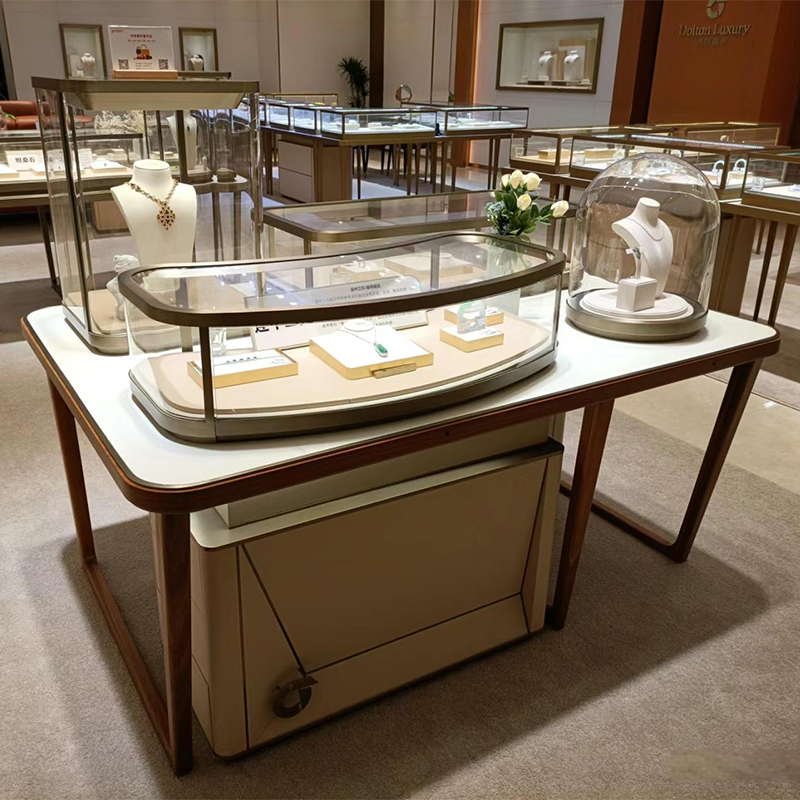 CM-104 Customised Combination Display CabinetsA customizable commercial combination cabinet for display projects needing consistent proportions across mixed formats, with flexible materials, shapes, colors, and sizes.View Product →
Where a store needs mixed formats in one run, from high cases to low sales counters and drawer units, a combination system keeps proportions consistent across the floor plate.


 ਪੰਜਾਬੀ
 English
 عربى
 русский
 中文简体