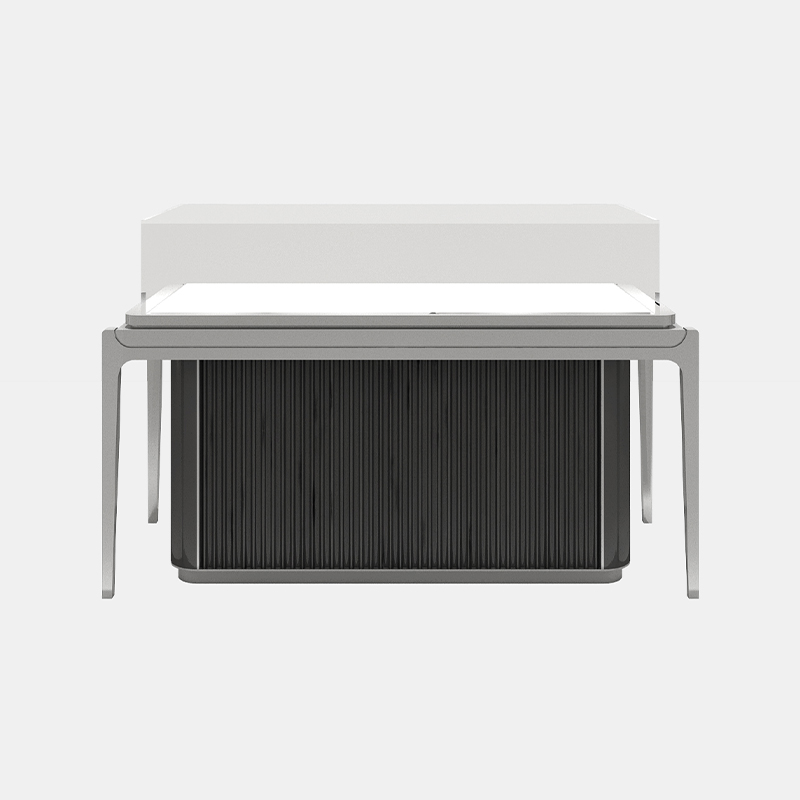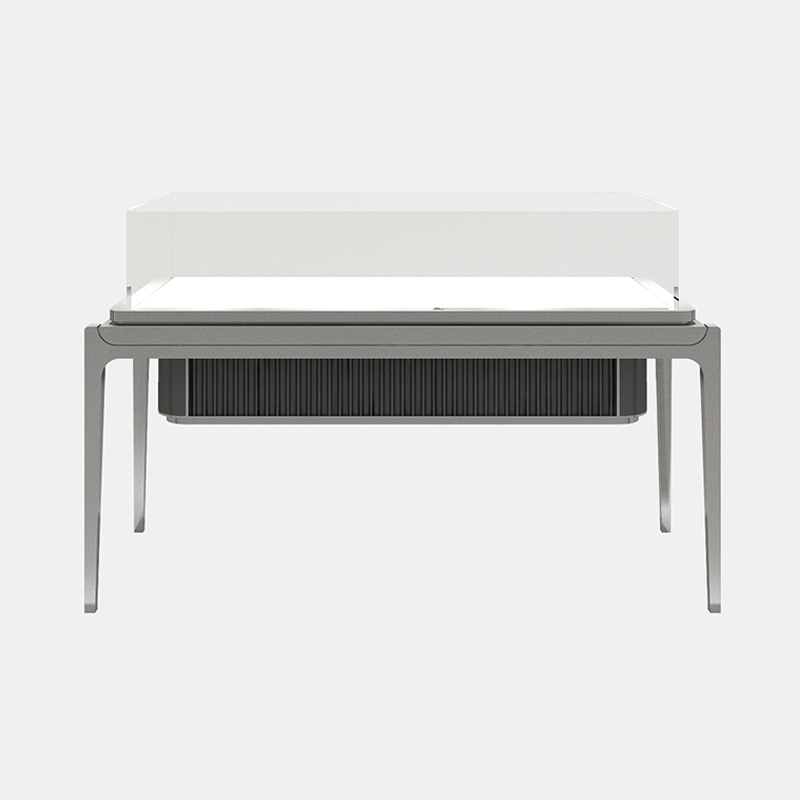
Two showcase panels can look identical in a photo and behave nothing alike after eighteen months of daily cleaning, door slamming, and spotlight heat. The difference usually comes down to one line on the purchase order that nobody argued about: "clear glass."
Here is the practical answer up front. For a retail glass display showcase, specify low-iron tempered glass at 8 to 10 mm for the front and doors, laminated glass anywhere the public can strike or lean on the surface, and lock hardware matched to the panel thickness. Lighting, layout, and finish can still be adjusted late in a project. The glass cannot — tempered panels are cut, drilled, and polished before toughening, so a wrong dimension is a remake, not a modification.
What follows is what actually drives clarity, safety, and cost in a glass display showcase, drawn from how these units are specified and built for jewelry, watch, cosmetics, and museum interiors.
Content
A showcase panel has three jobs at once: let light through without shifting the colour of what is inside, hold its shape under load and impact, and allow staff to open, clean, and restock hundreds of times a year. Glass type decides all three. "High clarity" is a marketing phrase, not a specification — the number behind it is visible light transmittance, and the behaviour behind it is how the panel fails.
| Glass type | Common thickness | Behaviour when struck | Where it earns its cost | Relative cost |
|---|---|---|---|---|
| Annealed float glass | 4 to 6 mm | Large sharp shards | Framed back panels, low-traffic areas | Lowest |
| Heat-tempered (toughened) | 8 to 10 mm | Crazes into small blunt pieces | Doors, fronts, shelves | Low to mid |
| Laminated (glass + PVB + glass) | 8.8 to 10.8 mm | Cracks but stays in the frame | Public-facing panels, museum cases | Mid |
| Low-iron ultra-clear | 8 to 10 mm | Same as its base type | Diamonds, gemstones, watches | High |
| Anti-reflective coated low-iron | 6 to 8 mm | Same as its base type | Single high-value pieces, vitrines | Highest |
Standard clear float glass carries a faint green edge that tints white gold and colour-graded diamonds. Low-iron glass removes most of that green cast, which is why jewelry counters pay for it. The chart below shows typical figures quoted in glass supplier datasheets; exact values move with thickness and coating.
Tempered glass is finished before it is toughened. Once a panel goes through the furnace, it cannot be cut, drilled, or re-polished — any attempt shatters it. That single fact explains most showcase delays, and it is the reason drawings deserve more attention than fabric swatches.
Put these on the drawing before approval:
Cut tolerance is typically around plus or minus 1 mm, which sounds generous until a cabinet is installed against a wall that is out of square by 15 mm over three metres. Measure openings in three places — top, middle, bottom — and specify to the smallest. Nickel sulphide inclusions can make tempered panels break spontaneously months after installation; heat-soak testing reduces that risk considerably, though it does not eliminate it. On projects with long lead times and expensive interiors, the test is cheap insurance.
Two failures show up again and again: glare on the glass that hides the product, and heat that slowly discolours it. Both are design problems, not product problems.
Recess the LED strip 30 to 50 mm behind the front edge so the light rakes across the display instead of bouncing into the viewer's eye. For gold and diamonds, 3000 to 3500 K with a colour rendering index of 90 or above keeps metal warm and stones accurate; silver and stainless steel read better closer to 4000 K. Keep the driver out of the light chamber, use dimmable drivers where cases sit near windows, and specify 24 V strip rather than constant-current line voltage for easier replacement.
Illuminance targets separate retail from conservation. Museum guidance widely adopted after CIE 157:2004 caps sensitive works on paper and textiles near 50 lux and most paintings near 200 lux, while retail counters routinely run four to five times higher. Neither figure is a rule for every project, but mixing them up is expensive.
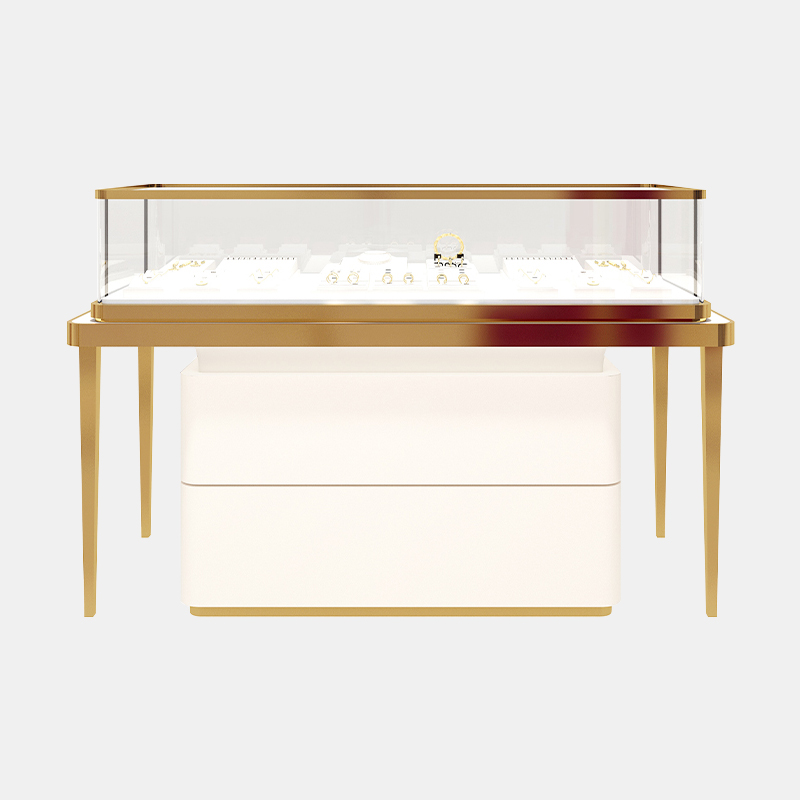
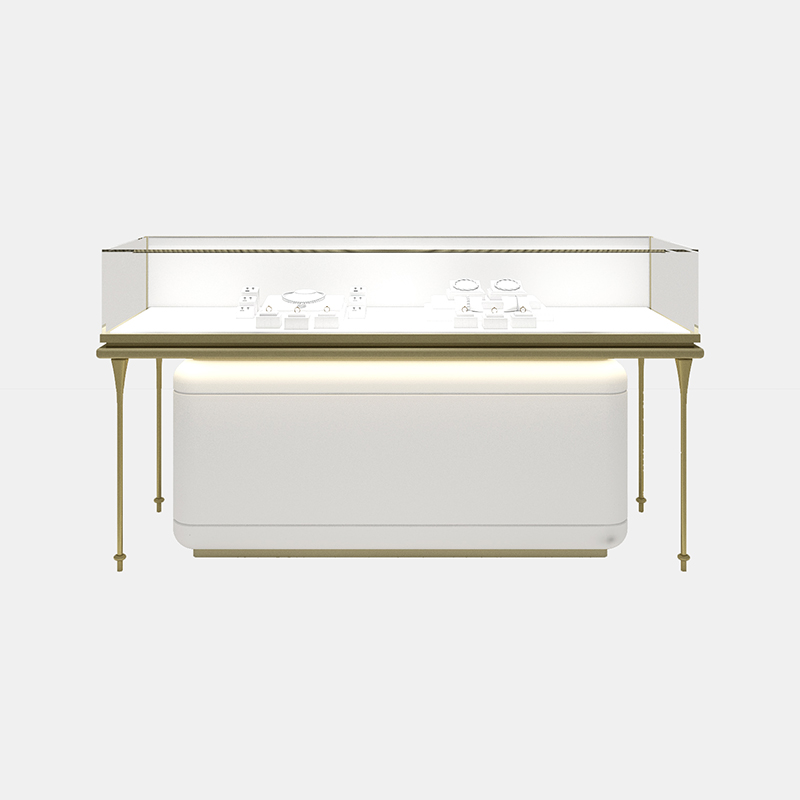
A unit built around an integrated light chamber and a serviceable driver bay removes most of the guesswork later:
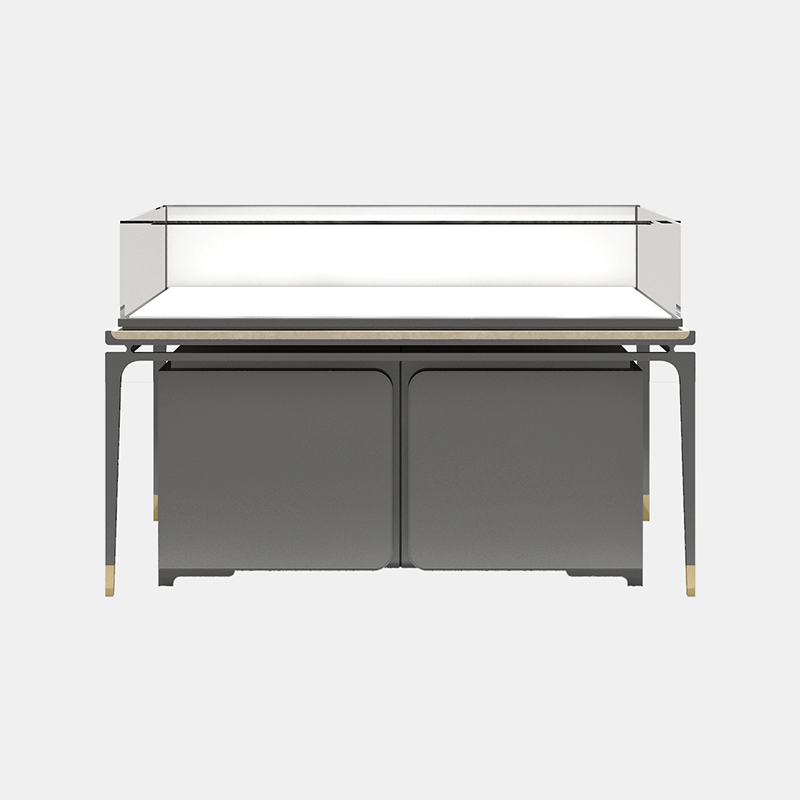 JR-S201 Jewelry Display Cabinet with Integrated LightingA customizable jewelry display cabinet with transparent glass, pearlescent finish, and built-in lighting, suited to protected illuminated presentation in sales settings.View Product →
Lock bodies are sized for a specific glass thickness. An 8 mm cam lock will not seat correctly in a 10 mm door, and a multi-point central lock changes the door frame geometry entirely. Decide the lock before the drawing is frozen, not after.
Showcase dimensions only work in relation to the body standing in front of them. Counter-height cases sit between 900 and 1000 mm, which puts the display surface just below a standing customer's hand. Tall cabinets run 1800 to 2400 mm, with the most valuable zone between 1400 and 1600 mm — eye level for an average adult. Main aisles below 900 mm force customers to turn sideways, and 1200 mm is comfortable where two people pass.
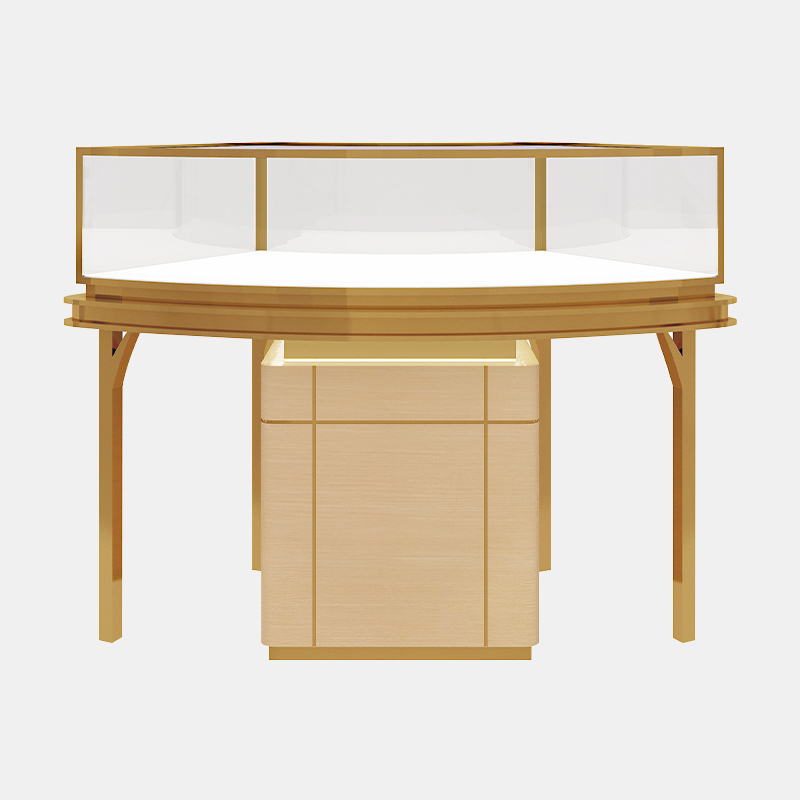
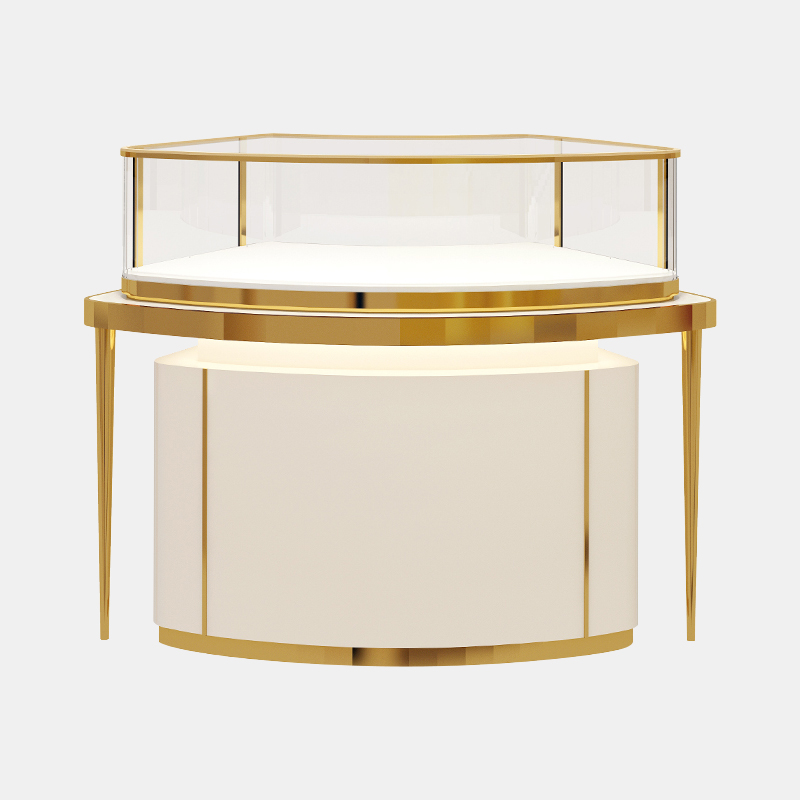
Curved glass solves a specific problem: pillars, corner sites, and island counters where a straight case leaves dead space. A curved front also spreads reflections across a wider arc, which softens glare from ceiling downlights. The trade-off is cost and lead time, because curved tempered glass needs dedicated tooling and cannot be re-cut.
Where a curved profile is the right answer, a shaped unit such as this watch display case shows how the geometry is handled:
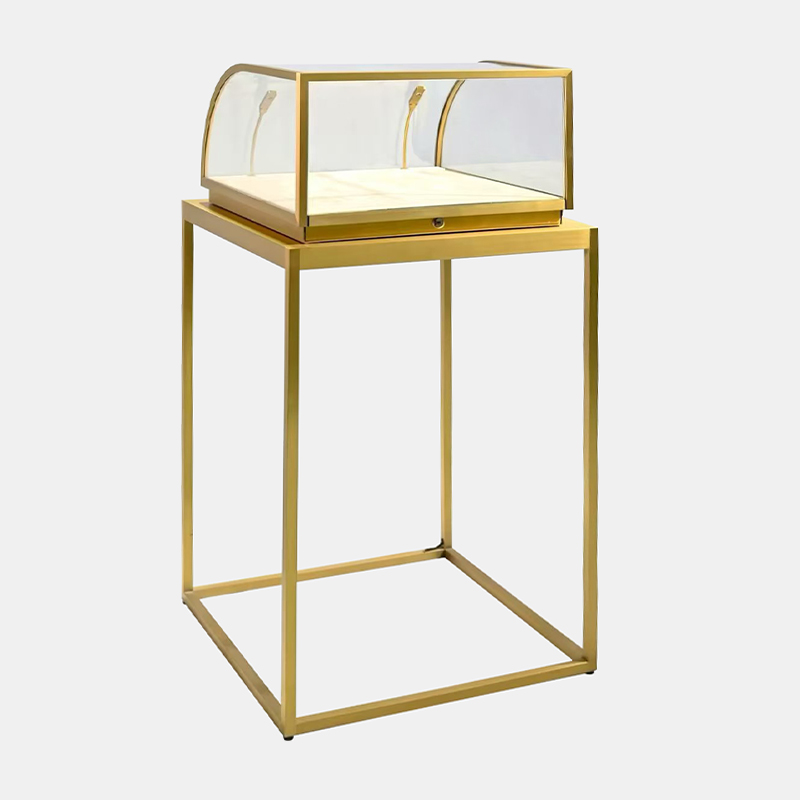 WD-102 Curved Glass Watch Display CaseA customizable watch showcase with curved glass that reduces reflection and makes displays clearer, useful where a shaped profile suits the store layout.View Product →
Standard units win on price and delivery. Custom units win when the store has an awkward column, a brand standard that specifies a finish no catalogue carries, or a lease that ends in four years. The comparison below is the one most retail teams actually need.
| Factor | Standard unit | Custom glass showcase |
|---|---|---|
| Dimensions | Fixed module sizes | Built to the millimetre |
| Glass specification | Usually one default type | Chosen per panel |
| Lighting | Basic strip, single colour temperature | CRI-rated, dimmable, zoned |
| Brand match | Limited to available finishes | Finish, hardware, and logo matched |
| Lead time | Shorter | Longer, due to drawings and samples |
| Risk profile | Fits "close enough" | Fits the space, but needs accurate site data |
The custom route lives or dies on the drawing approval stage. A useful process looks like this: site measurement in three places per opening, a signed dimension sheet, a finish sample approved in person under the real store lighting, then a single pilot unit installed and inspected before the rest of the batch is released. Skipping the pilot is how a rollout discovers that a 10 mm door swings into a neighbouring counter.
The customization process behind these units, from drawing to installation, is documented here: SUNTOP's customization process.
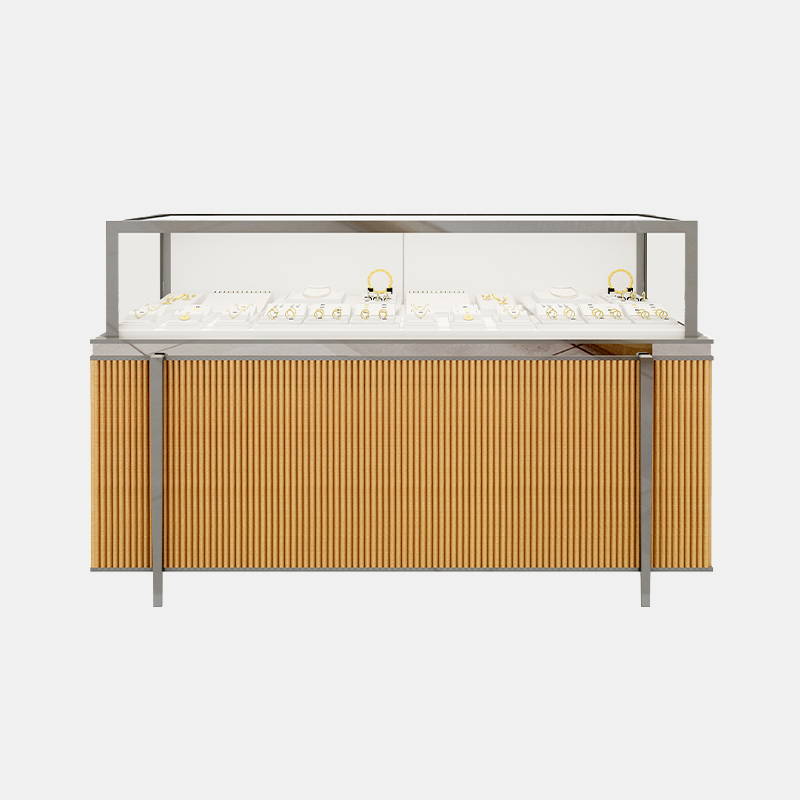
A representative custom build, the CM101 glass cabinet, shows the panel-level specification approach in practice:
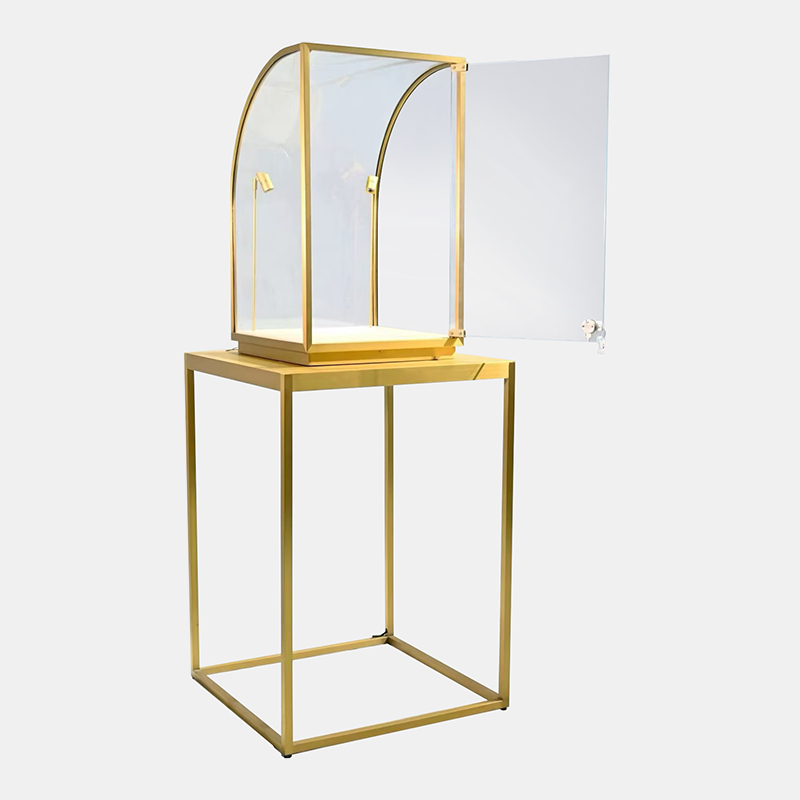 CM-101 Customised Glass Display and Storage CabinetA highly flexible glass cabinet customizable in materials, shapes, colors, and sizes, suited to displaying valuables in home or business settings.View Product →
Four questions separate a capable showcase supplier from an assembler. Ask for the glass tempering certificate and heat-soak records, not a photo of a glass panel. Ask which LED driver and CRI rating is used, and what happens when one fails. Ask how the unit is packed — glass travels badly in thin cardboard, and corner protection matters more than foam thickness. Ask who installs, and who returns if a door drops six months later.
Zhejiang Suntop Commercial Display Products Co., Ltd. was founded in 2009. The factory covers 25 acres with a building area of 25,000 square meters, and annual production capacity reaches 300 projects. Main customer types include jewelry, cosmetics, watches, and museums. The company adheres to a highly specialized spirit and strives for excellence in the creation of every display space cabinet, aiming to reflect the customer's brand concept and value through high-quality display spaces. After 16 years in the display props industry, Suntop has received provincial high-tech enterprise and credit enterprise awards and holds relevant industry technology patents that support product quality.
For teams comparing suppliers, past installations are more informative than brochures — the jewelry project archive shows how glass, lighting, and finish were resolved across different store formats: SUNTOP jewelry showcase projects.
8 mm tempered glass suits most fronts and doors. Go to 10 mm for panels wider than roughly 900 mm or anywhere customers lean on the surface. Shelves and back panels at 6 mm are usually sufficient.
Tempered resists impact and breaks into blunt pieces but can leave the frame. Laminated cracks and stays in place. Public-facing panels often use both properties in one toughened-laminated panel; museums usually specify laminated.
Glass type, edge polishing, CRI rating of the lighting, lock grade, packing, and installation are rarely quoted the same way. Ask for a panel-by-panel breakdown so the comparison is like for like.
Yes, if there is a light chamber and space for a driver. Retrofitting into a sealed unit risks trapped heat and pinched cables, so check the internal clearance first.
Custom orders run in weeks rather than days after drawing approval. Heat-soak testing, coated glass, and curved panels add time, so confirm the schedule in writing before signing.
Use a pH-neutral, ammonia-free cleaner with a microfibre cloth. Avoid abrasive pads and never spray directly into lock or lighting gaps, where liquid collects and corrodes contacts.


 ਪੰਜਾਬੀ
 English
 عربى
 русский
 中文简体