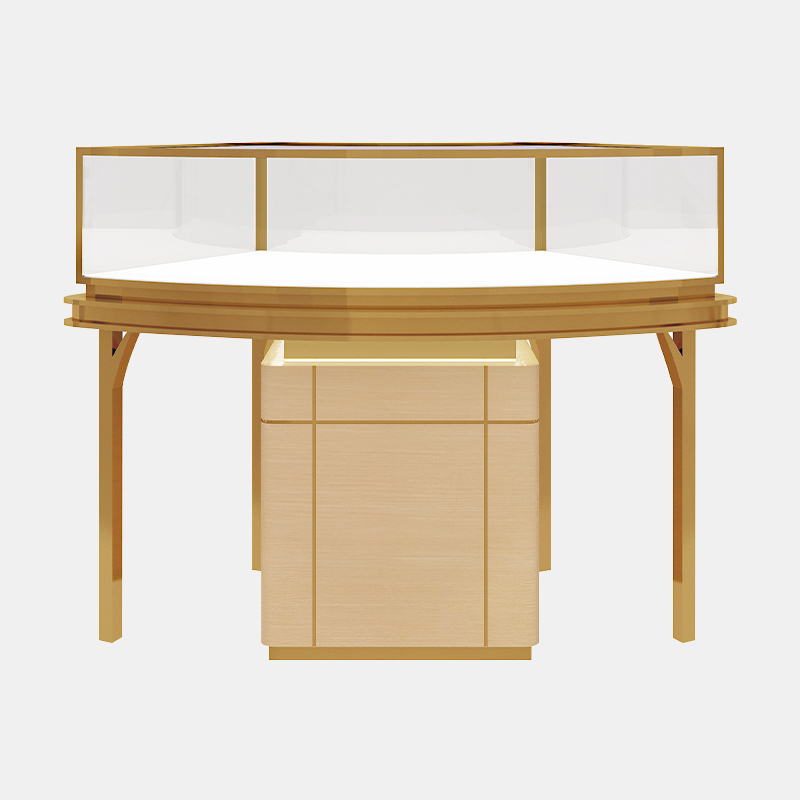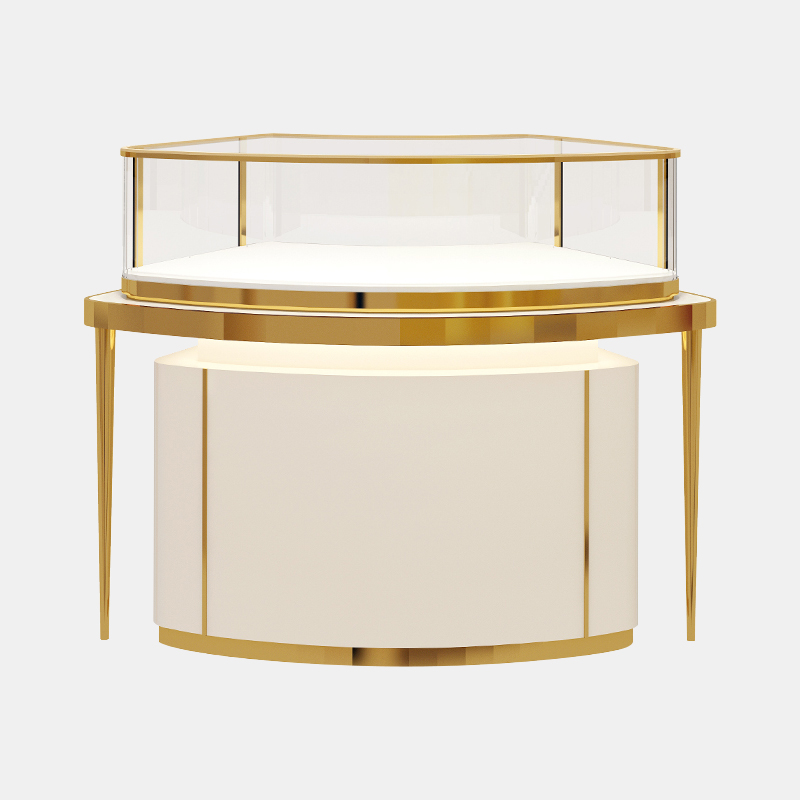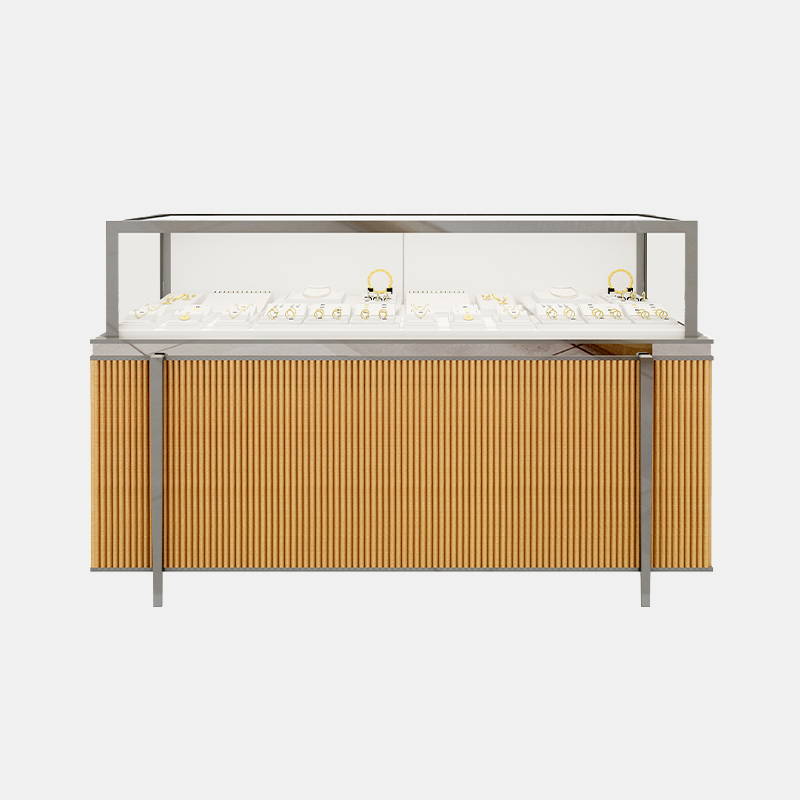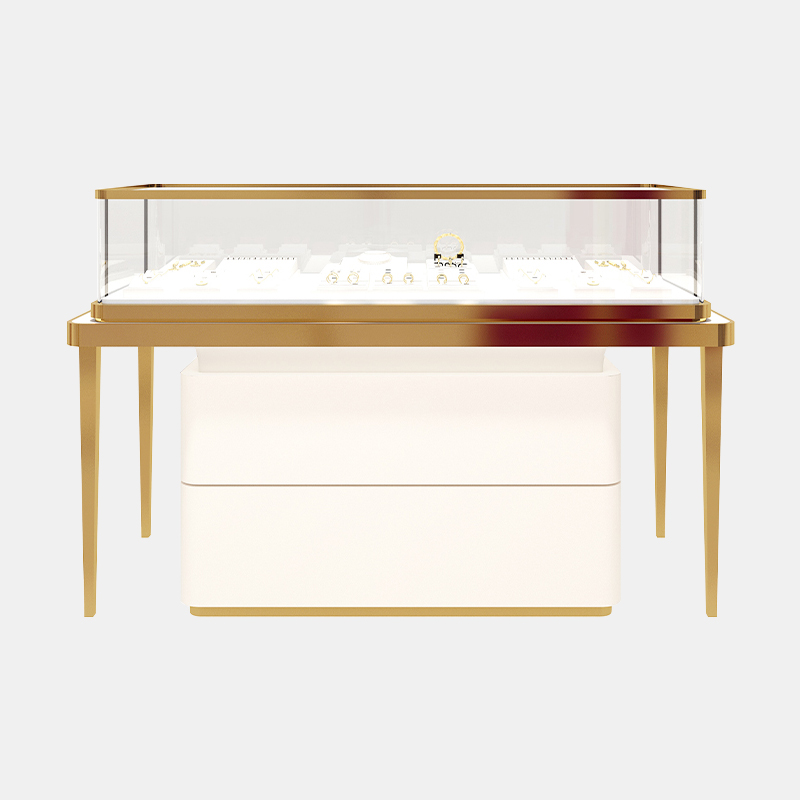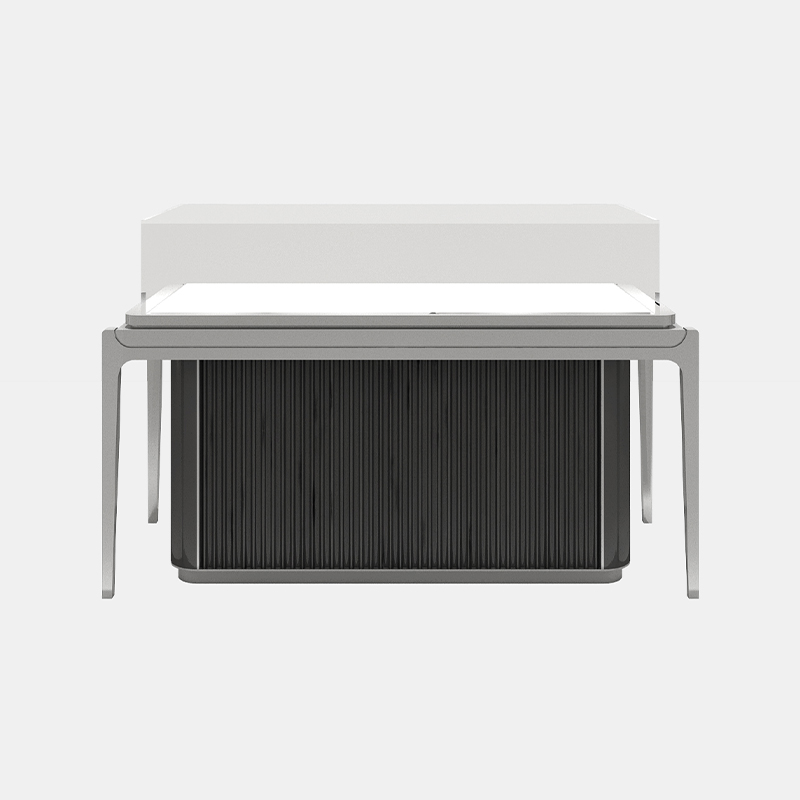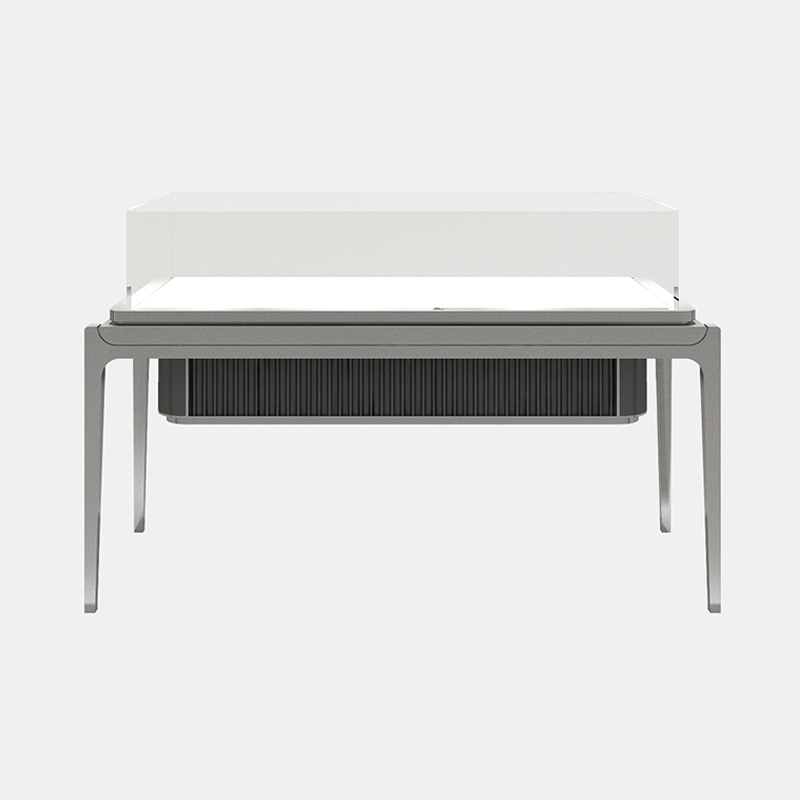
A jewelry store fit-out usually stalls at the same point: the case schedule. The floor plan is signed off, the ceiling lighting is priced, and then someone asks whether the counters should be quarter-vision or full-vision, whether the tall wall units have to match the island, and what happens if a glass panel arrives chipped two weeks before opening.
Most of those questions become easier once you stop treating a retail jewelry display case as furniture and start treating it as three jobs in one product: presenting the piece under the right light, protecting it behind locked glass, and surviving the daily open-and-close cycle for years. When those three are solved, the visual side usually falls into place faster than the other way round.
What follows is a practical buying guide drawn from custom case projects—covering case types, materials, lighting specifications, security hardware, sampling and inspection—written for brand owners, store planners and purchasing managers who have to sign off on the order.
Content
The most common sourcing mistake is starting from a Pinterest board. A case that looks right in a render can be wrong for the merchandise it has to hold: too shallow for bridal sets on trays, too tall for a seated sales associate, or too open for a store that runs on self-selection.
Before you request drawings, write down four things. First, the merchandise categories and the largest single piece you will ever display, because tray depth and shelf spacing follow from it. Second, the price band, since high-value bridal and fine gold usually justify more glass and better locks. Third, the service model—staff-assisted counters need a different working height and a different lock position than open-format fashion jewelry. Fourth, the storage requirement, because every case that hides stock below the display reduces how often staff walk to the back room.
A short brief along those lines gives a manufacturer enough to propose a layout instead of guessing from a mood board.
Retail jewelry display cases fall into a small number of functional families. The naming varies between suppliers, but the geometry does not.
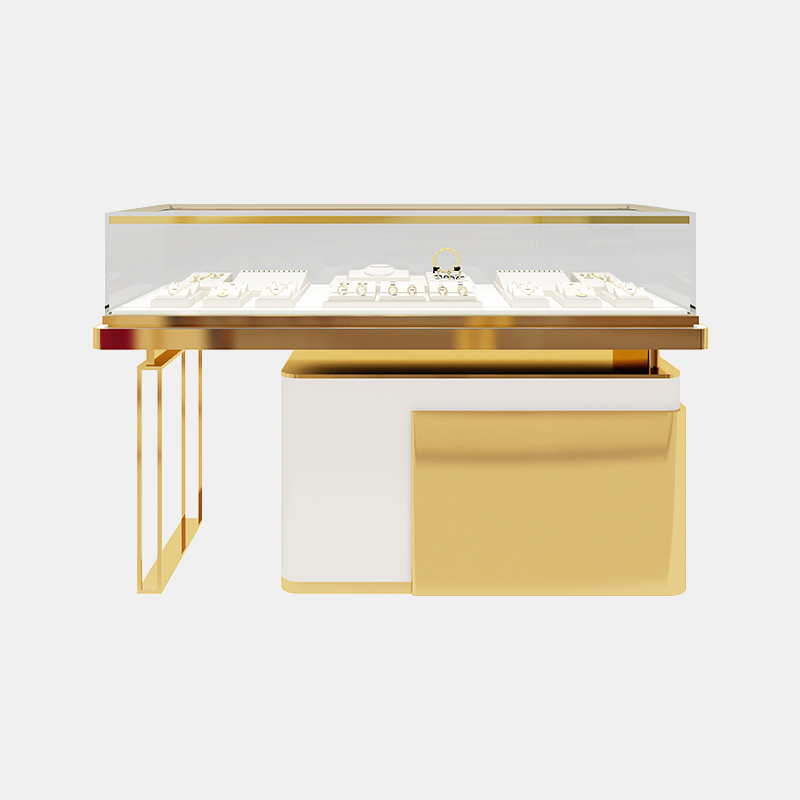
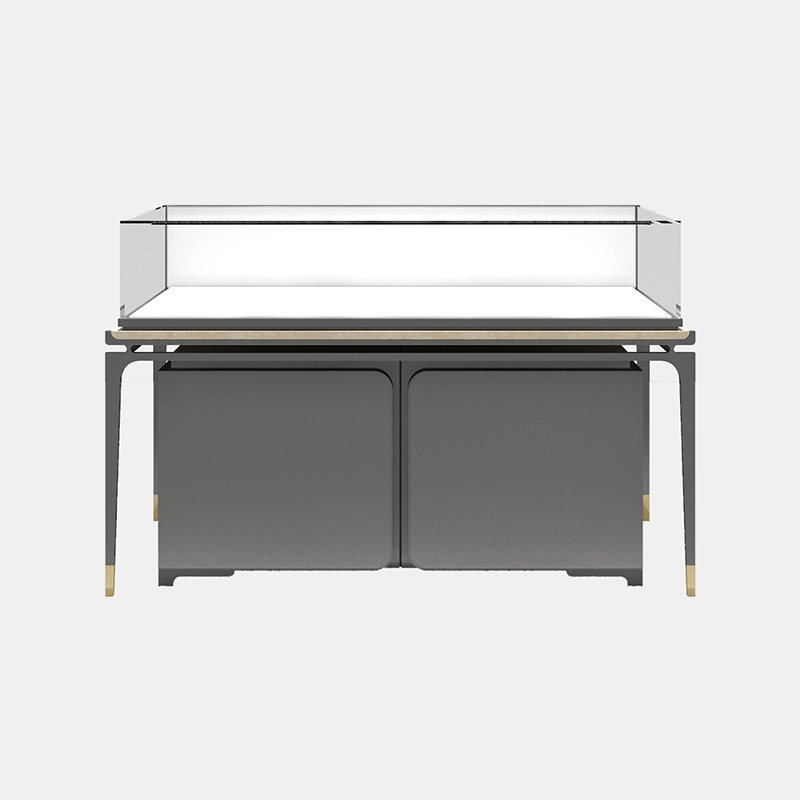
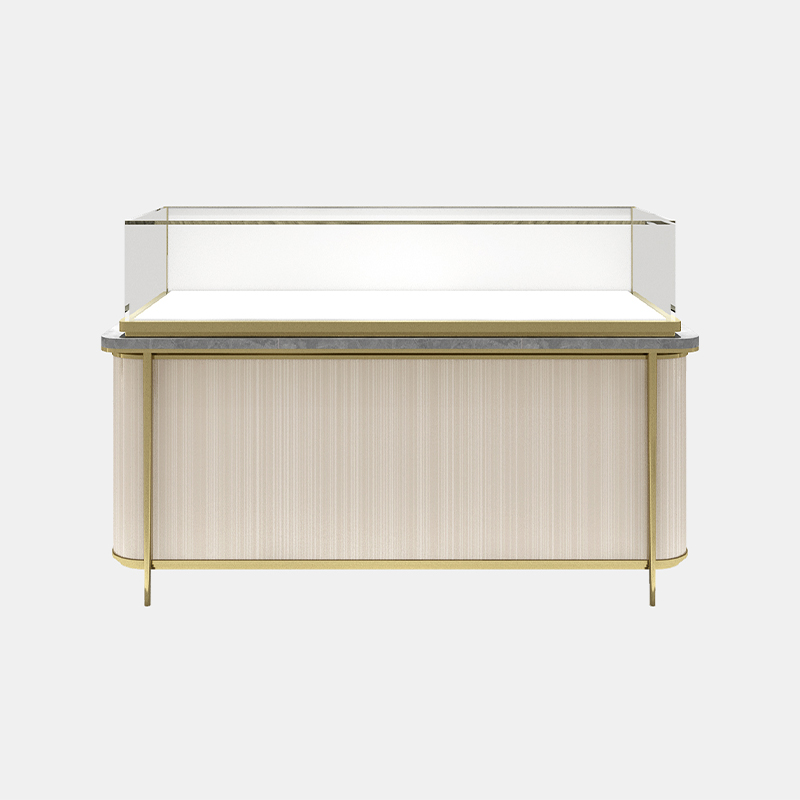
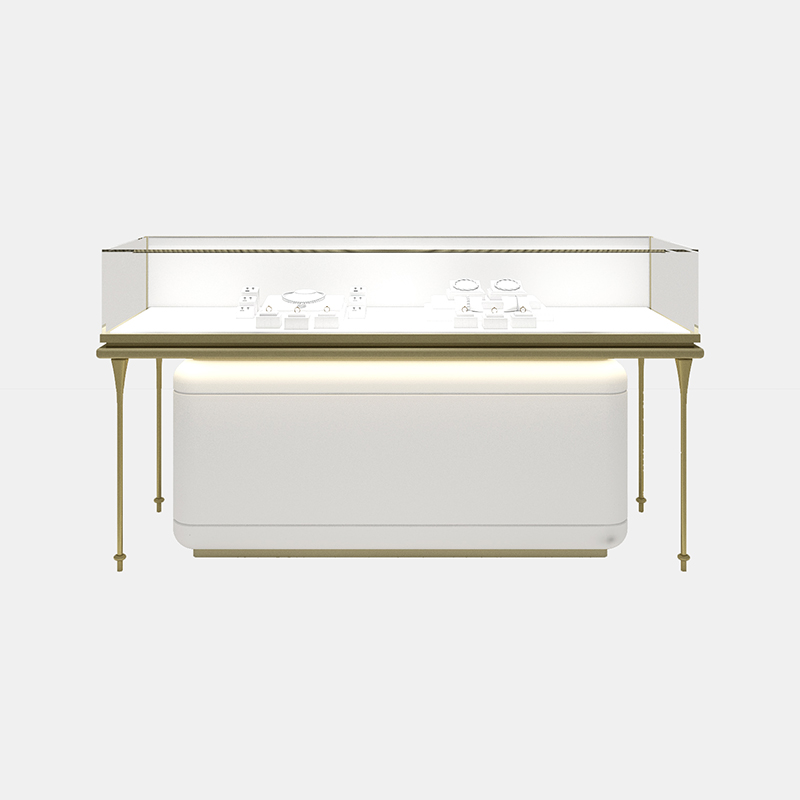
Low counters and sales cases sit at roughly 900–1000 mm working height and carry most of the transaction activity. Tall cabinets run from about 1800 mm to 2200 mm and use vertical wall space for volume, brand graphics and window impact. Islands and combination runs anchor the center of the floor and combine high and low modules so a customer can browse standing up and then sit down. Pedestals isolate a single high-value piece. Countertop units add density on top of an existing counter without changing the floor plan.
Most real stores mix two or three of these, which is why combination systems are popular: a low counter plus a connected tall unit gives display area, storage and a continuous visual line in one footprint. A typical example is a
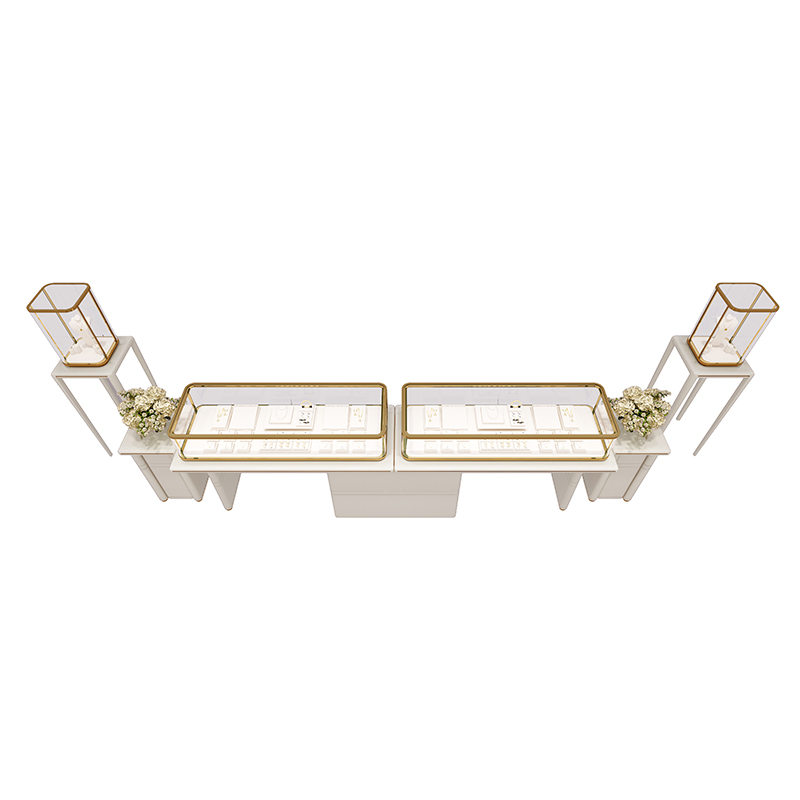 JR-C101 Jewellery Combination Display and Storage CabinetCombination counter-and-tall unit with drawers, compartments and glass-and-velvet display areas for jewellery shops seeking display, storage and a continuous visual line.View Product →
, where the lower section handles customer-facing display and the upper section carries branding and back-stock.
| Case type | Typical placement | Suits | Confirm before ordering |
|---|---|---|---|
| Low sales counter | Perimeter run, facing aisles | Bridal, gold, everyday fine jewelry | Working height, drawer depth, lock position |
| Tall cabinet | Wall line, window, brand zone | Volume display, watches, gifting | Total height vs. ceiling and signage, anchoring |
| Combination run | Center floor or long perimeter | Mixed categories, full store packages | Module alignment, cable routing, joint detail |
| Pedestal | Feature spot, entrance, campaign zone | Single hero piece, seasonal launches | Internal light access, base weight, cable exit |
| Countertop unit | On existing counters | Rings, earrings, add-on density | Footprint, height blocking sightlines, anti-slip base |
If you are comparing layouts, browsing finished jewelry store display projects is often faster than reading specification sheets, because it shows how high and low modules behave together in an actual sales floor.
Case bodies are usually built from lacquered MDF, wood veneer, stainless steel or a glass-and-metal frame. Each choice shifts cost from the purchase price to the maintenance budget in a different way, and the right answer depends on traffic, cleaning routine and how long you intend to keep the fixture.
| Material | Strengths | Watch-outs | Best fit |
|---|---|---|---|
| Lacquered MDF | Wide color matching, smooth finish, cost-efficient for large runs | Edge chipping on impact; humidity control matters in transit and storage | Brand-color counters, painted interiors |
| Wood veneer / solid wood | Warm appearance, repairable surface, strong in heritage-style interiors | Grain and shade variation between batches; needs consistent finishing | Boutique and flagship interiors |
| Stainless steel | High durability, easy cleaning, slim profiles, modern look | Fingerprints on polished surfaces; weld and brush direction must be specified | High-traffic stores, watch and modern concepts |
| Glass-dominant frames | Maximum visibility, lighter visual weight | Cleaning frequency, edge protection, structural bracing | Window units, islands, open-plan stores |
Two details are worth writing into the order: the finish reference (a physical color chip, not a screen color) and the hardware brand or grade for hinges, drawer runners and locks. Those two items account for a large share of the difference between a case that feels solid after three years and one that does not.
Lighting is the part of a case order most often left to the last minute, and it is the part customers notice first. Three numbers control most of the result.
Layout matters as much as the diode. Front-edge lighting throws light toward the customer and can create glare on horizontal glass; concealed top lighting angled back toward the display surface shows the piece with less reflection. Dimming on separate circuits lets a store tune brightness between day and evening without re-wiring.
Heat is the quiet risk. LED runs cooler than halogen, but a poorly ventilated compartment still shortens driver life and can stress adhesives and lacquer. Ask where the heat path goes and how the strip is serviced without dismantling the case. A case supplied with an integrated system, such as this
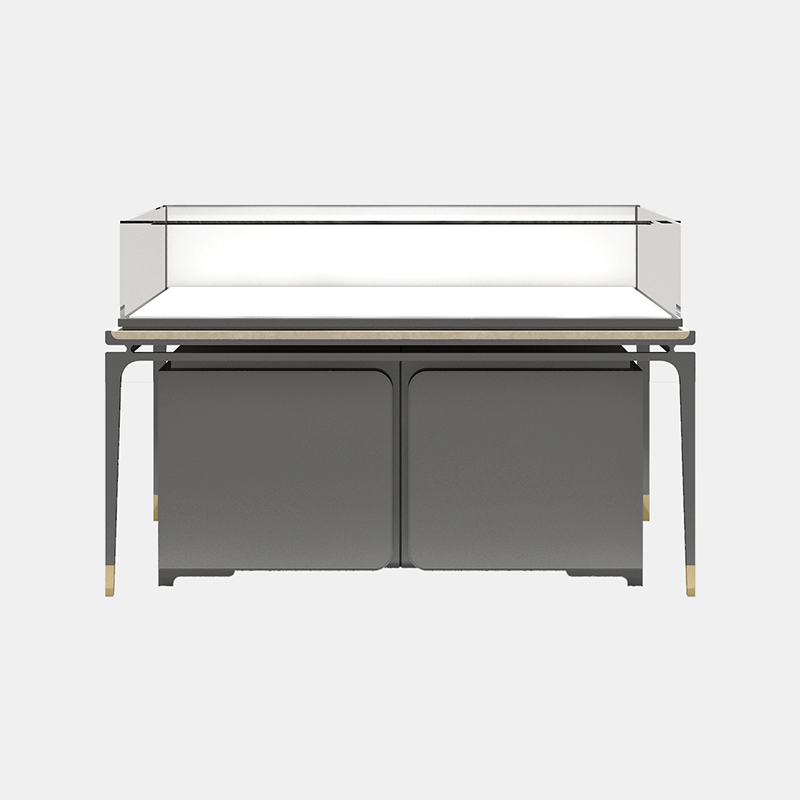 JR-S201 Jewellery Display Cabinet with Integrated LightingIlluminated glass showcase with pearlescent lacquer finish and integrated lighting, suited to jewellery retail displays where presentation and protection of precious items matter.View Product →
, should come with a wiring diagram showing circuit grouping and driver access.
Tempered glass is the default for retail jewelry display cases, commonly specified to a regional standard such as EN 12150 for thermally toughened soda lime silicate safety glass or ASTM C1048 for heat-treated flat glass. Thickness usually falls between 6 mm and 8 mm depending on panel size and span; low-iron glass is worth the extra cost where color accuracy matters, because standard float glass carries a faint green edge tint.
Door design drives daily behavior. Sliding doors save aisle space but need a clean track and a stop that does not loosen; hinged doors give better access for tray work but need clearance in front. Lock choice should follow the merchandise value: a simple cam lock per door is common, while central locking or keyed-alike systems reduce key management headaches across a multi-case store.
Drawings hide small problems well. Check these on the dimension sheet, not on site:
Tall units are where mistakes get expensive, because height affects both freight and installation. Tray-based designs—a
 JR-H211 Tall Jewellery Display Cabinet with TraysTall glass-door cabinet with flexible shelves and trays plus lighting, helping shoppers view varied jewellery details at eye level without deepening the aisle footprint.View Product →
, for example—let a tall cabinet carry small items at eye level without pushing the case deeper into the aisle.
On a custom order, the pre-production sample is the cheapest risk control available. Approve it against a written checklist rather than a feeling: finish color under the specified lighting, hardware brand and action, glass clarity and edge quality, drawer alignment, light output and color temperature, and the position of every lock.
During production, three checkpoints cover most failures. Incoming material inspection catches panel thickness and finish defects early. In-line inspection catches assembly and wiring issues while the case is still open. Pre-shipment inspection confirms function, lighting, leveling, cleanliness and packing—corner protection, foam between glass and frame, and crates that can survive a stacked container.
Illustrative process diagram, not a schedule commitment.
Retail jewelry display cases rarely fit a stock SKU once branding, floor plan and merchandise mix are in play. That pushes most projects into OEM or ODM territory, where the supplier takes a store layout and produces drawings, samples and a production run against it.
Ask three questions when evaluating a factory. Can they show drawings and shop-floor capability rather than only catalog photos? Who handles the interface between the case and the store fit-out—electricians, installers, shopfitters? And how do they manage color consistency across a long run and a later re-order? Our own plant in Zhejiang covers roughly 25,000 m² of production and assembly space and has supplied jewelry, watch, cosmetics and museum display projects since 2009, including properties in the Middle East.
For buyers who need modified dimensions, non-standard finishes or brand-specific detailing, a dedicated custom display cabinet manufacturing process is usually the fastest route: concept drawings, a priced bill of materials, a sample for approval, then production and packing.
Illustrative diagram of a typical counter-height case assembly; component layout varies by model.
A low counter is built around a working surface of roughly 900–1000 mm so staff can serve customers across it, making it the main transaction fixture. A tall case uses vertical height of about 1800–2200 mm for volume display and branding, and usually needs anchoring and more careful freight planning.
Tempered safety glass of 6–8 mm is standard, often specified against EN 12150 or ASTM C1048. Low-iron glass is chosen where color accuracy is critical. Panel size, span and local safety requirements determine the final thickness, so confirm it on the drawing.
Around 3000K for gold and warm-toned pieces, 4000K for diamond, platinum and silver, with a CRI of 90 or higher. Ask for dimmable circuits, accessible drivers and a wiring diagram before production starts.
Yes. Custom work typically covers dimensions, body material, lacquer or veneer color, lighting arrangement, glass configuration, lock placement and internal tray layout. Brand guidelines, a floor plan and a merchandise list are enough to start drawings.
Both depend on the number of unique modules, finish complexity and whether a new sample is required. Small single-store orders and multi-store rollouts follow different schedules, so MOQ and lead time are quoted per project rather than published as a fixed figure.
Approve a pre-production sample against a written checklist, then require in-line and pre-shipment inspection covering finish color, hardware action, glass clarity and edges, drawer alignment, light output, lock function, leveling and export packing.
If you are planning a store opening or a re-fit and need case dimensions, finish options or a sample schedule, send your floor plan and merchandise list to the manufacturer for a drawing-based quotation. Clear inputs at that stage reduce revisions later, and a factory that asks detailed questions up front is usually the one that delivers on time.


 ਪੰਜਾਬੀ
 English
 عربى
 русский
 中文简体