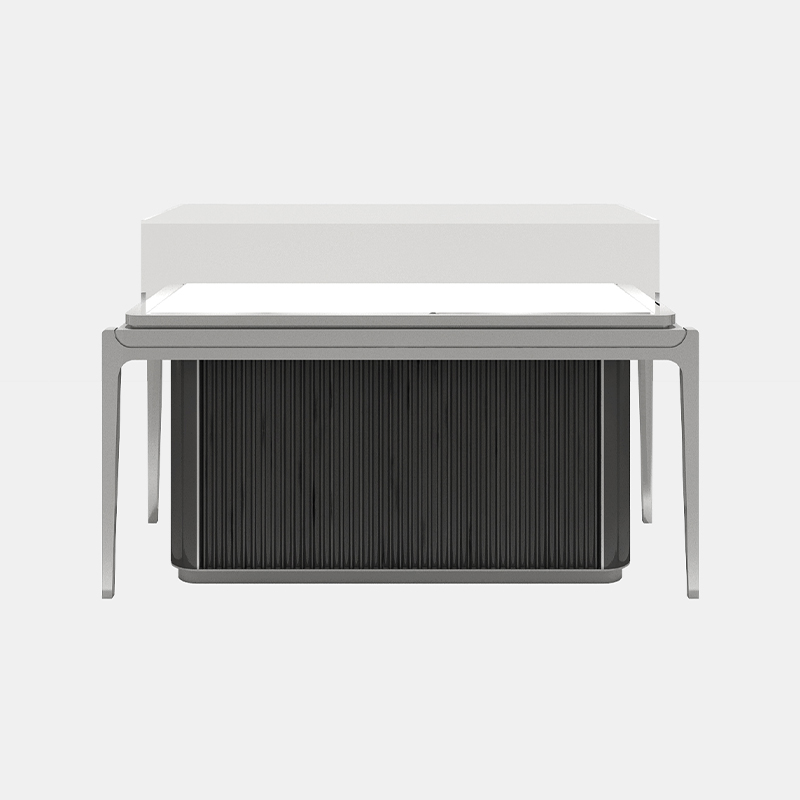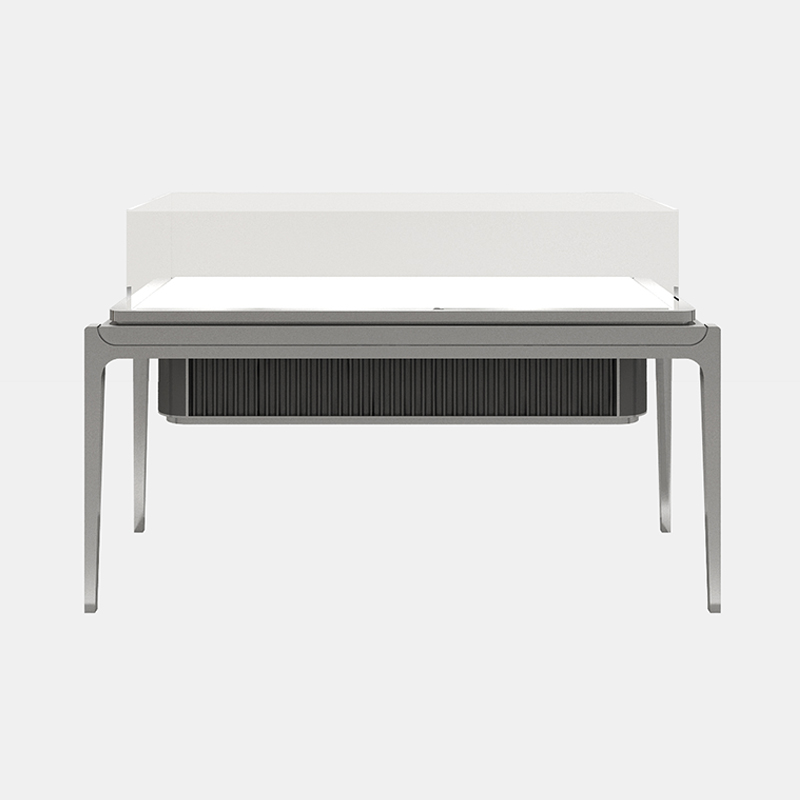
Can Customized Display Showcases Improve Sales Performance?
Home / News / Industry News / Can Customized Display Showcases Improve Sales Performance?

Can Customized Display Showcases Improve Sales Performance?

2026.03.26
Industry News

Direct answer: Yes — customized display showcases measurably improve sales performance. Retail research consistently shows that purpose-designed product displays increase customer dwell time by 20 to 40%, boost product interaction rates by up to 35%, and contribute to conversion rate improvements of 15 to 25% compared to generic or mismatched display furniture. The key mechanism is simple: when a showcase is designed around the specific product, brand identity, and customer journey of a store, it positions products at the right height, angle, and lighting condition to maximize visual engagement and purchasing intent.

How Display Design Directly Influences Buying Behavior

The relationship between physical display environment and purchasing decision is well-documented in retail psychology. Approximately 70% of in-store purchase decisions are made at the point of display — not in advance. This means the display itself is an active sales tool, not a passive storage solution. A customized display showcase that is designed for the specific product category, customer demographic, and store positioning converts passive browsers into active buyers at a significantly higher rate than standard off-the-shelf display furniture.

Three display variables consistently show the strongest correlation with sales outcome: product visibility (can the customer see and appreciate the product from the natural walking path through the store?), accessibility (can the customer interact with the product without assistance?), and perceived value alignment (does the showcase communicate the right quality tier and brand positioning for the product it contains?). A customized showcase can be engineered to optimize all three simultaneously for a specific product and retail context; a generic unit typically compromises on at least one.

Average Sales Uplift: Customized vs Standard Display Showcases by Retail Category (%)
Jewelry and watches
+32%
Cosmetics and skincare
+27%
Consumer electronics
+23%
Apparel accessories
+20%
Specialty food / premium goods
+17%
General retail merchandise
+15%

Customized Display Showcase for Retail Store Design: Key Design Principles

Designing a customized display showcase for retail store environments requires a structured approach that begins with the customer journey through the space, not with the showcase itself. The showcase is a response to defined display requirements — not the starting point of the design process.

Height and Sightline Engineering

The optimal display height for product visibility varies by product type and target customer demographic. Research in retail ergonomics identifies three display zones relative to standing customer height:

  • Eye-level zone (1.2 to 1.7 m from floor): The highest-converting position. Products at eye level receive the most visual attention and generate the highest conversion rates — typically 2 to 3× higher than products at floor level or above 1.8 m. Premium and featured products should always be positioned in this zone.
  • Reach zone (0.8 to 1.2 m): The second most effective position. Products here are easily accessible for handling without stooping or stretching, encouraging product interaction — which research shows increases purchase probability by up to 40% when customers physically engage with a product.
  • Low and high zones (below 0.8 m and above 1.7 m): Appropriate for larger items, alternative SKUs, or promotional stock. Lower engagement but still serve the role of communicating range depth to the customer.

A customized showcase can be designed with shelf heights and display tiers calibrated to maximize the proportion of featured products in the high-converting eye-level zone — something that off-the-shelf units with fixed shelf positions cannot accommodate for every product category.

Material and Finish Alignment With Brand Positioning

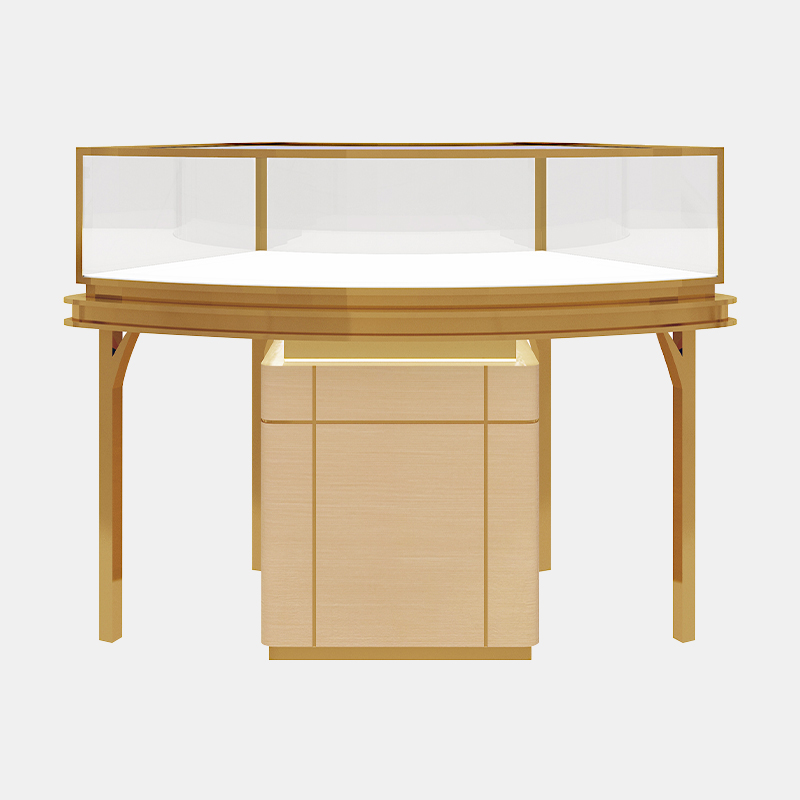
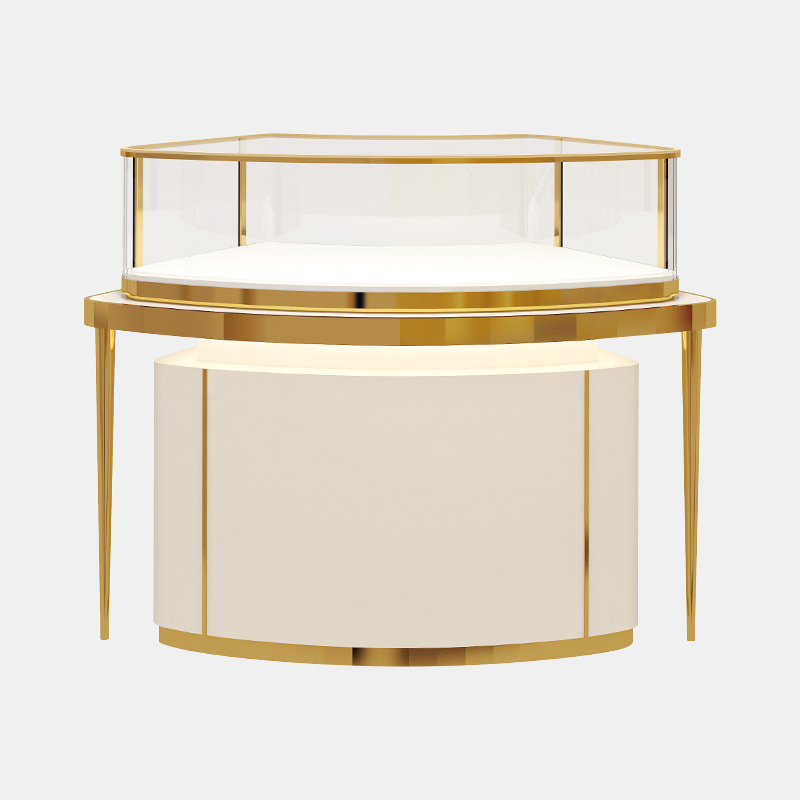
The material and surface finish of the showcase communicates the brand's positioning to customers before they read a single word of signage. A showcase built from brushed steel, tempered glass, and matte lacquered wood communicates premium quality; a showcase built from powder-coated steel with LED acrylic panels communicates modernity and technology. Misalignment between showcase aesthetic and product positioning — for example, a luxury perfume brand displayed in a wire grid unit — actively undermines brand perception and reduces conversion rates even when the products themselves are correctly positioned.

Integrated Lighting Design

Lighting within a custom showcase is not decorative — it is functional sales hardware. Studies measuring customer attention to products in retail environments show that well-lit products receive 30 to 50% more visual attention from passing customers than products in unlit or poorly lit displays. For customized showcases, specify lighting that:

  • Illuminates the product surface directly with minimum shadowing — particularly important for jewelry, watches, and cosmetics where surface detail and texture drive purchase decisions.
  • Uses color temperature appropriate to the product — warm white (2700–3000K) enhances gold metals, wood tones, and food products; cool white (4000–5000K) enhances silver metals, technology products, and cosmetic packaging.
  • Does not produce glare on glass surfaces that obscures product visibility for customers approaching from the primary viewing angle.

Glass Customized Display Showcase for Jewelry Shop: Why Glass Is Non-Negotiable

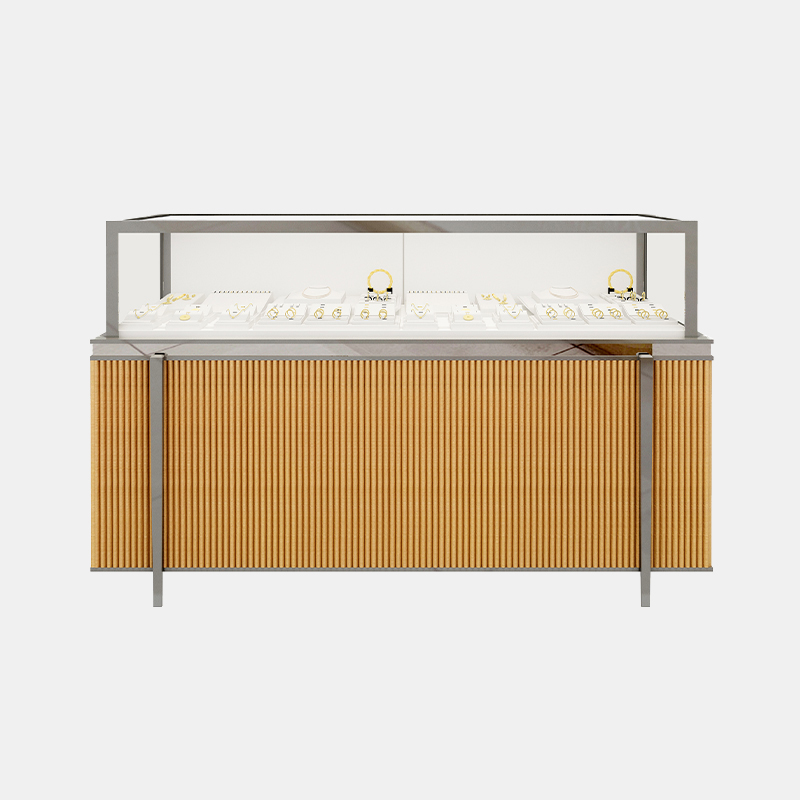
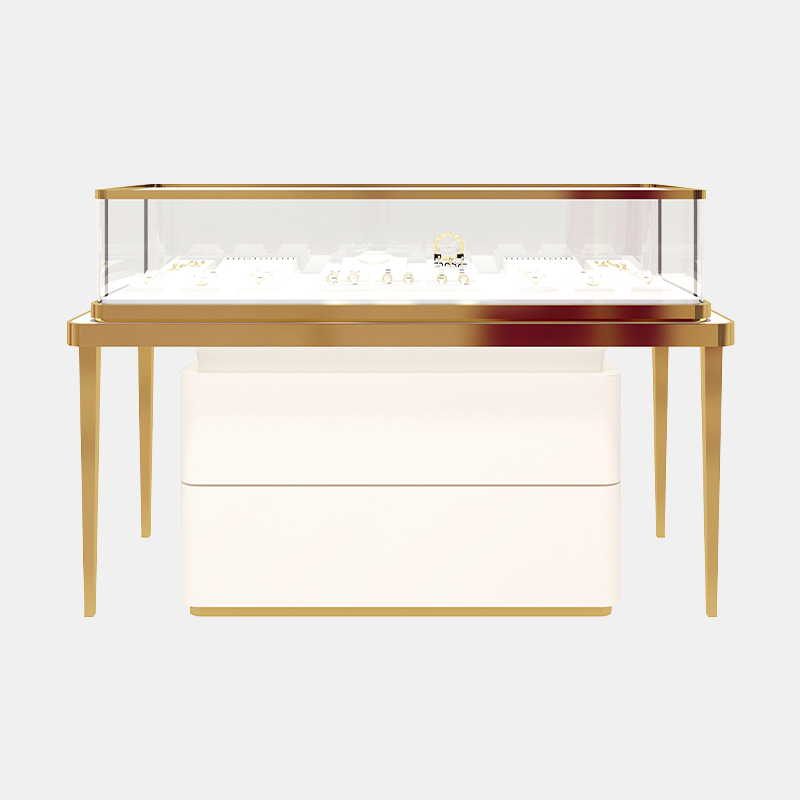
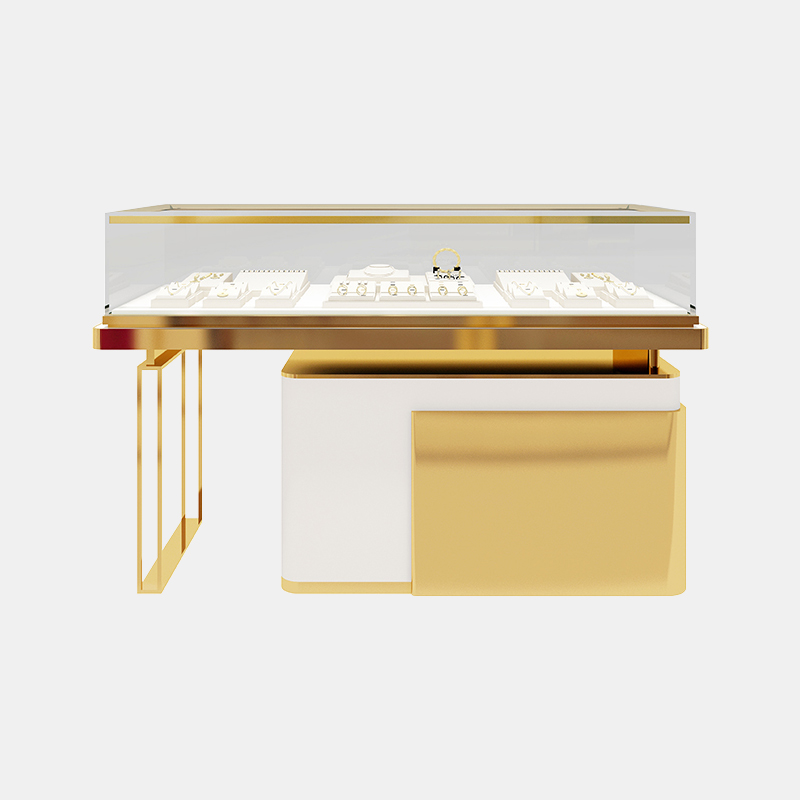
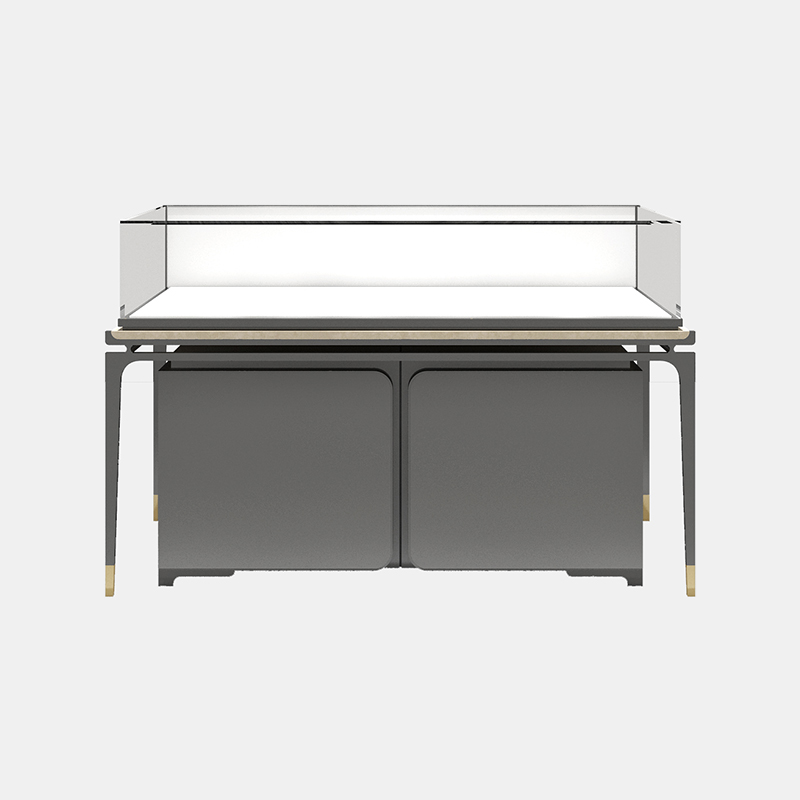
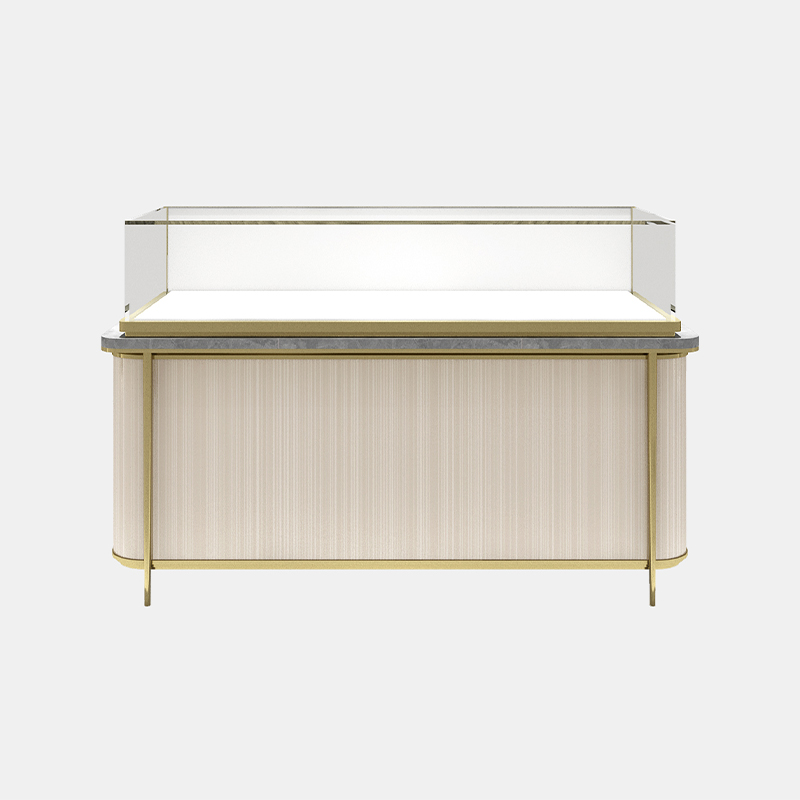
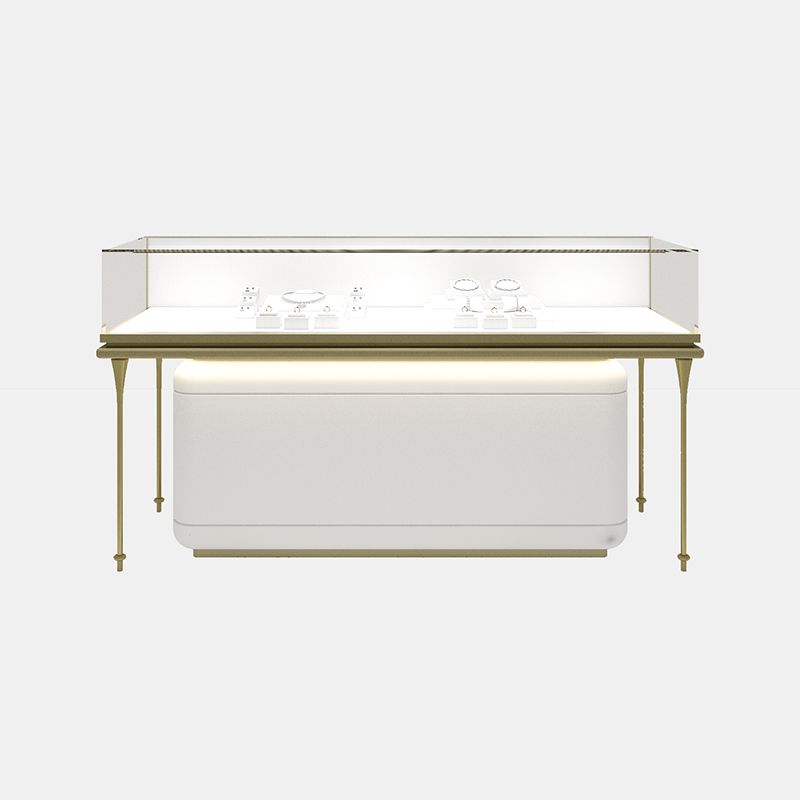
In jewelry retail, the display showcase is not merely furniture — it is the primary sales conversion environment. A glass customized display showcase for jewelry shop must simultaneously protect high-value inventory, present each piece at its best visual advantage, and facilitate the sales consultation process between staff and customer without creating physical or psychological barriers.

Glass Type and Visual Clarity

Not all glass performs equally in a jewelry showcase context. The key specification is optical clarity — the absence of green tint in the glass cross-section that distorts the appearance of diamonds, white metals, and pearls. Standard float glass contains iron impurities that produce a visible green cast visible at the glass edges and through the display floor. Low-iron glass (sometimes branded as "ultra-clear" or "extra-clear" glass) reduces iron content and produces 90%+ light transmission compared to approximately 82% for standard float glass — a difference clearly visible in side-by-side comparison, and directly affecting how diamonds and gemstones appear to customers viewing them through the case.

For jewelry showcases, specify low-iron tempered glass with a minimum thickness of 6 mm for display surfaces and 8–10 mm for structural panels. Tempered glass has four to five times the impact resistance of standard glass and, critically, fractures into small blunt fragments rather than sharp shards — an important safety consideration in a retail environment.

Display Tray and Interior Configuration

The interior configuration of a jewelry showcase — tray layout, velvet pad height, stand and neck positions, and the angle of the display floor — has a direct effect on how pieces are presented. A customized jewelry showcase can incorporate:

  • Angled display floors (5–15 degrees): Tilting the display base toward the customer improves the viewing angle for rings, bracelets, and earrings without requiring the customer to lean over the counter.
  • Removable tray system: Allows staff to present individual trays directly to customers without lifting the entire display, reducing physical strain and improving the consultation experience.
  • Adjustable interior lighting on separate circuit: Allows lighting intensity to be varied between display-on and consultation mode, giving staff the ability to spotlight specific pieces during sales interaction.
  • Lockable display sections with individual key access: For multi-staff environments, enabling each section to be accessed independently improves operational efficiency and security without requiring full showcase access for every product retrieval.
Showcase Feature Standard Unit Customized Jewelry Showcase Sales Impact
Glass type Standard float (82% transmission) Low-iron tempered (90%+ transmission) Improved gem color perception
Internal lighting Single fixed LED strip Adjustable multi-zone LED, dimmable +30–50% product visual attention
Display angle Flat horizontal surface 5–15° angled display floor Improved viewing without leaning
Interior configuration Fixed shelves or trays Removable tray system, adjustable Faster consultation, higher engagement
Finish / material Generic powder coat or laminate Brand-matched finish, material, color Perceived value alignment
Table 1: Standard vs customized glass display showcase for jewelry shop — feature and sales impact comparison

The ROI Case for Customized Display Investment

The business case for investing in customized display showcases rather than standard furniture comes down to a straightforward ROI calculation. Customized showcases carry a higher initial investment than generic alternatives, but the incremental revenue generated by improved conversion performance typically recovers that investment within a defined period.

A mid-sized jewelry retailer with monthly sales of $80,000 experiencing a 20% conversion improvement from customized showcases generates an additional $16,000 per month in revenue. At this rate, a $48,000 investment in customized showcase design and fabrication recovers its cost within 3 months — with every subsequent month contributing pure incremental margin.

Beyond direct conversion impact, customized display showcases contribute to brand differentiation — the ability of a retail space to stand apart from competitors in the same product category. In markets where product offerings are increasingly similar across retailers, the in-store experience created by the physical environment — of which the display showcase is a central element — becomes a key driver of customer loyalty, repeat visit rate, and average transaction value.

Factors That Accelerate ROI Recovery

  • High average transaction value products: In categories like fine jewelry, watches, and luxury goods, even a modest improvement in conversion rate generates disproportionate revenue uplift relative to display investment cost.
  • High customer traffic locations: Showcase performance improvements are amplified by foot traffic — a 1% conversion improvement in a store with 500 daily visitors produces five times the revenue uplift of the same improvement in a store with 100 visitors.
  • Differentiated product display requirements: The further the gap between what a standard showcase can achieve and what the product requires, the larger the performance uplift available from customization.

Specifying a Customized Display Showcase: What to Define Before Ordering

The quality of a customized showcase output is directly proportional to the clarity of the brief provided to the manufacturer. Undefined or vaguely specified requirements lead to revision cycles that extend lead times and increase costs. A complete showcase specification should address the following parameters.

Specification Category Key Parameters to Define Why It Matters
Dimensions L × W × H, floor space footprint, wall clearance Fit within store layout without obstructing traffic flow
Product dimensions and weight Item count, size range, heaviest item weight Determines shelf spacing, structural load rating, tray size
Material and finish Frame material, glass type, surface finish, color RAL/Pantone code Brand alignment, durability, maintenance requirements
Lighting specification Color temperature (K), lux level, dimmability, circuit layout Product presentation quality, energy consumption
Access and security Door/drawer configuration, lock type, number of key sets Operational efficiency, security compliance
Electrical and cable management Power inlet location, internal cable routing, external connection type Clean installation, serviceability of lighting components
Table 2: Customized display showcase specification checklist — parameters, details, and importance

About Zhejiang SUNTOP Commercial Display Products Co., Ltd.

Manufacturer Profile

Zhejiang SUNTOP Commercial Display Products Co., Ltd. was established in 2009 and specializes in creating commercial display spaces across retail, hospitality, and branded environments. The company integrates design planning, display cabinet and prop production, and decoration and renovation contracting management into a single service offering — enabling clients to receive a complete, coordinated display solution rather than managing multiple suppliers for design, fabrication, and installation separately.

The factory covers an area of 25 acres with a floor space of 25,000 square meters and an annual production capacity exceeding 100 million units. This scale supports both high-volume standardized production and fully customized showcase fabrication for individual retail clients — from single-store jewelry boutiques to multi-location retail rollout projects requiring consistent brand expression across multiple sites.

SUNTOP's core philosophy is creating display spaces that "better fit the customer's positioning" — a design-first approach that ensures every showcase project begins with a thorough understanding of the client's brand, product, and customer profile before any production decision is made.

2009
Year Founded
25,000 m²
Factory Floor Space
100M+
Annual Capacity (units)
Full Service
Design to Installation

Frequently Asked Questions

Lead time for a customized display showcase depends on complexity, quantity, and material availability. For standard customization — specific dimensions, finish colors, and basic lighting integration — production lead times typically range from 3 to 6 weeks from confirmed design approval. More complex projects involving special materials, bespoke joinery, or large-quantity retail rollouts may require 8 to 14 weeks. Allow additional time for international shipping when sourcing from overseas manufacturers. Always confirm lead time in writing before committing to a store opening or refurbishment schedule.
Minimum order quantities vary significantly between manufacturers. Factory-scale commercial display manufacturers can typically produce single units for highly customized one-off projects, though per-unit cost is naturally higher for small quantities. For retail chain rollouts requiring identical units across multiple locations, manufacturers generally offer volume-based pricing beginning at quantities of 5 to 10 units. For the most competitive per-unit investment on fully customized showcases, quantities of 20 or more typically enter the volume pricing tier. Clarify MOQ and volume pricing structure early in the specification process.
For a glass customized display showcase for jewelry shop, specify tempered glass at a minimum of 6 mm thickness for display surfaces (top viewing panel, side panels) and 8 to 10 mm for structural base panels that bear the weight of the display interior. Low-iron tempered glass is the preferred specification — it provides over 90% light transmission without the green tint cast of standard glass, which is clearly visible on white metals and diamonds. For curved glass showcase designs, laminated curved glass is the appropriate specification, as tempered glass cannot be curved after tempering.
Yes — most freestanding customized display showcases are designed to be relocatable within a store or moved to a different location entirely. When ordering, specify that the showcase should be designed for relocation: this means floor-fixing points should be plug-closeable, electrical connections should be via accessible junction boxes rather than hardwired, and the unit should be modular enough to disassemble for movement through standard doorways if necessary. Wall-mounted showcase units are more difficult to relocate and should only be specified for positions expected to remain fixed for the full intended service life of the showcase.
To receive an accurate quotation for a customized display showcase for retail store design, provide: overall dimensions (L × W × H) or the space envelope available; the product types and approximate dimensions of the largest and smallest items to be displayed; your preferred materials or finish references (images, RAL/Pantone color codes); the required lighting specification or reference images showing the lighting effect you want to achieve; access and security requirements (door type, lock requirements); quantity required and delivery timeline; and any brand guidelines documents covering approved colors, materials, or visual identity standards. The more specific the brief, the more accurate the quotation and the fewer revision cycles required.
Glass surfaces should be cleaned with a streak-free glass cleaner and a microfibre cloth — avoid abrasive cleaners that scratch glass coatings. Lacquered and painted metal or wood surfaces should be wiped with a lightly damp cloth and dried immediately; standing water on lacquered surfaces can cause white ring marks. LED lighting components typically require no maintenance for 50,000 hours or more of operation, but connection points should be checked annually for corrosion in humid environments. Hardware such as hinges and locking mechanisms should be lubricated annually with a dry lubricant spray. Address any glass chips or edge damage promptly — small chips can propagate into larger cracks under thermal cycling if left unaddressed.