RETAIL FIXTURE PLANNING
Content
A cosmetic display cabinet works best when it is matched to three things at once: the footprint available on the shop floor, the way products are picked up and tested by shoppers, and the lighting needed to make packaging colors read accurately. For most beauty retailers, that means starting with a wall-mounted or island-style cabinet built from tempered glass and a metal or engineered-wood frame, fitted with adjustable shelving and integrated LED strips along the interior edges. Getting the height, shelf spacing, and lighting right before ordering typically prevents the most common fixture regrets reported by store owners, such as shelves that turn out too shallow for tester bottles or lighting that washes out product labels.
This guide walks through the cabinet types, materials, sizing standards, lighting approaches, layout planning, and maintenance routines that beauty retailers weigh before placing an order with a cosmetic display cabinet manufacturer. It is written for store owners, visual merchandisers, and procurement teams comparing a cosmetic display cabinet supplier for a new store build-out, a renovation, or a multi-location rollout.
Throughout the sections below, several charts and a labeled structural diagram are included to make the sizing, lighting, and comparison guidance easier to scan at a glance.
A cosmetic display cabinet is an enclosed or semi-enclosed retail fixture built to hold, protect, and present beauty products such as skincare, makeup, fragrance, and personal care items in a way that keeps merchandise organized while still allowing shoppers to see and, in many cases, test the product. Unlike an open shelf, a cabinet typically includes a frame, a back or side panel, and often a glass door or sliding panel that separates stock from the sales floor.
Retailers researching fixtures often come across several closely related terms. The table below outlines how these terms are generally used within the cosmetic store fixtures category, since wording can vary between a cosmetic display cabinet manufacturer, a shop-fitting contractor, and a retail design consultant.
| Term | Typical Meaning |
|---|---|
| Cosmetic Display Cabinet | An enclosed fixture with doors, shelving, and often locking or sliding panels, used for higher-value or tester products |
| Cosmetic Display Showcase | Often used interchangeably with a cabinet, though it can lean toward counter-height units with a glass top for close viewing |
| Cosmetic Display Case | Generally a smaller or sometimes portable unit, used for fragrance sets or limited-edition items |
| Cosmetic Display Fixture | A broad industry term covering cabinets, stands, gondolas, and any built structure used to merchandise beauty products |
| Display Stand | An open, often lightweight structure without doors, used for high-turnover or promotional product placement |
The practical difference between a display cabinet and a display stand comes down to enclosure and security. A cabinet, whether wall-mounted or freestanding, generally protects stock behind glass or a lockable panel, while a stand leaves product fully open for self-service browsing. Many beauty retailers use a combination of both across a single store, pairing cabinets for premium skincare and fragrance with stands for everyday consumables such as cotton pads or travel-size items.
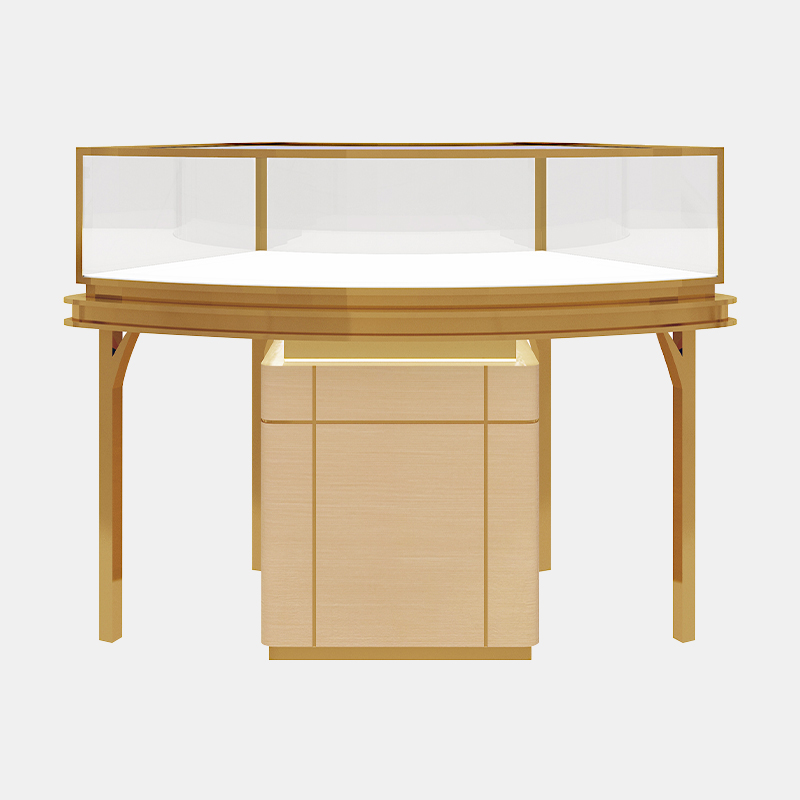
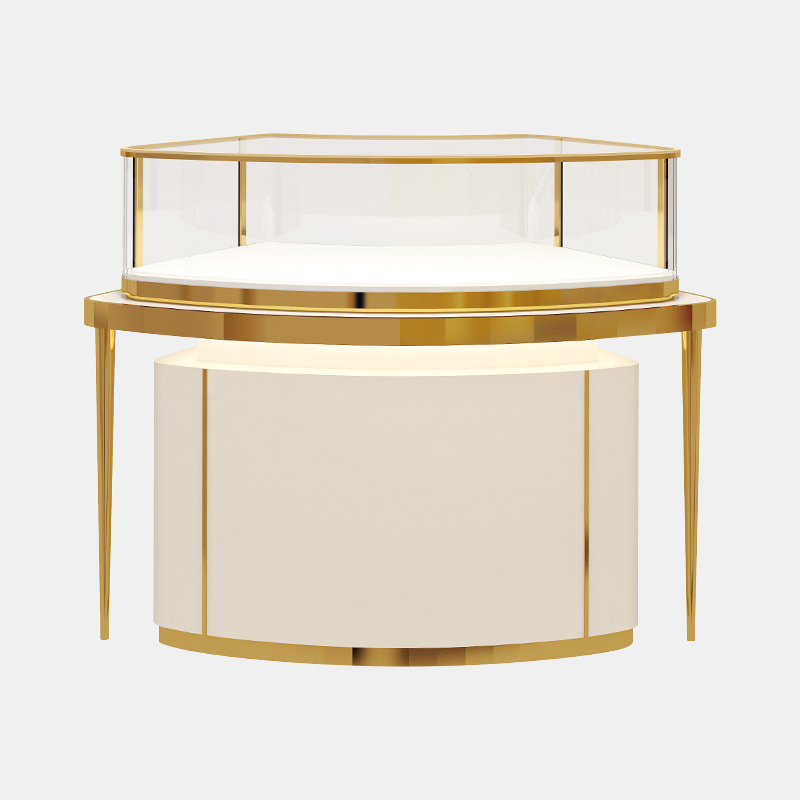
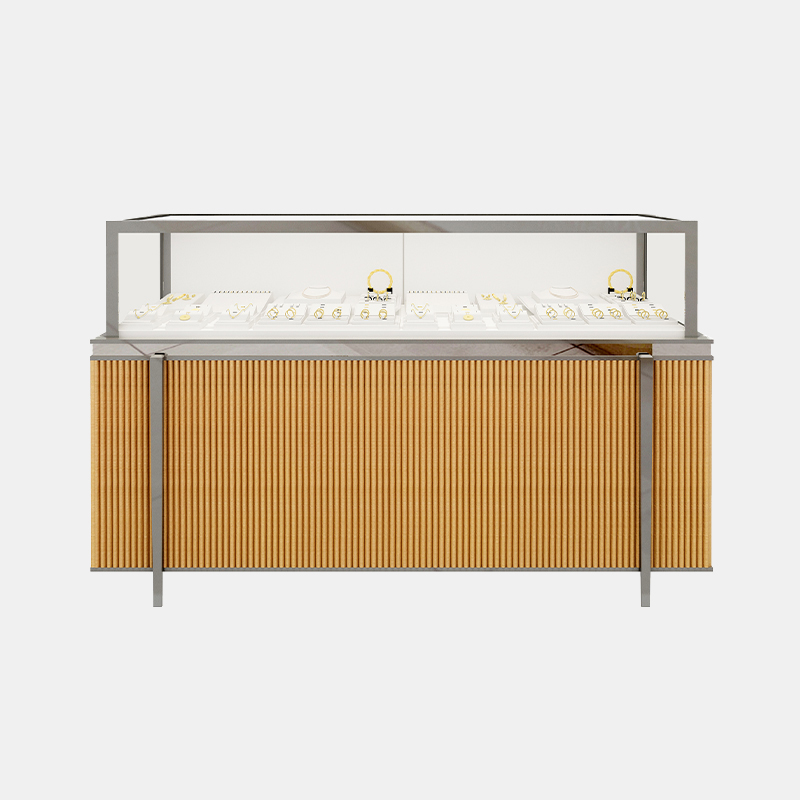
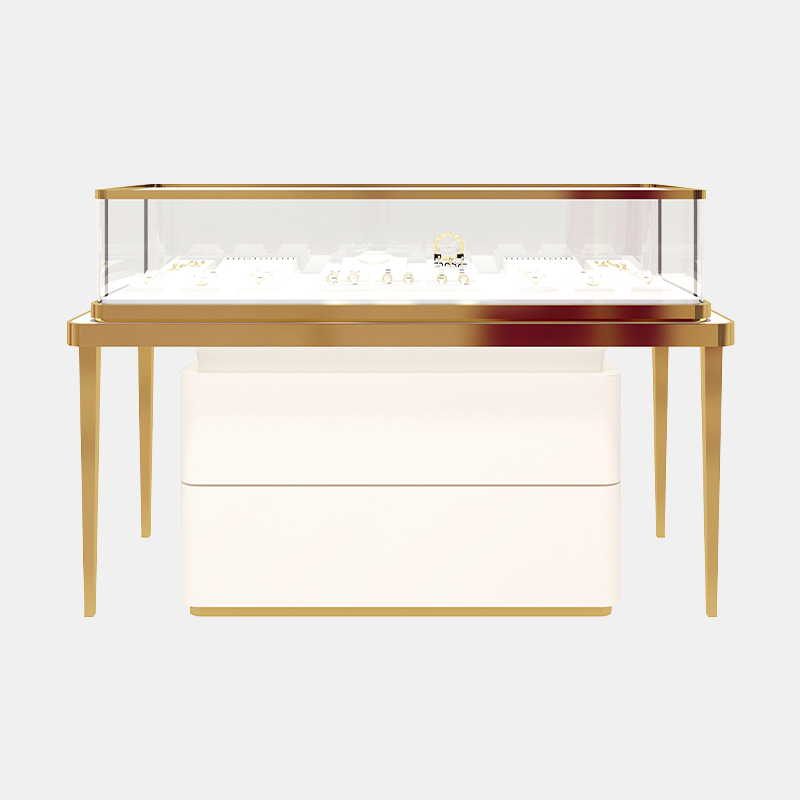
Beauty retailers typically choose from a small set of cabinet formats, each suited to a different part of the store layout. Selecting the right format is one of the first decisions made when working with a cosmetic display cabinet supplier, since the format affects footprint, staffing needs at the fixture, and how customers approach the product.
Larger retail groups and franchise networks often mix formats within a single custom cosmetic display cabinet order, pairing wall-mounted runs with a central island for the current seasonal promotion. Working from one cosmetic display cabinet manufacturer for all formats tends to keep finishes, hardware, and branding consistent across a multi-unit order.
The material chosen for a cosmetic display cabinet affects how it looks, how much weight it can hold, and how it holds up under daily handling. Four materials appear most often across cosmetic store fixtures: tempered glass, stainless steel, engineered wood with a laminate or painted finish, and acrylic.
Tempered glass remains the most requested material for cabinet doors and shelving because it presents product clearly and resists scratching better than standard glass. Stainless steel is typically reserved for frames, hardware, and structural components where load-bearing strength matters most. Engineered wood, usually MDF with a laminate or painted finish, is common for cabinet bodies and back panels because it can be shaped, painted, or printed to match a brand color palette. Acrylic is lighter than glass and is often used for smaller inserts, riser blocks, and signage holders within a larger cabinet.
Illustrative comparison of general material characteristics referenced when planning cosmetic store fixtures, rated on a five-point scale
When comparing quotes from a cosmetic display cabinet supplier, it helps to ask which components use which material, since a single cabinet often blends two or three materials to balance appearance, weight, and structural support.
Sizing a cosmetic display cabinet starts with the available wall length or floor footprint, then works backward to shelf count and depth. A shallow miscalculation in depth is one of the more frequent issues that surfaces after installation, particularly when packaging changes between the planning stage and the final product lineup.
Typical cabinet width ranges referenced by store footprint category
Beyond width, retailers generally plan around three additional dimension bands.
Shelf depth for most cosmetic packaging falls between 30 and 45 centimeters, though fragrance bottles, gift sets, and larger skincare jars can require deeper shelving. Sharing packaging dimensions with a cosmetic display cabinet manufacturer early in the planning stage generally avoids a second round of shelf adjustments after delivery.
Most cosmetic display cabinets share a similar structural anatomy, even across different formats. Recognizing each component makes it easier to compare specifications between suppliers and to describe exactly what a custom cosmetic display cabinet build should include.
Structural components commonly found in a wall-mounted cosmetic display cabinet
| Component | Function |
|---|---|
| Header Panel | Carries branding, logo, or category signage at the top of the cabinet |
| LED Strip | Illuminates shelves so packaging colors read accurately to shoppers |
| Glass Door | Protects stock while keeping product visible, and can include locking hardware |
| Adjustable Shelf | Allows shelf spacing to be customized to product height as a lineup changes |
| Base Storage | Holds backstock or supplies below the main display area |
| Leveling Feet | Keeps the cabinet stable and level on uneven flooring |
Lighting inside a cosmetic display cabinet influences how accurately shoppers perceive color, particularly for foundation shades, lipstick, and skincare packaging with subtle color differences. Warm-white LED strips in the 3000K to 4000K range are widely used because they tend to render skin-tone products more naturally than cool-white lighting, which can distort warmer shades.
General lighting level guidance across zones of a beauty retail floor, measured in lux
Retail lighting design commonly increases brightness as a shopper moves from the entrance toward the product itself, then softens again near the checkout. Applied to a cosmetic display cabinet, this usually means brighter, more concentrated lighting directly inside the cabinet or along the shelf edge, layered on top of the store's general ambient lighting.
Retailers comparing a wall-mounted cabinet, an island display showcase, and a modular cosmetic display often weigh the same five factors: storage capacity, visual impact, space efficiency, customization flexibility, and how easy the unit is to maintain day to day.
Illustrative comparison across three common cabinet formats, rated on a five-point scale for general planning purposes
Wall-mounted cabinets tend to score well on space efficiency since they use vertical wall area rather than floor footprint. Island showcases generally offer strong visual impact and storage capacity because shoppers can approach from every direction, though they use more floor space and can be less efficient in a narrow store. Modular cosmetic display units are usually the most flexible to reconfigure, since panels and shelving can be rearranged as a product range grows or a seasonal campaign changes.
Where a cosmetic display cabinet sits inside the store affects how much of it customers actually notice. A general planning sequence used by many visual merchandisers follows these steps.
A cosmetic retail display placed too close to the entrance without a clear sightline often gets walked past rather than browsed, so many store designers leave a short buffer zone before the first fixture. Cabinet height also matters for sightlines: a wall-mounted run taller than eye level should keep its most important products at the middle shelf band, where shoppers naturally look first.
Cosmetic display cabinets see frequent handling from both staff and customers, so a routine cleaning and inspection schedule helps keep glass, hardware, and lighting in working condition over time.
| Frequency | Task |
|---|---|
| Daily | Wipe glass surfaces and shelves, and remove fingerprints or product residue |
| Weekly | Check LED strips and flag any flickering or dim sections for replacement |
| Monthly | Inspect door hinges, sliding tracks, and locking hardware for wear |
| Quarterly | Tighten frame joints and re-level cabinets on uneven flooring |
Keeping a simple maintenance log for each cabinet, especially across a multi-store rollout, makes it easier to spot recurring issues and flag them to the cosmetic display cabinet supplier if a hardware component needs replacement.
Many beauty retailers move beyond standard catalog units once a brand identity is established, working with a manufacturer on a custom cosmetic display cabinet that reflects specific color codes, logo placement, and shelf configurations. Customization commonly covers frame color, panel finish, branded header graphics, shelf spacing, and lighting temperature.
Retail chains and franchise groups opening several locations at once often source a cosmetic display cabinet wholesale, ordering matching units in volume so that every store location presents a consistent look. Sourcing this way generally streamlines production scheduling and keeps hardware and finish specifications identical across every unit in the order.
Sharing floor plans, product dimensions, and brand guidelines early in the process typically shortens the back-and-forth needed to finalize a custom cosmetic display order.
A number of recurring issues show up after installation, and most of them trace back to details that were skipped during the planning stage rather than problems with the fixture itself.
Zhejiang SUNTOP Commercial Display Products Co., Ltd was established in 2009 and has since focused on commercial display space design and production, working across design planning, cabinet and prop manufacturing, and decoration and renovation contracting management. This combined approach allows a beauty retailer to move from initial concept toward a finished cosmetic display cabinet within one coordinated process.
The production facility covers 25 acres, with floor space reaching 25,000 square meters and an annual production capacity of over 100 million. This scale supports both custom, single-store projects and larger cosmetic display cabinet wholesale orders for multi-location retail groups.
As a cosmetic display cabinet manufacturer, the company works directly with beauty retailers, agencies, and shop-fitting contractors to plan display layouts, select materials, and manage production through to installation-ready delivery.


 ਪੰਜਾਬੀ
 English
 عربى
عربى русский
 中文简体
中文简体