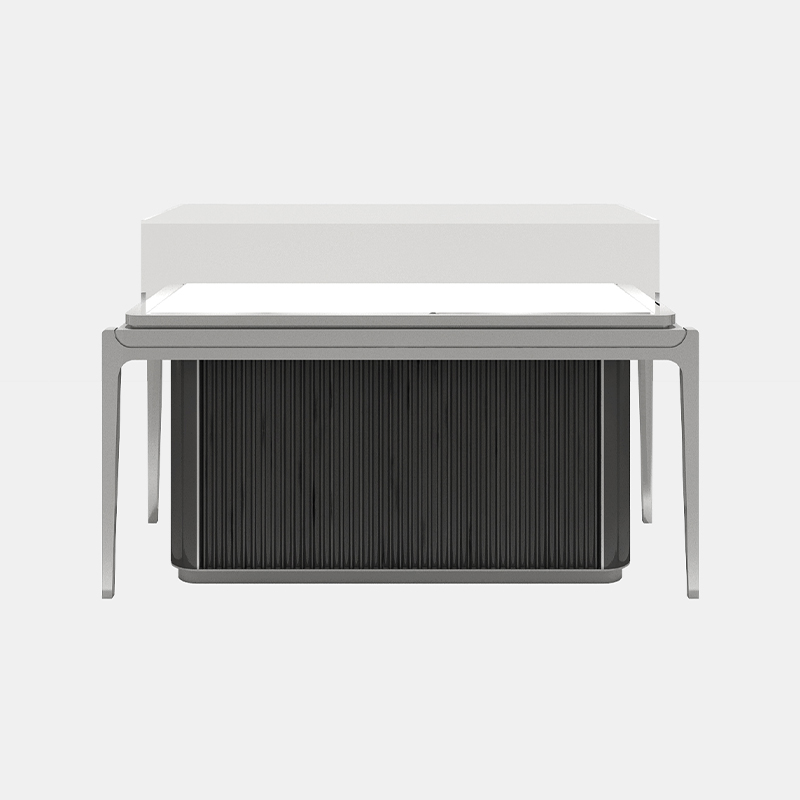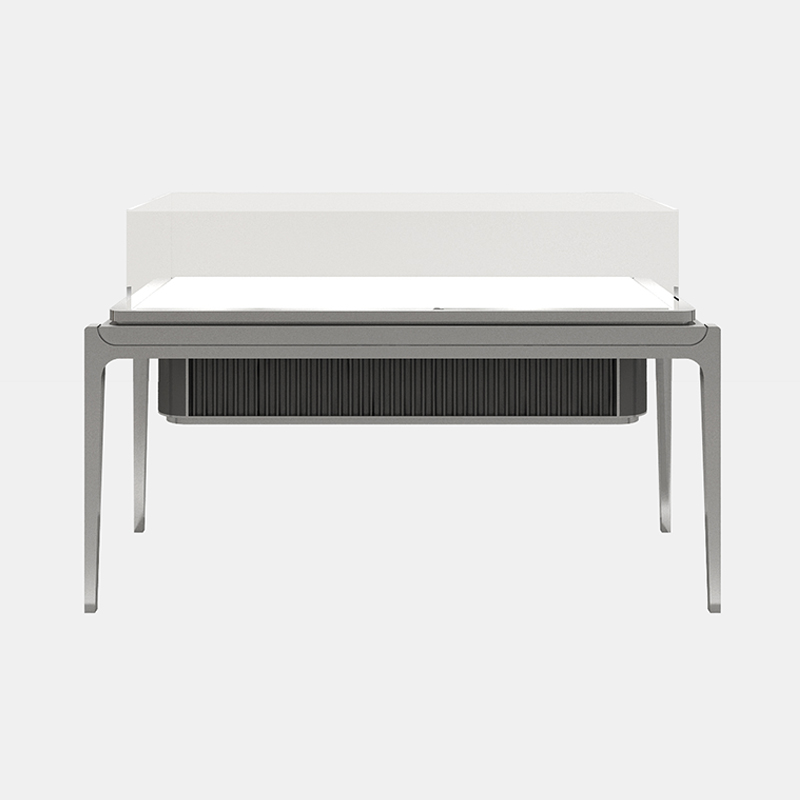
A customer walks into a clothing store, glances at the display table, and pauses. The folded shirts are neatly stacked, but at eye level the first thing they see is a mass of folded edges, not the collars or buttons. This is a common problem in retail display: the decision of whether to place folded shirts above or below the fold line, and which side of the fold should face the customer.
If you are setting up a garment display that converts browsers into buyers, here is the direct answer: fold shirts with the fold edge facing down, and position them above the fold line — at or slightly above the customer’s eye level. This enables the clean collar and front detail to be the first visual cue, which draws attention and invites closer inspection.
Content
In retail display, “the fold” refers to two practical points: the physical fold line — the visible crease line on the shelf or display cabinet — and the folded edge of the shirt itself. Both affect how shoppers perceive your merchandise.
When a folded shirt sits below the fold line, it is more likely to be overlooked because it falls outside the shopper’s natural viewing cone. When the shirt sits above the fold line, it enters the primary viewing zone. The simple geometry of human sight means that items placed at or slightly above eye level receive significantly more attention than items placed at lower heights.
The fold line in a retail display cabinet is often the height at which the shelf’s front edge meets the vertical surface of the case. It may also refer to the imaginary line that divides a customer’s normal field of view. In practice, a fold line located around 140 cm to 160 cm from the floor marks the transition between “above the fold” and “below the fold.” Above this line, displayed items are clearly visible with minimal head or body movement. Below it, shoppers must look down, which reduces the time they spend examining the products.
Placing folded shirts above the fold line therefore puts them in the prime real estate of any retail store. It is where customers expect to find featured items, seasonal promotions, and best sellers.
When a shirt is folded, it creates two visible sides: the fold edge and the collar/neckline side. For retail display, the recommendation is to fold shirts with the fold edge facing downward, so the collar and any front detailing are exposed to the customer.
This principle applies whether the shirt is displayed on a table, a shelf, or inside a display cabinet. The clean collar line signals quality and helps customers quickly identify the style and fit. A downward-facing fold also keeps the stack looking tidy and consistent, as the folded edges align into a flat, uniform surface.
| Orientation | Effect on Customer View | Best Use Case |
|---|---|---|
| Fold edge facing up | Shows a bunched hem line; less visual information for the customer | Rarely recommended for folded shirts in retail; can be acceptable for basic tees in a discount-oriented setting |
| Fold edge facing down | Exposes the collar and front details; communicates fit and style at a glance | Recommended for all folded shirts in retail display, including high-end stores |
Once you have oriented the fold correctly, the next decision is height. The question “above or below fold” is essentially about placement in the sales space.
The standard rule in visual merchandising is: place folded shirts above the fold line — in the customer’s natural eye-level zone. This zone typically spans between 130 cm and 170 cm, depending on the average customer height and the type of retail environment. A display cabinet or wall unit that places the top shelf or mid shelf within this range is ideal.
If your display wall has multiple layers, the top layers (about 170 cm and above) are slightly harder to see clearly without looking up, while the middle layers (between 140 cm and 160 cm) provide the best balance between visibility and physical reach. Below the fold line, at heights of 60 cm to 110 cm, items are accessible but require the customer to look down — which reduces the chance of a quick visual impression.
For stores with a freestanding table, the tabletop itself may not be sufficient. Pair it with a high display cabinet or a vertical fixture to elevate the folded shirts to the correct height range.
| Cabinet Type | Ideal Height for Folded Shirts | Why |
|---|---|---|
| High glass display cabinet | 140–170 cm | Top shelves are visible at eye level; transparent glass keeps shirts unobstructed |
| Stainless steel clothing cabinet | 120–150 cm | Robust and durable; middle shelves work well for core items |
| Combination display cabinet | 130–160 cm | Versatile layout allows the best display level for folded products |
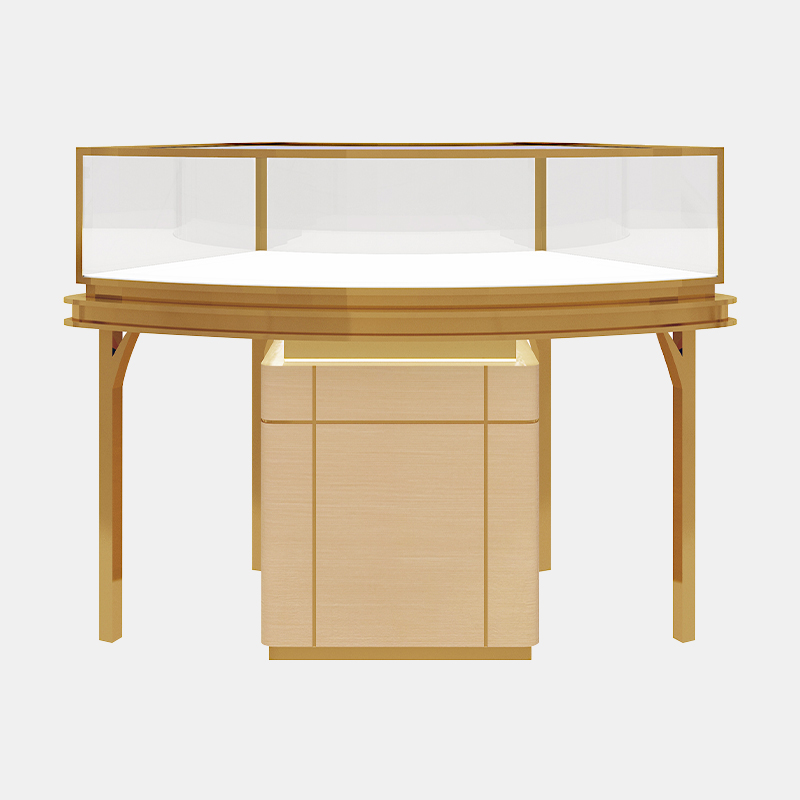
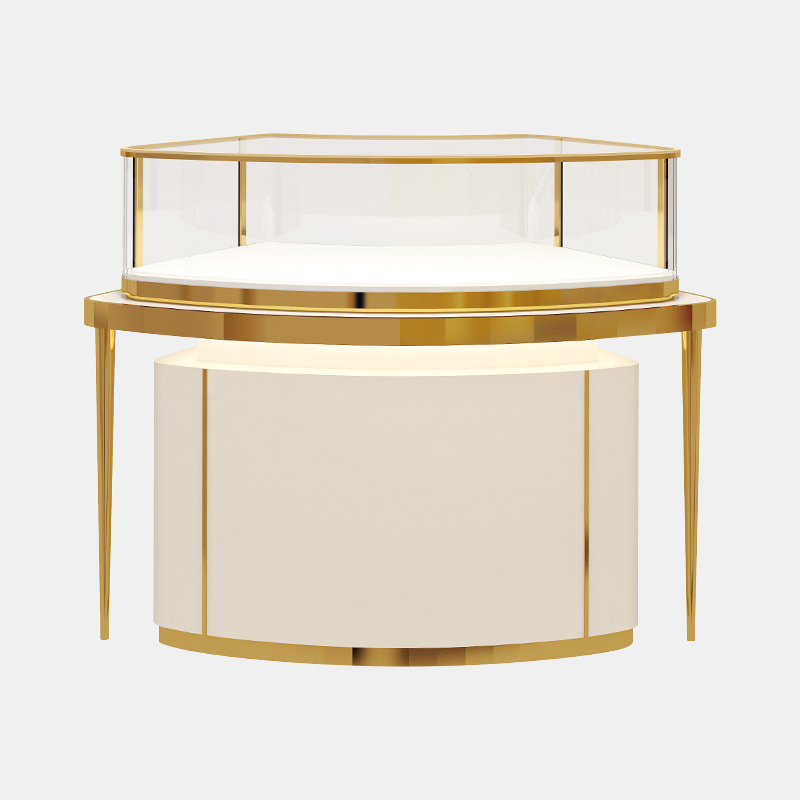
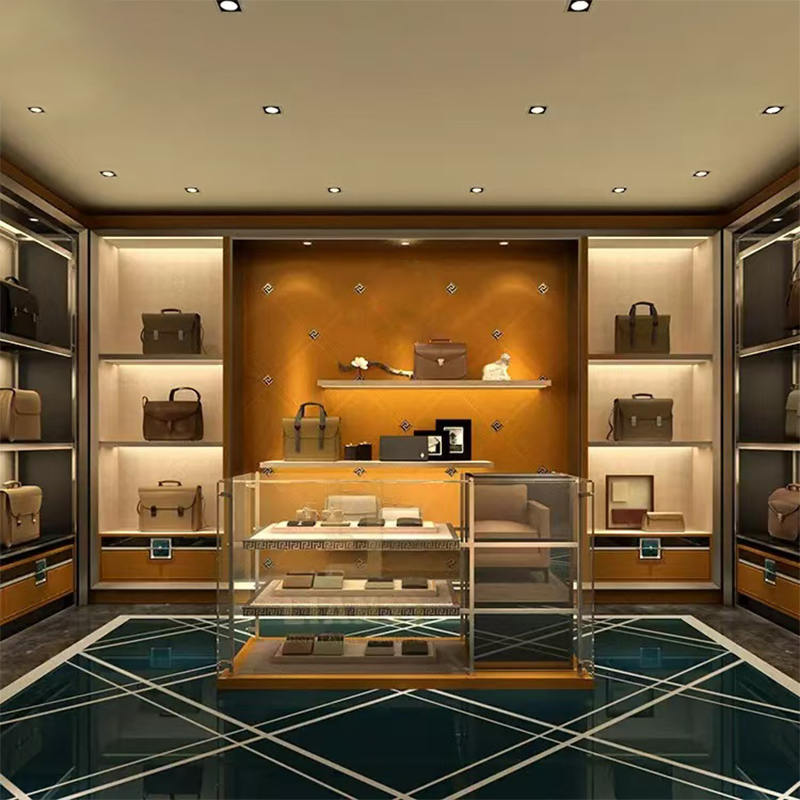 High Glass Clothing Display Cabinet for Elevating Folded ShirtsThis transparent glass cabinet with a metal or wooden frame offers a clear view of merchandise while providing the height needed to place folded shirts at eye level, improving customer engagement and visibility.View Product →
As shown above, customer engagement rises sharply as the display height climbs from low levels toward the 140–170 cm range. At and above the fold line, which typically sits around 140 cm, engagement peaks. Shirts placed here receive the most attention from shoppers walking through the store.
Folded shirts display best when they are folded consistently and supported by the right auxiliary fixtures. A folding board ensures uniform size across the stack, which directly affects the visual rhythm of the display. Here are the key steps professional visual merchandisers use:
When stacking, follow the “same color, different sizes” rule: place the smallest size at the top and the largest at the bottom. This allows customers to quickly find their size while keeping the stack stable. For stores with a limited footprint, a dedicated folded display area with vertical dividers can maximize the number of shirts shown without clutter.
Quality display cabinets also play a critical role. A well-designed cabinet not only keeps folded shirts protected from dust and handling but also elevates them to the correct height. For a streamlined look, a high glass cabinet with adjustable shelving is often the best solution. For a more industrial and durable approach, a stainless steel garment cabinet offers a clean, modern look with excellent durability.
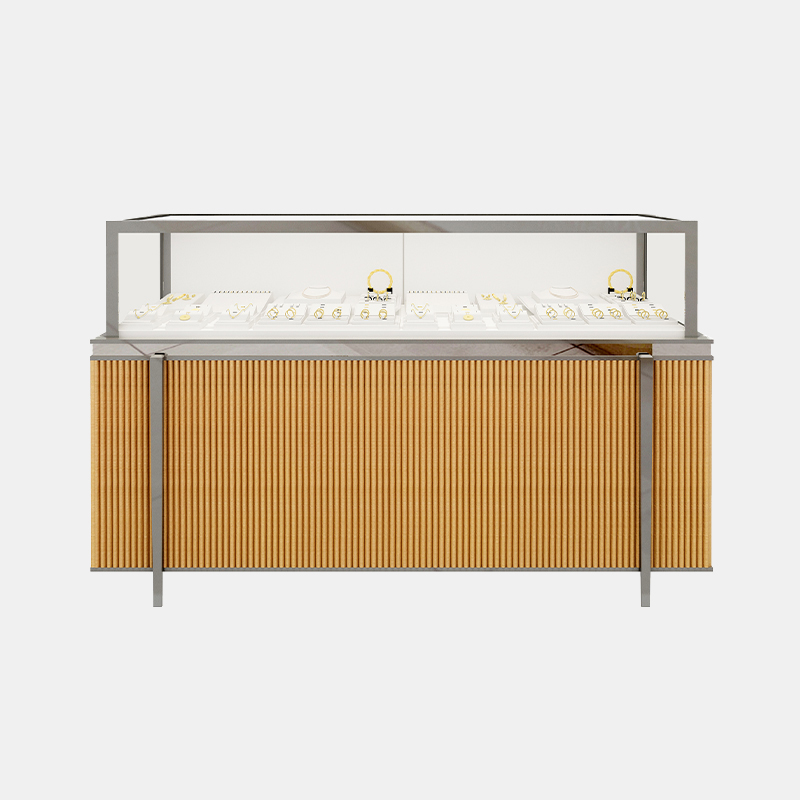
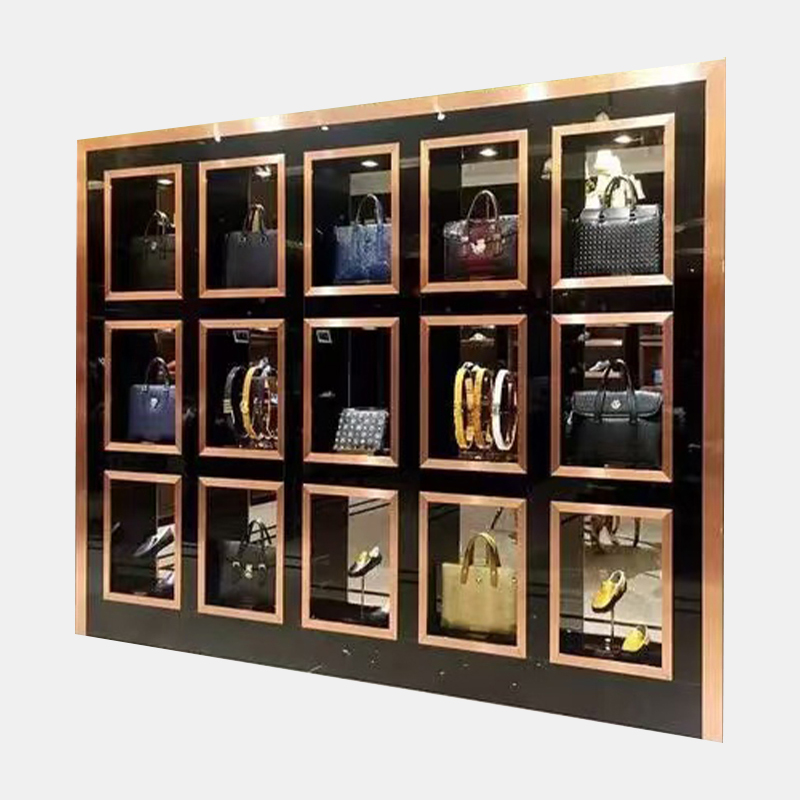 Stainless Steel Clothing Display Cabinet for Durable Retail UseMade from rust-proof and corrosion-resistant stainless steel, this cabinet combines durability with a modern look, effectively raising folded shirts to optimal viewing heights and enhancing the store's overall appearance.View Product →
Choosing the right display cabinet is not just about aesthetics — it directly affects your ability to place folded shirts above the fold line. Here are the practical purchasing criteria to evaluate:
If you are planning a store upgrade or a new fixture purchase, it is worth consulting with a manufacturer that understands the specific needs of garment displays. A team with production and design capabilities can help you translate these principles into a practical layout for your space.
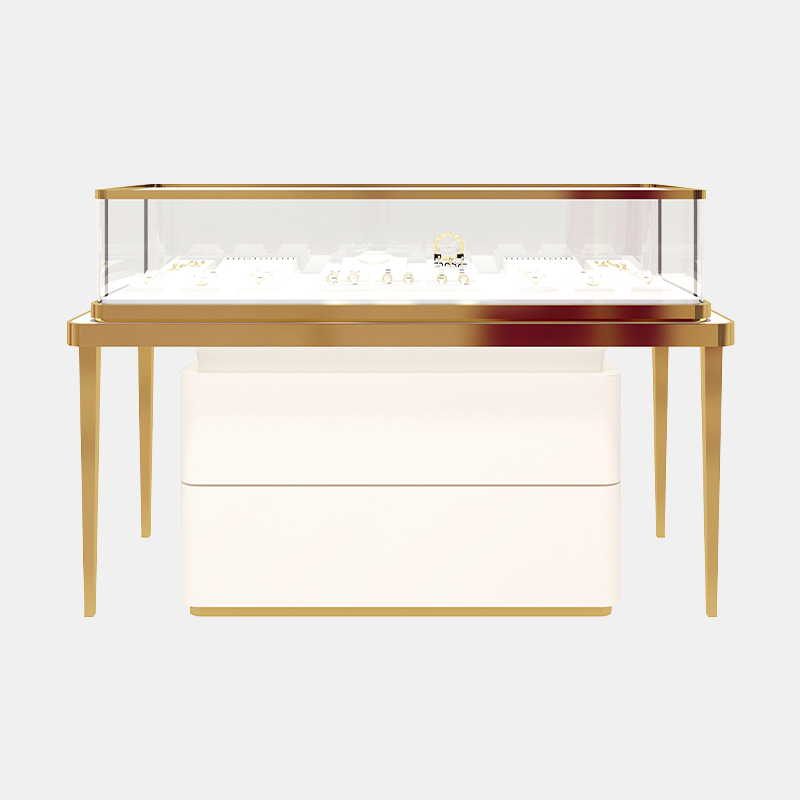
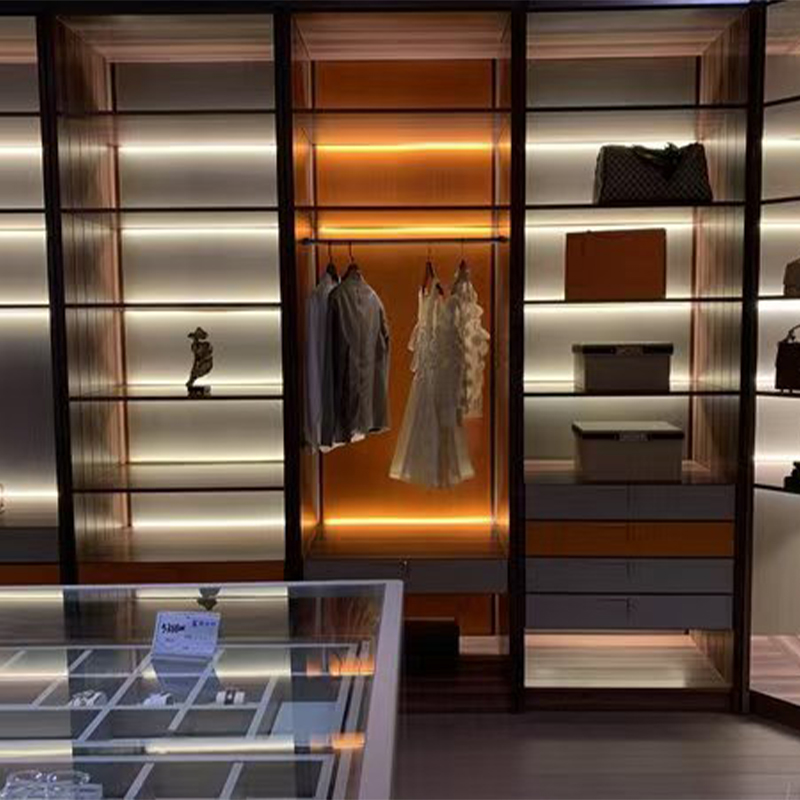 Stainless Steel Garment Combination Cabinet with Flexible ConfigurationsThis versatile cabinet features hanging, stacking, and storage areas that can be tailored to your needs. Its high-quality stainless steel construction ensures long-lasting use, making it a practical choice for store upgrades or new fixtures.View Product →
Zhejiang Suntop Commercial Display Products Co., Ltd. was founded in 2009. The company’s factory covers an area of 25 acres, with a building area of 25,000 square meters and an annual production capacity that reaches 300 projects. Suntop mainly serves customers in jewelry, cosmetics, watches, museums, and other retail environments. The company adheres to a highly specialized spirit and strives for excellence in the creation of every display space cabinet, aiming to perfectly reflect the customer’s brand concept and value through high-quality display spaces.
After 16 years of deep cultivation in the display props industry, Suntop has won provincial high-tech enterprise and credit enterprise awards. At the same time, it has obtained numerous relevant industry technology patents, providing a guarantee for product quality. For retail clothing brands, a display cabinet from Suntop is designed with a focus on visual impact and practical functionality. If you are evaluating cabinet options, how clothing and luggage display cabinets improve the customer shopping experience is a valuable reference.
A: The fold edge should face down. This exposes the collar and front details, making it easier for customers to see the shirt’s style and fit.
A: It refers to the area at or slightly above the customer’s eye level, typically 140–160 cm from the floor, where products are most visible.
A: Stack by color, then organize by size with the smallest on top. This gives a clean color block and makes size selection faster.
A: Between 140 cm and 170 cm. This places the shirts in the customer’s natural viewing zone above the fold line.
A: Cabinets with adjustable shelves and transparent fronts let you position folded shirts at the ideal height and make them clearly visible.
A: A folding board ensures every shirt folds to the same size, producing a uniform, professional stack that looks more appealing.


 ਪੰਜਾਬੀ
 English
 عربى
عربى русский
 中文简体
中文简体