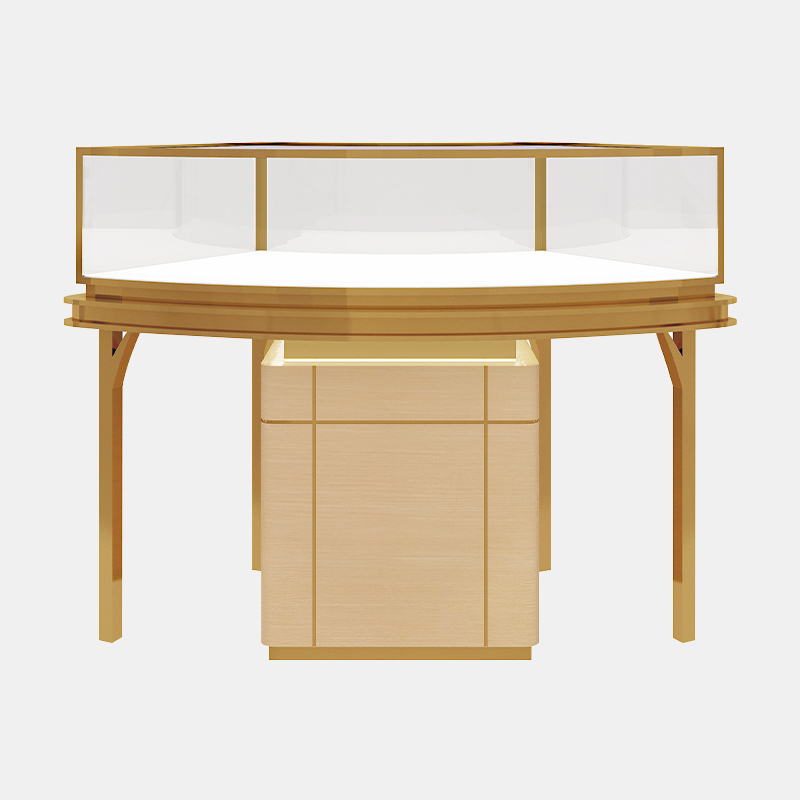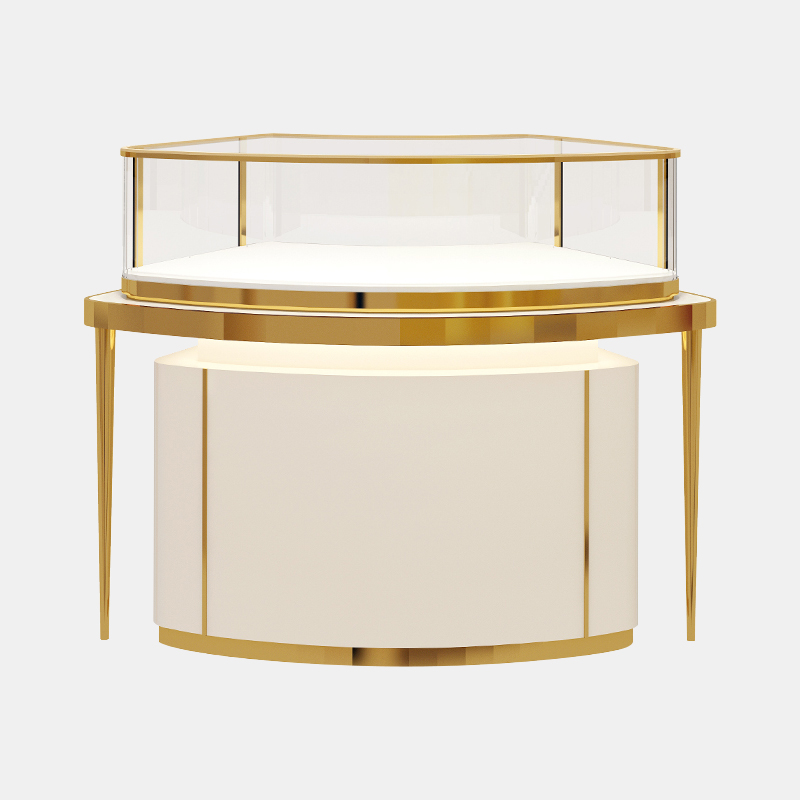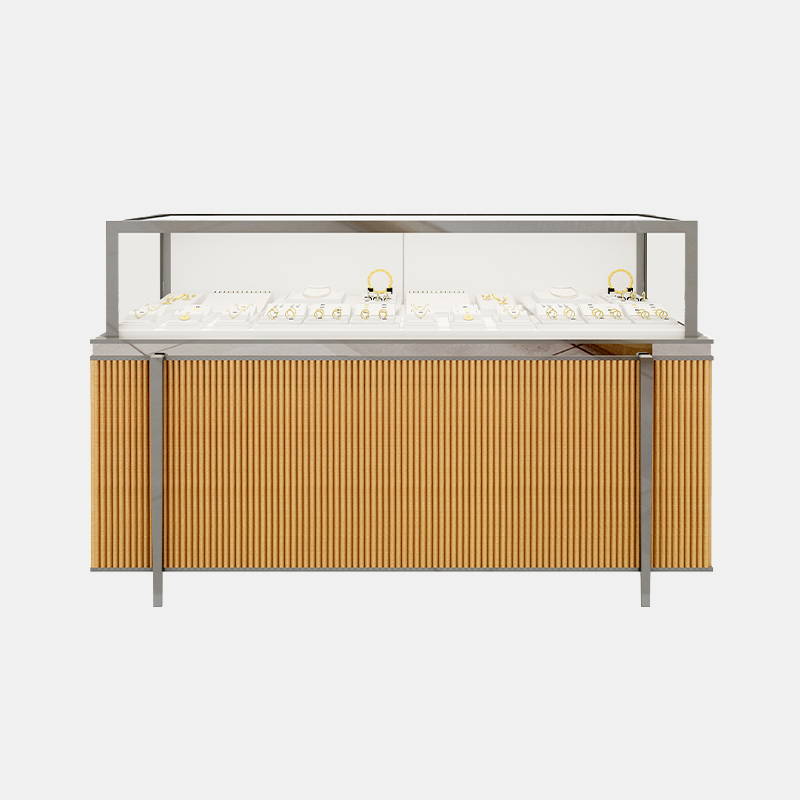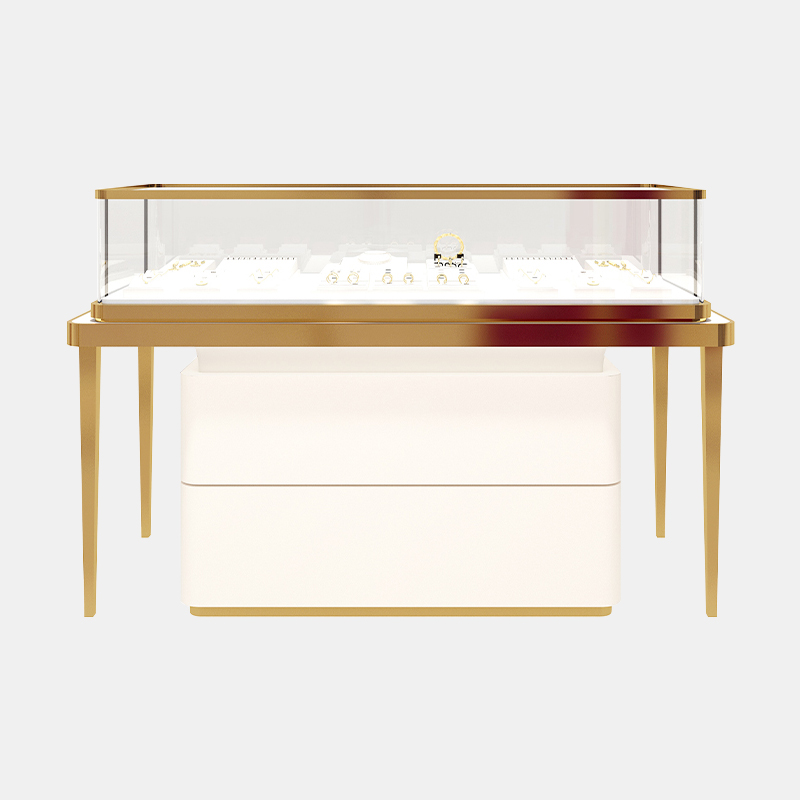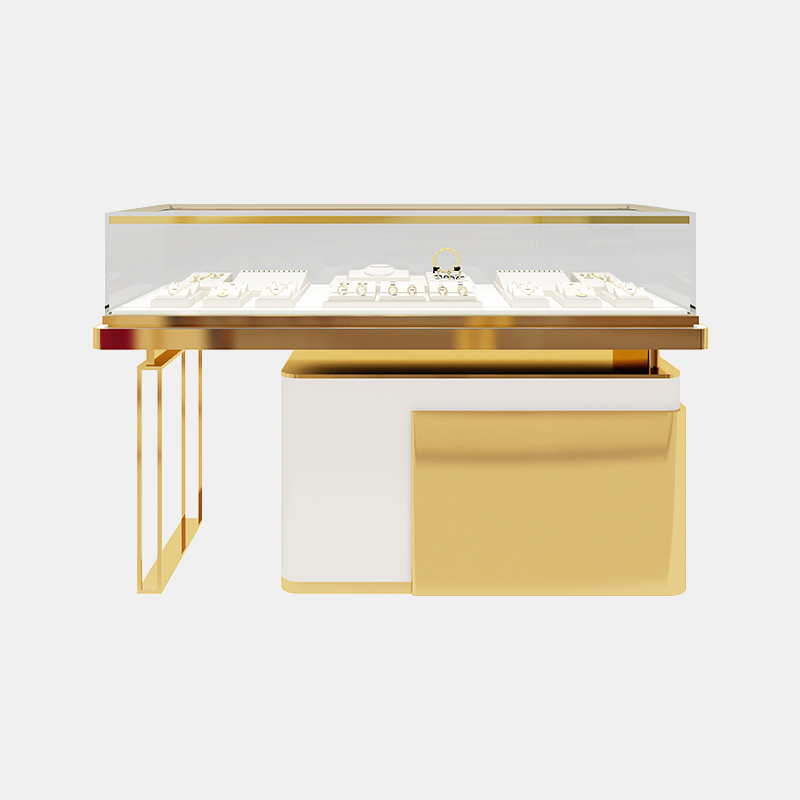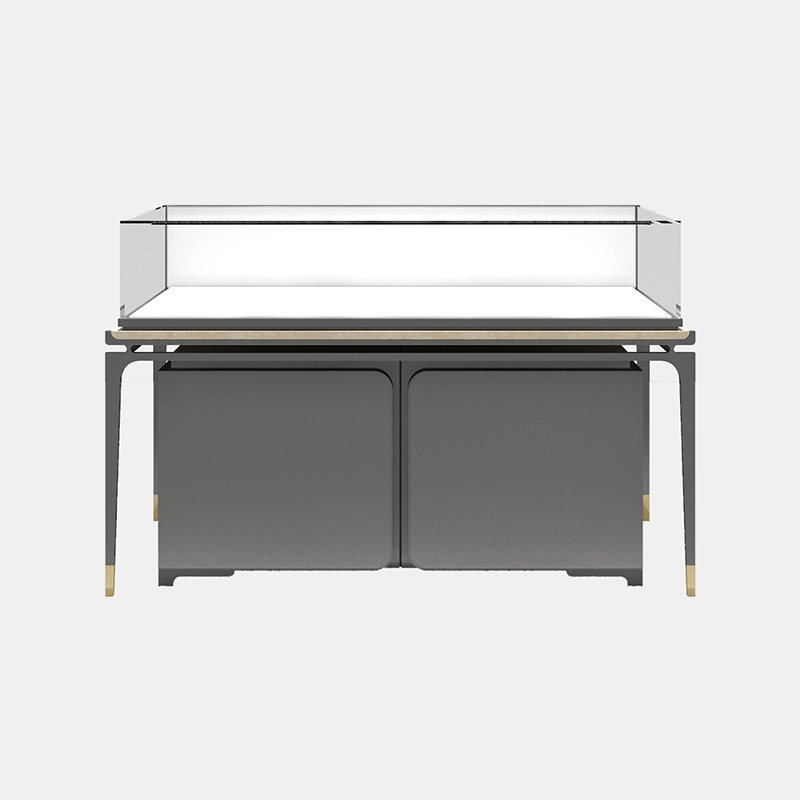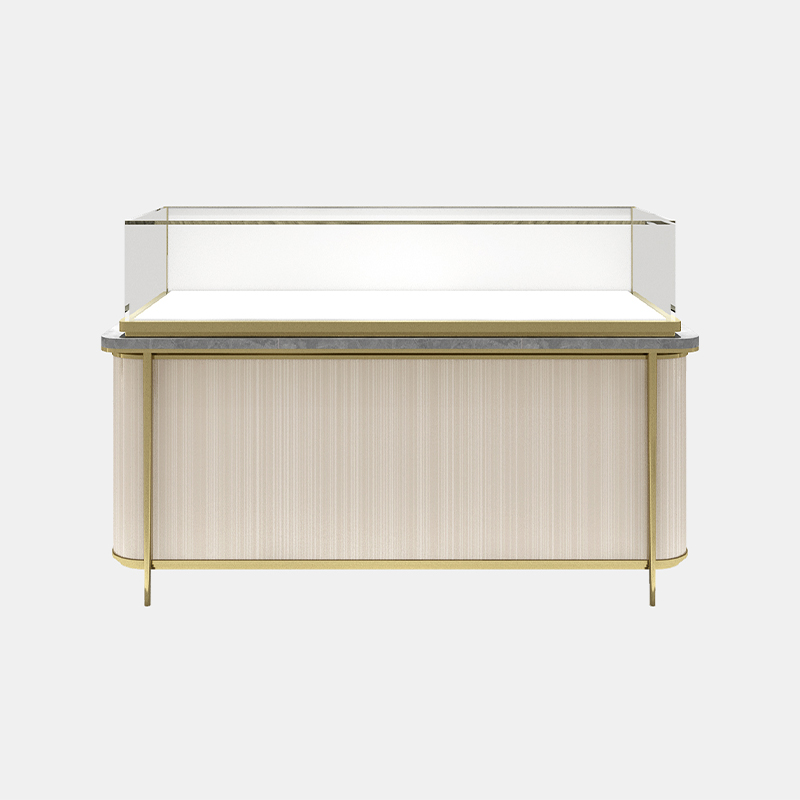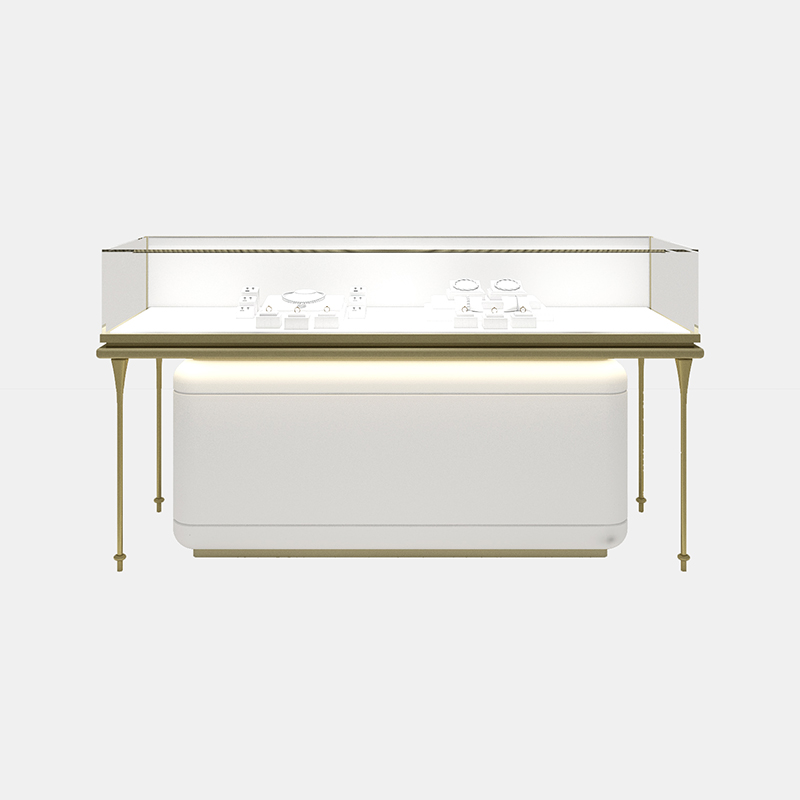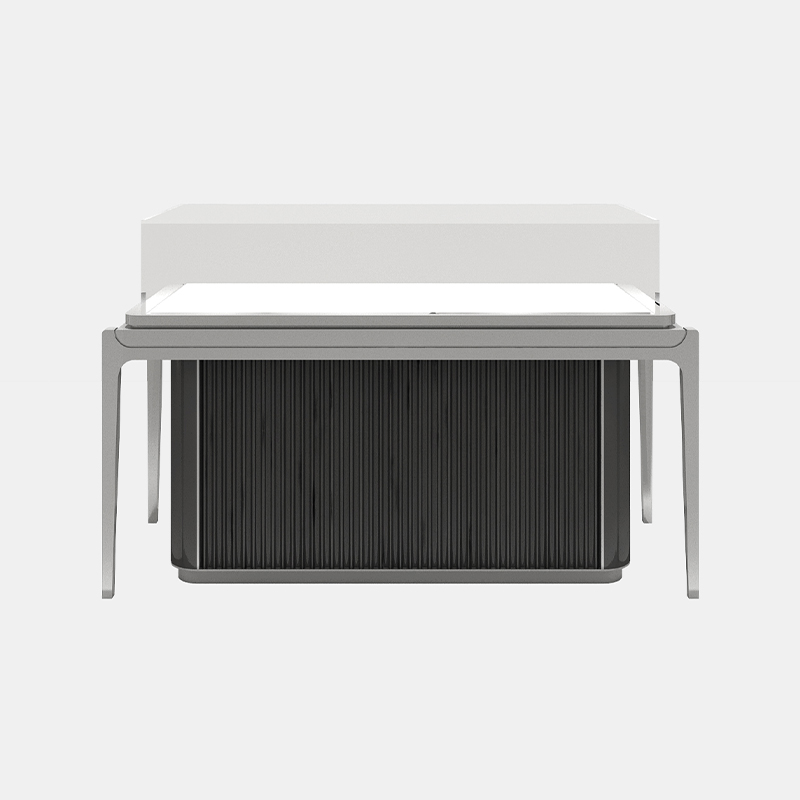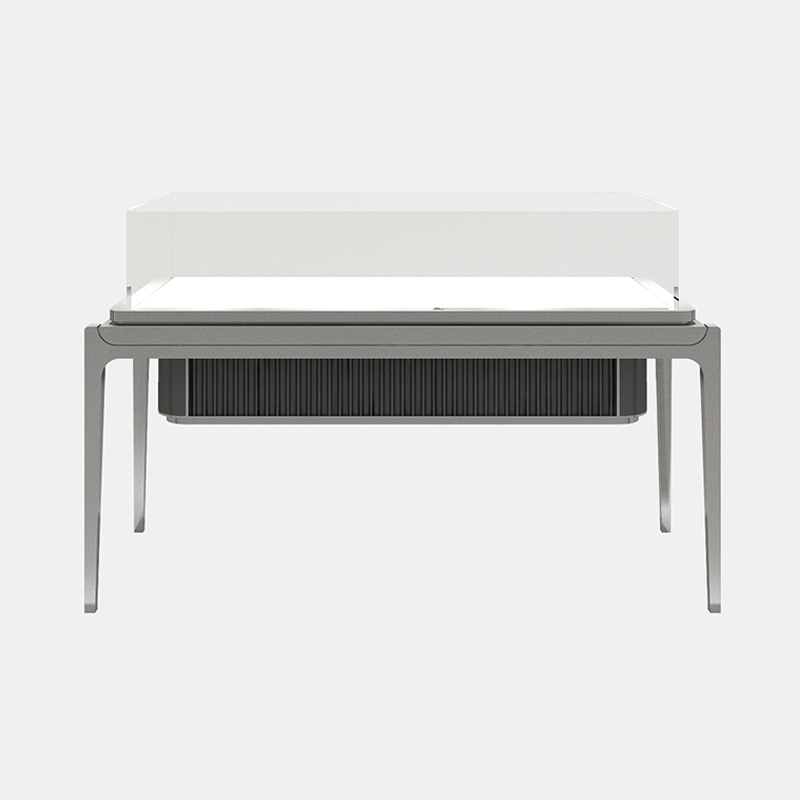
A store owner comparing three quotations for the same 2.4 m wall run will usually find the prices far apart, and none of the drawings will state the hinge brand, the glass thickness, or the colour temperature of the LED strip. That is exactly where the wrong cabinet gets bought. The right jewelry display cabinet is decided by five things: sightline, security, glass specification, lighting quality and the supplier's delivery discipline. Price is the result of those five, not the starting point.
Content
Put five questions to every supplier in writing before you compare numbers. When all five come back with figures, the quotations finally sit on the same baseline.
If a quotation cannot answer items three and four with numbers, it is still a drawing rather than an offer.
Cabinet type follows two practical facts: how the customer approaches the item, and how much of the piece must be visible without a staff member opening a door.
These belong where the transaction happens. A working surface around 900-1000 mm keeps the tray comfortable for both sides, and a low glass hood keeps hands visible - customers read that as openness rather than as a barrier.
Used for stock depth and brand presence. Above roughly 1800 mm the upper shelves stop being selling space and become brand space, so budget the lighting accordingly.
Curved and L-shaped runs steer foot traffic well, but every curve adds glass cutting and frame labour to the cost.
| Cabinet type | Best used for | Planning height | Common watch-out |
|---|---|---|---|
| Counter / sales top | Closing the sale, tray presentation | 900-1000 mm | Hood height hiding the associate's hands |
| Low showcase | Impulse browsing at the aisle edge | 900-1100 mm | Top surface turning into a clutter shelf |
| Tall showcase | Brand wall and stock depth | 1800-2200 mm | Upper shelves outside the useful sightline |
| Window / mid-height | Street-side first impression | 1200-1400 mm | Direct sunlight and heat reaching gemstones |
| Combination / island | Guiding customer flow | 1200-1500 mm | Curves raising glass and labour cost |
Strip away the finish and a jewelry display cabinet is a frame, a glass box, an interior lining, a light channel and a lock. The isometric view below shows where the cost sits.
Glass is the specification most often reduced to save cost. Tempered glass carries much higher impact resistance than ordinary annealed glass, but it can release into small particles if an edge is chipped during installation. Laminated glass holds its fragments and keeps a barrier in place, which matters in shared retail space. Ultra-clear low-iron glass removes the green tint that dulls diamonds and white gold, at a price.
For most jewelry counters, 8-10 mm tempered glass with polished edges, plus a laminated front panel on shared floor space, covers both safety and clarity. Write the edge finish into the order - an unpolished edge is where cracking starts.
Wrong light makes 18k gold look brassy and diamonds look flat. Three numbers matter more than the fixture brand on the box.
Glare is the fourth, unlisted number. A diffused strip set back from the front edge lights the jewellery; a bare strip close to the glass lights the customer's eyes instead.
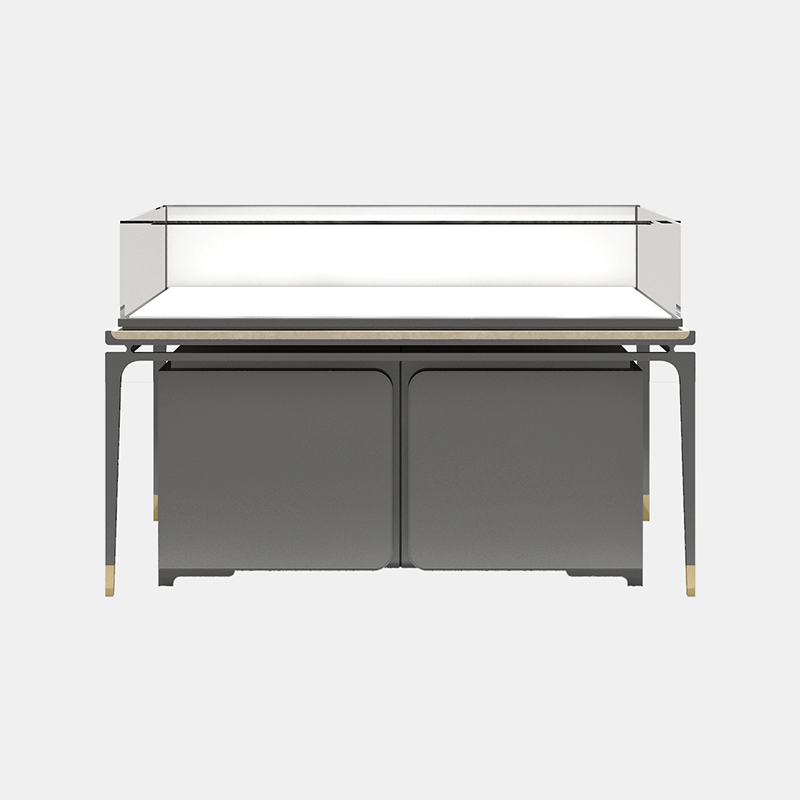 JR-S201 Jewelry Display Cabinet with Integrated LightingView this customizable glass showcase for its integrated lighting, intended to illuminate jewelry displays while supporting a polished sales presentation.View Product →
Height decisions are made in the store, not on a product page. The chart below shows the planning ranges that keep a cabinet useful.
Two rules avoid most layout errors. Keep the top of a selling display below roughly 1400 mm so the customer looks down at the piece instead of up at it. Then leave at least 900 mm of clear aisle in front of an open drawer - a cabinet that forces customers to step back quietly loses the sale.
Tall cabinets still earn their place along the brand wall, where the job is recognition rather than handling.
 JR-H203 Customised Tall Jewellery Display CabinetsA tall, customizable jewellery cabinet for brand-wall display; review materials, sizes and installation scope when comparing supplier quotes.View Product →
Two suppliers can quote the same cabinet and mean different things: one prices a cabinet that arrives assembled and levelled, the other prices a flat-packed box with an instruction sheet. Ask for installation scope, packing method and warranty terms in the same document as the price.
Zhejiang Suntop Commercial Display Products Co., Ltd. was founded in 2009. Its factory covers 25 acres, with a building area of 25,000 square meters and an annual production capacity of 300 projects. Main customer types include jewelry, cosmetics, watches and museums. The company works with a highly specialised spirit and pursues excellence in every display space it builds, so that the finished cabinet reflects the client's brand concept and value. After 16 years in the display props industry, Suntop has been recognised as a provincial high-tech enterprise and a credit enterprise, and holds a number of industry technology patents that support product quality.
That structure matters at procurement stage: a supplier who handles design, production and installation keeps responsibility in one place when a glass panel arrives late or a lacquer colour drifts between the sample and the delivery. For a mixed store format, it is worth reviewing the customisation process and a completed jewelry store project before signing, because the drawings tell you more than the brochure.
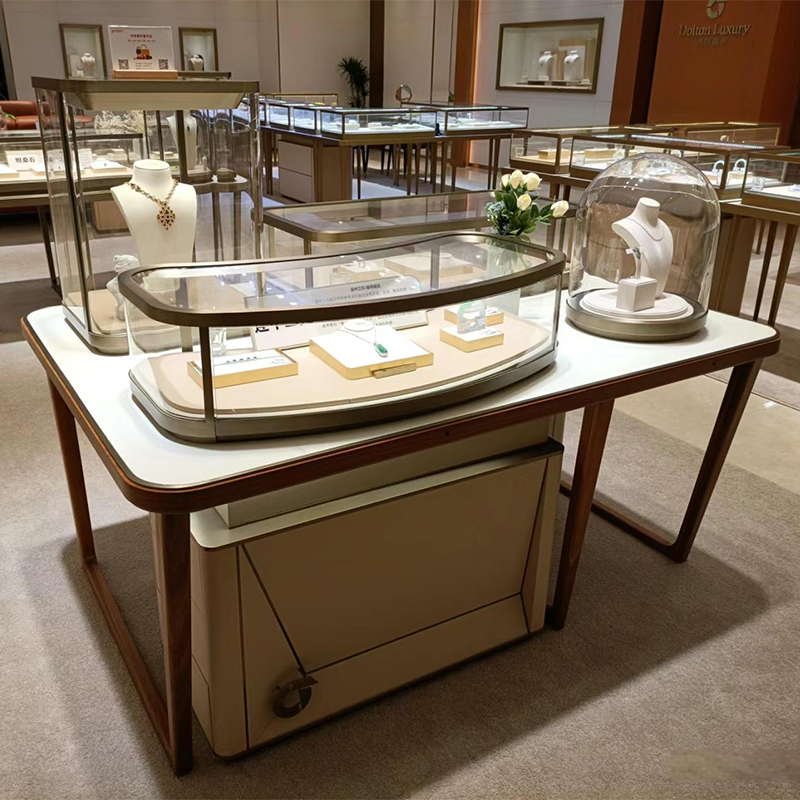 CM-104 Customised Combination Display CabinetA customizable combination cabinet for commercial display; review the customisation process and completed project when planning a mixed-format jewelry store.View Product →


 ਪੰਜਾਬੀ
 English
 عربى
 русский
 中文简体