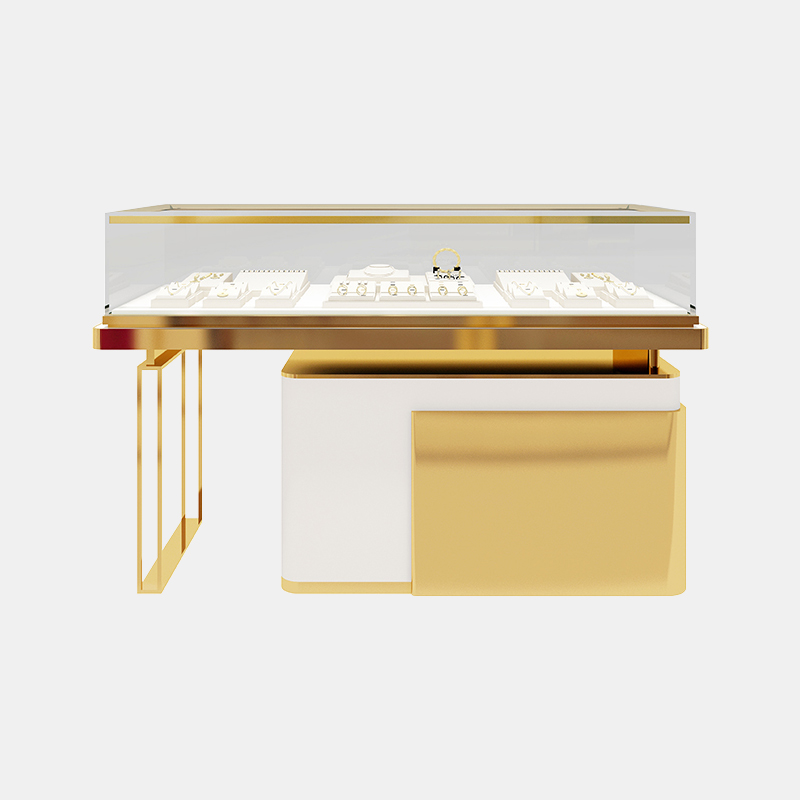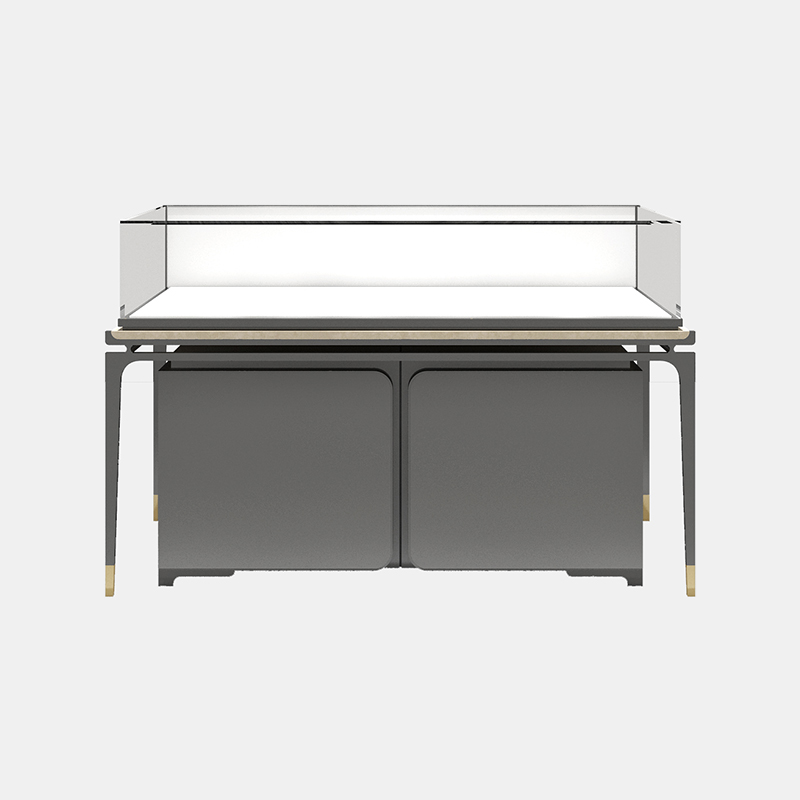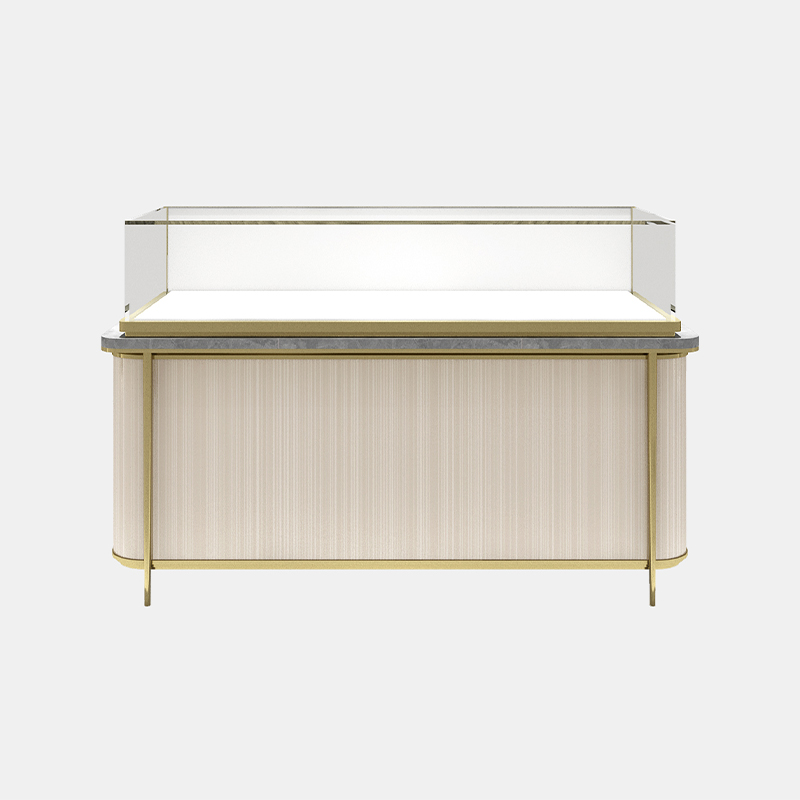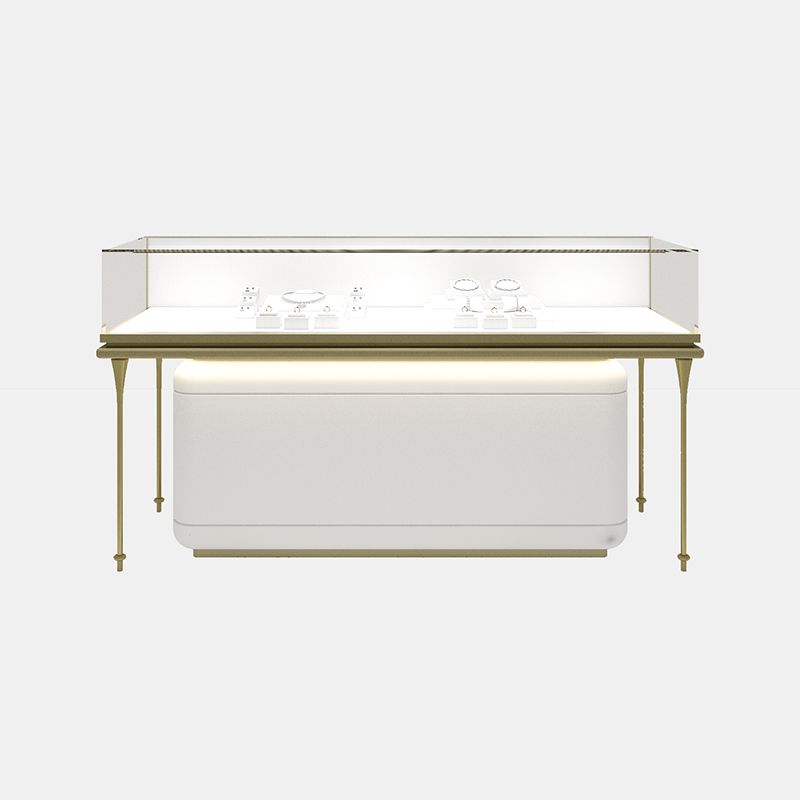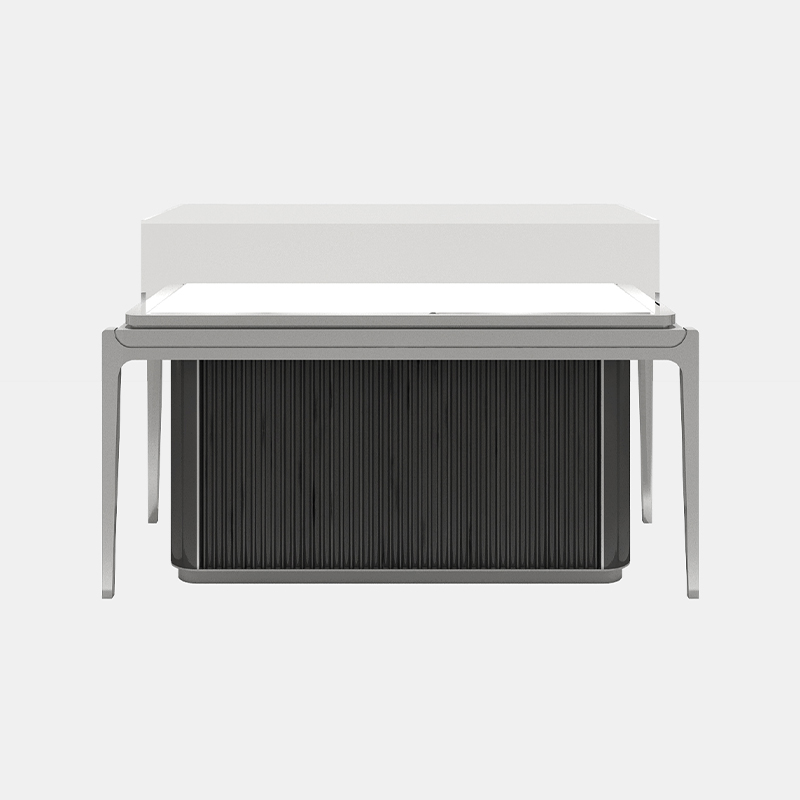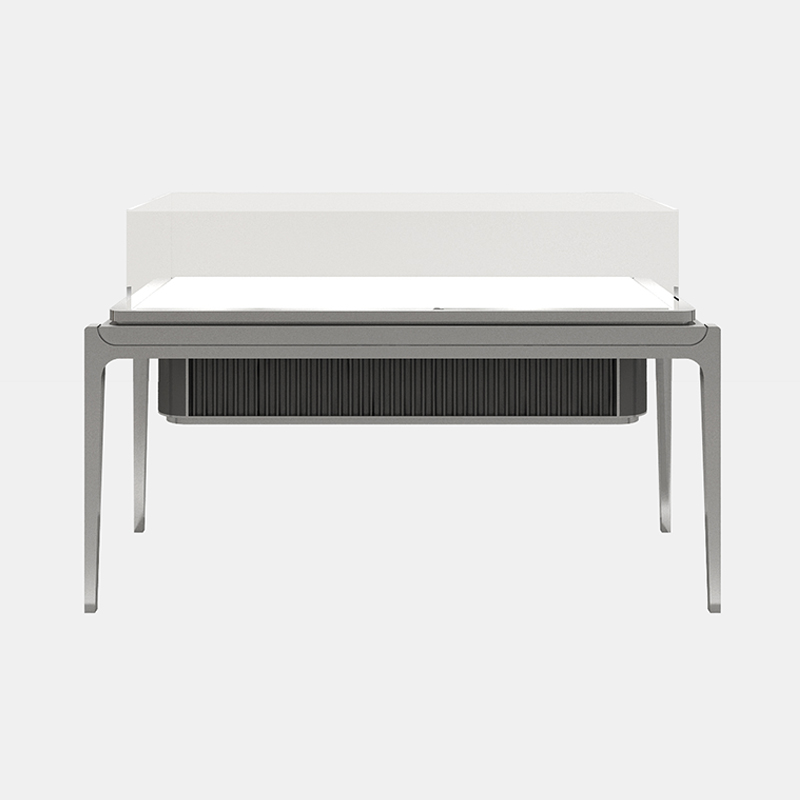
The most direct answer: strategic jewelry display — combining the right showcase height, focused LED lighting, clean sightlines, and curated product groupings — can increase retail jewelry sales by 20% to 40% compared to unstructured displays. The way jewelry is presented is not a secondary consideration; it is one of the most powerful sales tools available to any retail jeweler or showroom operator. A well-designed jewelry display cabinet communicates brand positioning, guides the customer's eye, builds perceived value, and reduces the time needed to close a sale.
Research published in the Journal of Retailing found that visual merchandising quality accounts for up to 33% of the variance in impulse purchase behavior in specialty retail environments. For jewelry — where the product is small, high-value, and emotionally significant — this figure is even more pronounced. Customers who cannot see or engage with a piece rarely ask to try it on, and a purchase that never gets considered is a sale permanently lost.
This guide covers every dimension of effective jewelry display: showcase types and materials, lighting science, layout psychology, display ideas for retail stores, and the design trends shaping modern jewelry store furniture. Whether you are outfitting a flagship showroom or optimizing a boutique counter, the principles here apply at every scale.
Content
Jewelry is a tactile, emotional product category. Unlike apparel or electronics, where the customer often arrives with a specific model or style in mind, a significant proportion of jewelry purchases — particularly gifts — are shaped almost entirely by what the customer sees in the store. A 2022 study by the Gemological Institute of America (GIA) found that 68% of fine jewelry purchases in physical stores were influenced by in-store display rather than prior intent. This means display is not merely presentation — it is an active conversion mechanism.
The specific mechanisms through which a jewelry showcase drives revenue are well-documented. First, elevation and isolation: a piece placed at eye level in a dedicated LED jewelry showcase draws more dwell time than the same piece laid flat in a crowded tray. Second, lighting-driven sparkle: diamonds and gemstones need targeted light to display their optical properties, and customers who see a ring sparkle under focused beam lighting experience a measurably stronger desire response. Third, perceived exclusivity: a modern jewelry store display case that presents five carefully chosen pieces communicates higher value than one displaying fifty.
The chart above, drawing on GIA consumer behavior research and retail merchandising studies, ranks the top five factors that influence in-store jewelry purchase decisions. Display presentation leads decisively at 68%, followed by staff engagement (54%), lighting quality (47%), store layout (38%), and brand signage (22%). The data reveals that the physical environment — showcase design, illumination, and spatial organization — collectively outweighs even human sales interaction in driving the initial purchase impulse. This should not be interpreted as diminishing the role of staff, but rather as confirmation that the display environment sets the stage on which every sales conversation takes place. A jewelry display cabinet that fails to engage the customer before the salesperson approaches has already created a conversion barrier.
Choosing the right jewelry display case format is the foundation of any effective retail display strategy. The showcase type determines customer interaction distance, viewing angle, security level, and the amount of product that can be presented legibly without visual crowding.
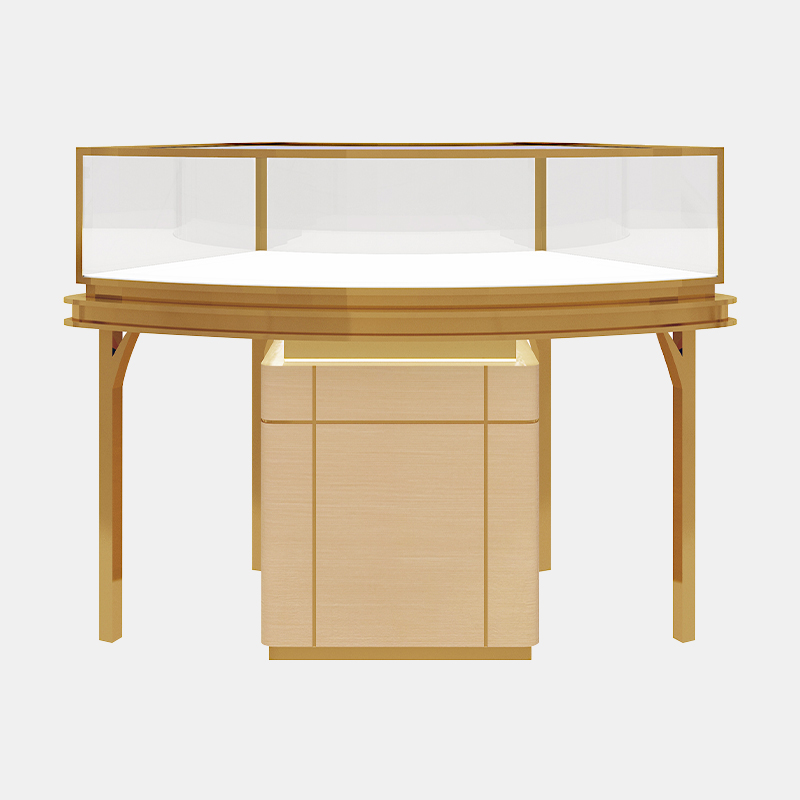
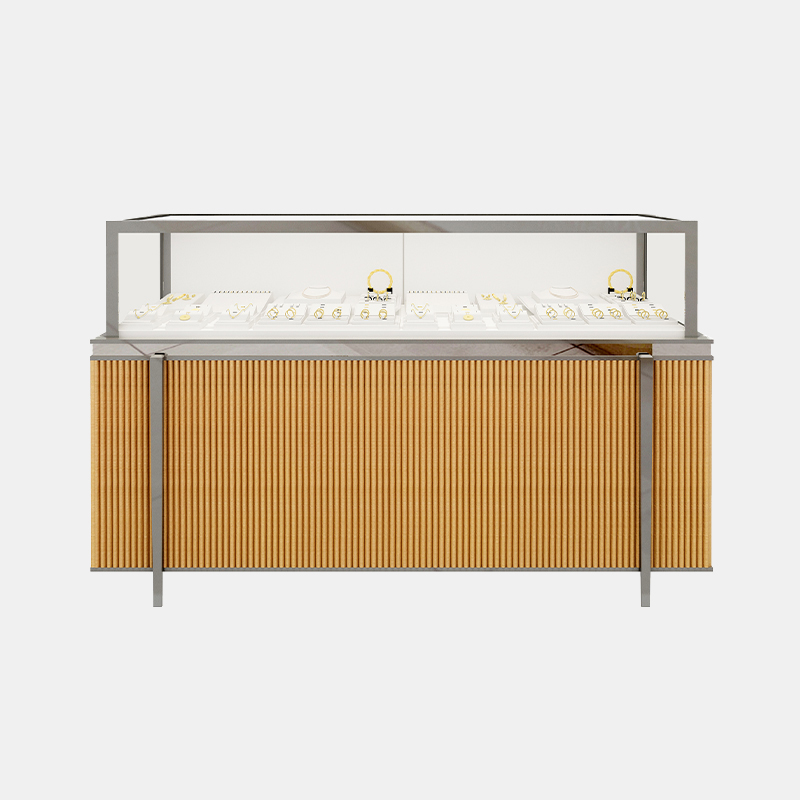
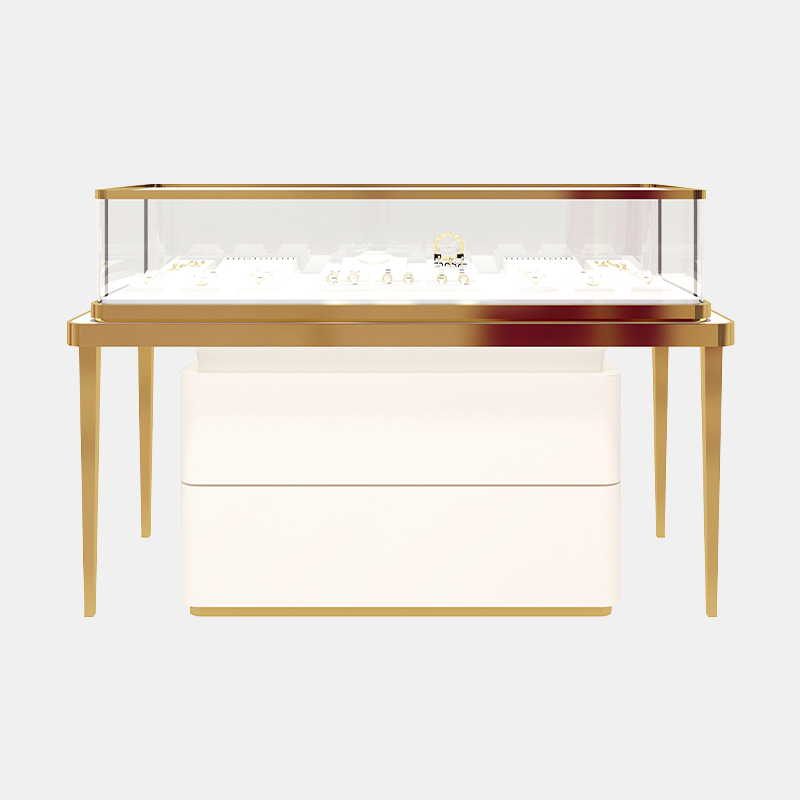
Counter-height jewelry display cases — typically 90–100 cm tall — are the workhorse format of most retail jewelry stores. They position merchandise at a natural viewing angle for standing customers, allow staff to reach in from behind for item retrieval, and provide a work surface for transaction processing on top. Counter cases work best for rings, earrings, pendants, and mid-tier product lines where customers expect to ask to try items on. The case front should be angled glass at approximately 5–15° to reduce reflective glare while maximizing product visibility.
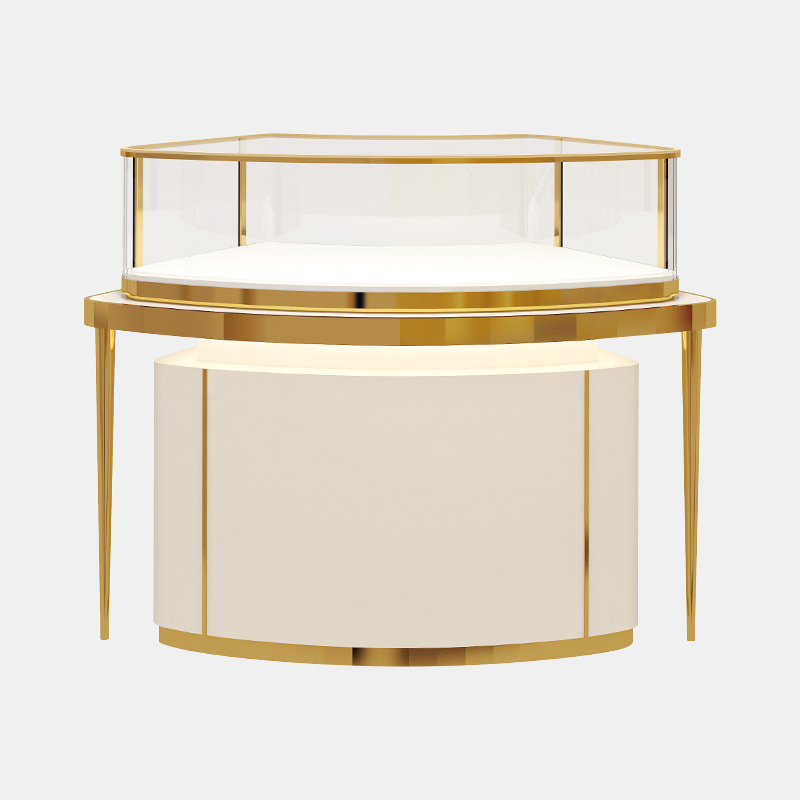
Freestanding tower or pedestal jewelry showcases are used to create focal points on the retail floor, typically for high-value hero pieces — statement necklaces, diamond solitaires, or seasonal feature collections. A pedestal display elevates the item both literally and perceptually, communicating rarity and exclusivity. In luxury jewelry showroom furniture design, a single pedestal display with one or three items is more effective than a counter loaded with options, because it forces the eye to engage with the specific piece rather than scanning a broad selection.
Wall-mounted jewelry display cabinets make use of vertical space to present watches, bracelets, or secondary collections without consuming floor area. They work particularly well in smaller boutiques where counter space is limited. Backlit wall displays — where illumination comes from behind frosted panels or through shelving — create a dramatic presentation that makes gold and gemstone pieces appear to glow. Wall units also serve as zoning tools, defining separate product worlds within a single retail space.
Some modern jewelry stores — particularly those targeting younger demographics or fashion jewelry segments — have moved toward partially open display tables where select pieces can be handled directly, with staff present nearby. This format reduces the psychological barrier created by glass-enclosed showcases and increases trial rates, which in turn increases conversion. However, it requires more active loss-prevention management and is less suitable for high-value fine jewelry.
| Showcase Type | Best Product Category | Store Tier | Key Advantage |
|---|---|---|---|
| Counter Case | Rings, earrings, pendants | All tiers | High capacity, staff interaction |
| Tower / Pedestal | Hero pieces, solitaires | Mid to luxury | Focal point, perceived exclusivity |
| Wall Cabinet | Watches, bracelets, sets | Boutique to luxury | Space-efficient, dramatic backlit effect |
| Open Display Table | Fashion jewelry, entry-level | Mass market, lifestyle | Higher trial rate, tactile engagement |
| Custom Jewelry Display Cabinet | Full collection, brand identity | Luxury, flagship | Brand coherence, maximum flexibility |
Lighting is arguably the single highest-impact variable in jewelry display. The right lighting does not merely illuminate — it activates the optical properties of gemstones and precious metals that drive desire. Poor lighting is invisible to most shoppers, but its effect is immediate: jewelry under flat, diffuse, or cool-white fluorescent light appears dull, flat, and uninspiring regardless of its actual quality.
The best lighting for jewelry showcases combines three elements. First, high Color Rendering Index (CRI): a CRI of 90 or above ensures that gold appears richly yellow, platinum appears cool and crisp, and gemstone colors read true to their GIA grade. Second, high luminous intensity from a narrow beam angle (typically 15–25°) that concentrates light on individual pieces to generate the sparkle that triggers desire responses. Third, color temperature calibrated to the product category: warm white (2700–3000K) enhances yellow gold and rose gold; neutral white (3500–4000K) is ideal for platinum, white gold, and diamond solitaires; cooler temperatures (4000–5000K) work well for sapphires, emeralds, and colored stone displays.
A 2021 retail lighting study by the Lighting Research Center (LRC) at Rensselaer Polytechnic Institute found that jewelry displayed under high-CRI LED spotlights generated 31% higher purchase intent scores than the same items under standard fluorescent lighting, even when shoppers were not told the lighting conditions had changed. This is a direct, measurable impact on sales conversion attributable solely to illumination quality.
The line chart maps the relationship between CRI level and purchase intent scores for both high-CRI LED spotlights and standard fluorescent lighting in jewelry showcases. The LED line rises steeply from CRI 70 (score: 42) to CRI 98 (score: 95), demonstrating that incremental improvements in color rendering quality produce compounding gains in customer desire. The fluorescent line remains comparatively flat across the same CRI range (40 to 55), confirming that the light source type — not merely CRI — matters significantly. LED light has a spectral composition that activates diamond brilliance and gemstone saturation in ways that fluorescent light physically cannot replicate, regardless of CRI rating. For jewelry store owners evaluating showcase upgrades, the data points to a clear conclusion: investing in high-CRI LED jewelry showcases is one of the highest-return improvements available in the display environment.
The spatial arrangement of jewelry showcases within a store environment determines how customers move, where they pause, and which product categories they engage with most deeply. Retail environmental psychology — formalized in research by Kotler, Turley, and Milliman — identifies specific layout patterns that maximize dwell time and browsing depth in specialty retail.
The first 1–2 meters inside a jewelry store entrance should be kept relatively clear — this is the decompression zone where customers transition from the street environment and begin to register their surroundings. Placing product-dense showcases immediately at the entrance causes sensory overload and reduces engagement with those first items by up to 40%, according to Paco Underhill's foundational retail research. Instead, use this zone for brand imagery, a single hero display, or ambient decor that signals the store's positioning.
Studies consistently show that the majority of shoppers — approximately 75–80% in Western markets — turn right upon entering a retail store. This means the first substantive product display a customer encounters is typically on their right side. Placing your highest-margin or most visually compelling jewelry showcase in this position capitalizes on a natural behavioral pattern. Reserve the left side for secondary categories and the rear of the store for anchor categories that draw customers deeper into the space.
Jewelry store showcases should be arranged to maintain clear sightlines from the entrance to the rear of the store. This serves two purposes: customers can preview the entire space before committing to entering fully, which reduces the perceived risk of entering; and it allows staff to maintain visual contact with all product areas. Recommended aisle widths between counter-height jewelry display cases are 90–120 cm minimum, allowing two customers to browse simultaneously without feeling crowded.
The radar chart compares two dominant jewelry store layout strategies across six performance dimensions. The open loop or boutique layout — where showcases are arranged in a meandering path with clear focal points and open sightlines — scores strongly on dwell time (90), conversion rate (85), and browse depth (88), the three metrics most directly tied to sales revenue. Its trade-offs are lower security control (65) and layout flexibility (75), since open designs are harder to reorganize quickly and require more active staff floor presence. The grid layout, where showcases are arranged in parallel rows or around the perimeter, offers higher staff efficiency (88) and security control (85) but produces lower customer dwell time (60) and conversion rates (65) because it lacks the spatial cues that encourage exploration. For most jewelry store operators, a hybrid approach — grid structure for the perimeter combined with open-loop movement through the center — captures the advantages of both systems.
Beyond the physical showcase and lighting infrastructure, the specific way products are arranged within a display cabinet determines whether customers engage individually with pieces or scan and move on. Effective jewelry display ideas are grounded in visual hierarchy, product density management, and narrative grouping.
The most consistent finding across retail visual merchandising research is that reducing product density in jewelry showcases increases per-item engagement time and perceived value. A counter case displaying 15–20 pieces in organized groupings outperforms one showing 50+ items in terms of conversion rate and average transaction value. When a showcase is too crowded, customers experience cognitive overload and default to not engaging, rather than investing the effort to sort through the selection.
Every display zone should have one dominant piece — visually elevated, better lit, and positioned centrally — surrounded by supporting items. This hierarchy gives the customer's eye a starting point and allows the salesperson to open a conversation with: "The piece you're looking at is our featured [collection/stone/design]..." A display without a clear focal point forces the customer to self-navigate, which reduces engagement.
Organizing jewelry displays by story or occasion — bridal, anniversary, birthstone, or seasonal collections — helps customers self-identify as relevant buyers and dramatically reduces the cognitive effort of shopping. A customer browsing for an anniversary gift who encounters a curated "10-Year Anniversary" display section with a coordinated necklace, earring, and bracelet set is far more likely to purchase multiple items than one who must assemble a coordinated look from separate category sections.
The materials used in jewelry display cases — velvet, leather, marble, acrylic, wood — communicate brand values before a word is spoken. Black velvet creates contrast that makes gold and diamonds appear brilliant but can feel traditional. Cream or blush velvet reads as romantic and contemporary. Natural stone and raw wood communicate artisanal positioning. Acrylic and brushed metal signal modernity and accessibility. A custom jewelry display cabinet that uses materials aligned with the brand's visual identity reinforces the purchase justification at a subconscious level.
The horizontal bar chart quantifies the sales conversion lift associated with five individual display improvement techniques, drawn from controlled retail merchandising studies and industry case data. Reducing product density delivers the highest single-technique lift at 38%, reinforcing the well-established principle that edited, focused displays outperform dense, comprehensive ones in jewelry retail. LED spotlight upgrades produce a 31% lift — the second-highest individual impact — confirming the lighting research discussed earlier. Occasion-based grouping (27%) and hero piece designation (24%) are closely related techniques that work synergistically; stores that implement both simultaneously often see combined lifts exceeding the sum of either alone. Aligned display materials, while contributing the smallest individual lift (18%), are important for long-term brand equity and customer recall. Together, implementing all five techniques can produce cumulative conversion improvements well above 40%.
Off-the-shelf jewelry showcases offer a functional baseline, but they impose a visual template that is often identical to dozens of competing stores in the same market. A custom jewelry display cabinet — designed, engineered, and manufactured to match a specific brand identity, store architecture, and product line — transforms the retail environment into a proprietary brand asset.
The case for investing in a custom jewelry showcase factory relationship becomes most compelling when the brand operates in the mid-to-luxury tier, is opening a flagship or anchor store, or has a distinctive visual identity that stock displays undermine. Custom cabinets can be engineered with integrated LED systems at precise angles for each product zone, specific interior finishes (velvet color, leather texture, mirror depth), dimensional proportions that match the store's architecture, and security features tailored to the jewelry category.
OEM jewelry display cabinet manufacturing — where a brand works with a factory to produce showcases under the brand's own specifications — has become increasingly accessible through specialized jewelry showcase manufacturers in China, where production quality and customization capability have advanced significantly. Wholesale jewelry showcases from these manufacturers can be produced in quantity for multi-store rollouts while maintaining design consistency across locations. When evaluating a jewelry display cabinet supplier, key criteria include: prototyping speed and fidelity, glass specification (tempered, low-iron, or standard), finish consistency across production batches, and LED integration quality.
The grouped bar chart tracks the adoption rate of five leading jewelry showcase design trends across luxury and mid-market store tiers. LED integration leads adoption across both segments — 92% in luxury and 72% in mid-market — reflecting the now-universal recognition that lighting quality is non-negotiable in jewelry retail. Minimal design aesthetics (88% luxury, 60% mid-market) reflect the broader retail design movement away from ornate maximalism toward understated environments where the jewelry itself commands attention. Custom millwork adoption (78% luxury, 45% mid-market) highlights the growing commitment to distinctive physical environments as competitive differentiation. Smart lock integration (65% luxury, 35% mid-market) is an emerging operational trend driven by staff efficiency needs and security requirements in high-value retail. Sustainable materials adoption remains in its early stages (55% luxury, 28% mid-market) but is growing rapidly as consumer values increasingly include environmental consciousness in their brand evaluation criteria.
Zhejiang SUNTOP Commercial Display Products Co., Ltd was established in 2009 and specializes in creating commercial display spaces for jewelry retailers and showrooms worldwide. The company integrates design planning, display cabinet and prop production, and decoration and renovation contracting management to create display spaces that precisely match each client's positioning and brand identity.
The factory covers an area of 25 acres with floor space up to 25,000 square meters and annual production capacity exceeding 100 million units. SUNTOP's capabilities span custom jewelry display cabinet design, OEM jewelry display cabinet production, wholesale jewelry showcases, and full-service showroom furniture solutions for clients ranging from independent boutiques to international jewelry chains. With professional engineering teams, advanced manufacturing facilities, and proprietary mold development, SUNTOP delivers the precision, consistency, and design flexibility that modern jewelry retailers require.
Q1: What is a jewelry showcase?
A jewelry showcase is a glass-enclosed display cabinet designed to present jewelry to customers in a retail or showroom setting. It combines secure, lockable storage with maximum product visibility, typically featuring integrated lighting and interior display surfaces to enhance the appearance of each item.
Q2: Why is a jewelry showcase important for retail?
A jewelry showcase directly influences purchase decisions by highlighting the brilliance and detail of each piece, communicating brand positioning, and creating a secure, organized environment for customer browsing. Research shows display quality accounts for up to 33% of impulse purchase behavior in jewelry retail.
Q3: What materials are used in jewelry display cabinets?
Jewelry display cabinets typically use tempered or low-iron glass panels, MDF or solid wood frames, stainless steel or aluminum hardware, and interior surfaces in velvet, leather, or lacquered acrylic. Premium custom cabinets may incorporate marble bases, brass fittings, or bespoke millwork elements.
Q4: How do you display jewelry attractively in a store?
Display jewelry attractively by reducing product density (15–20 pieces per counter section), designating a clear hero piece in each display zone, using high-CRI LED spotlights (95+ CRI), grouping items by occasion or collection story, and using display materials whose color and texture complement your metal tones.
Q5: What is the best lighting for a jewelry showcase?
The best lighting for jewelry showcases is high-CRI (95+) LED spotlighting with a narrow beam angle (15–25°). Use 2700–3000K for gold and rose gold, and 3500–4000K for platinum and diamonds. LED is preferred over fluorescent because its spectral output activates the optical brilliance of gemstones far more effectively.
Q6: How do luxury jewelry stores display their products?
Luxury jewelry stores use sparse, curated displays with very few items per section, custom-built showcases aligned precisely with the brand's visual identity, high-CRI LED lighting, neutral or richly textured interior surfaces, pedestal displays for hero pieces, and carefully maintained open sightlines that communicate exclusivity and spaciousness.
Q7: What is the ideal counter height for a jewelry showcase?
The standard counter height for jewelry display cases is 90–100 cm (approximately 36–39 inches), which positions merchandise at a comfortable viewing angle for standing adult customers. The glass front panel is typically angled at 5–15° to reduce reflective glare and maximize the customer's view of displayed items.
Q8: Can I order custom jewelry showcases for multiple store locations?
Yes. Wholesale jewelry showcases can be produced in consistent batches through OEM jewelry display cabinet manufacturing partnerships, ensuring design uniformity across multiple locations. A reputable jewelry showcase manufacturer can produce prototypes for approval before full production runs, including custom dimensions, finishes, and integrated LED specifications.


 ਪੰਜਾਬੀ
 English
 عربى
عربى русский
 中文简体
中文简体