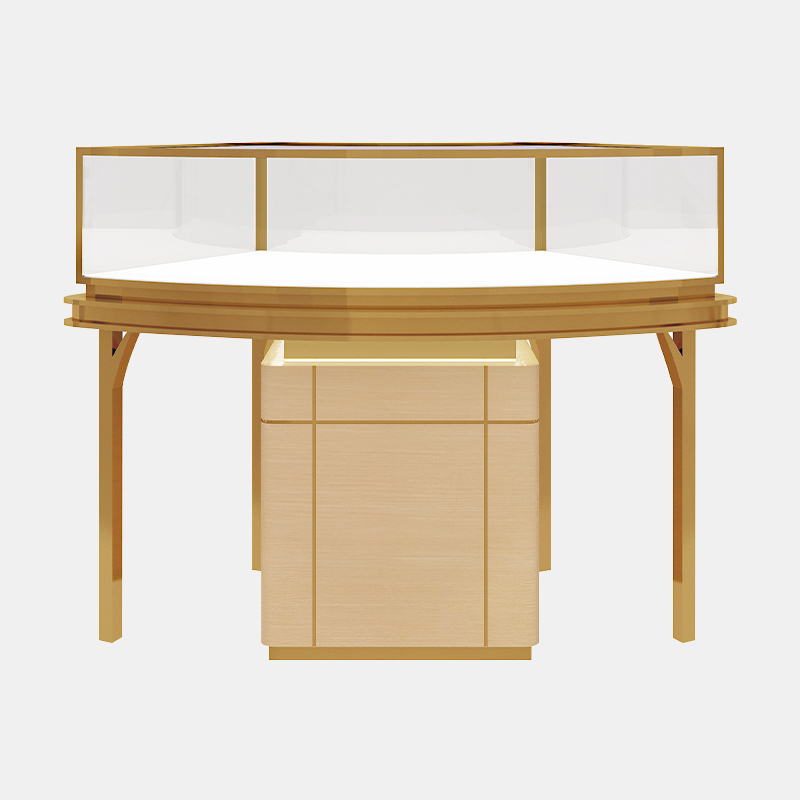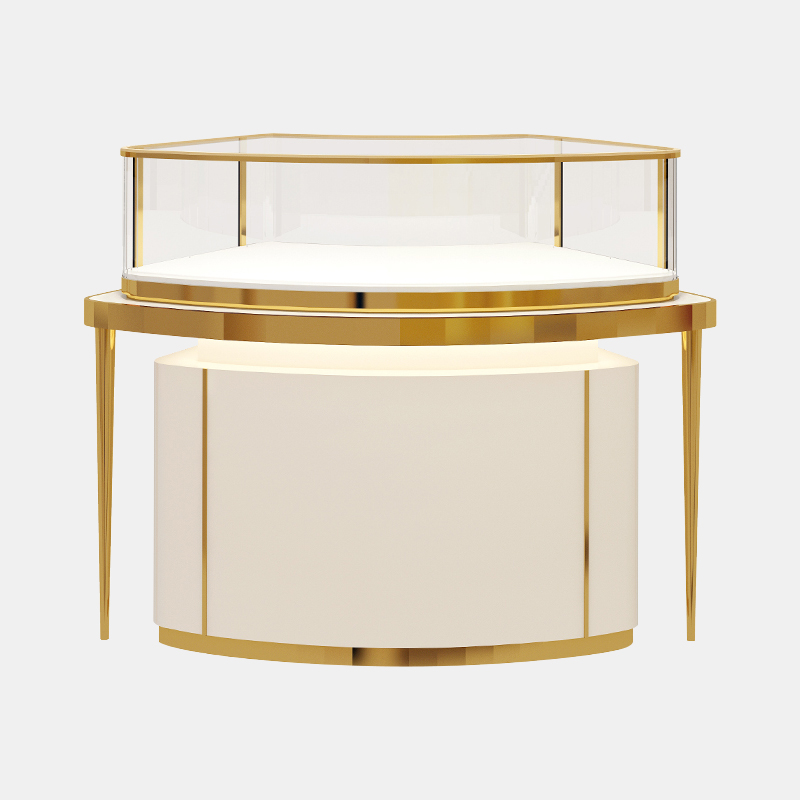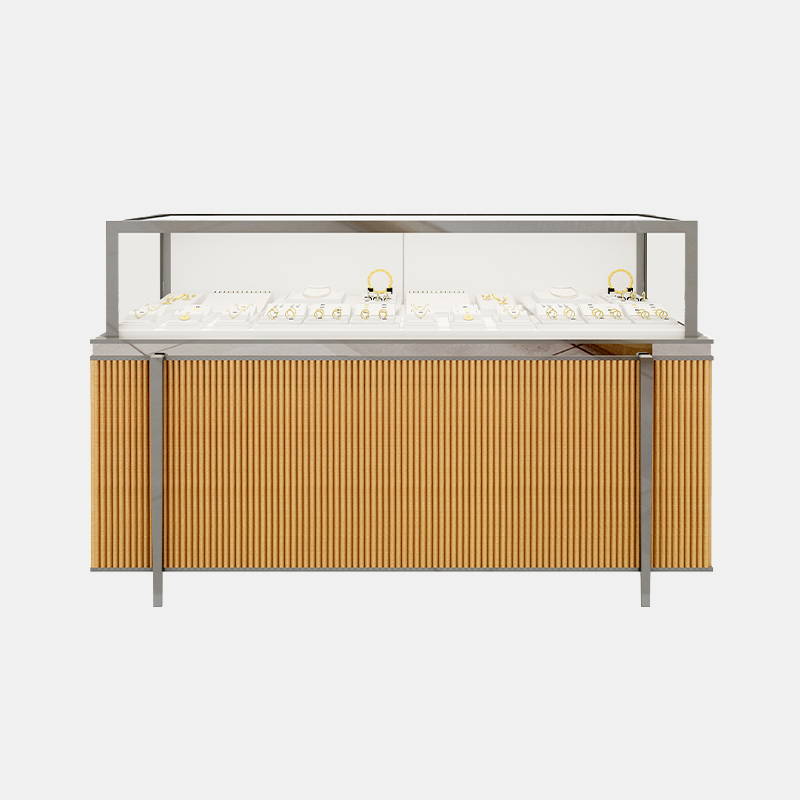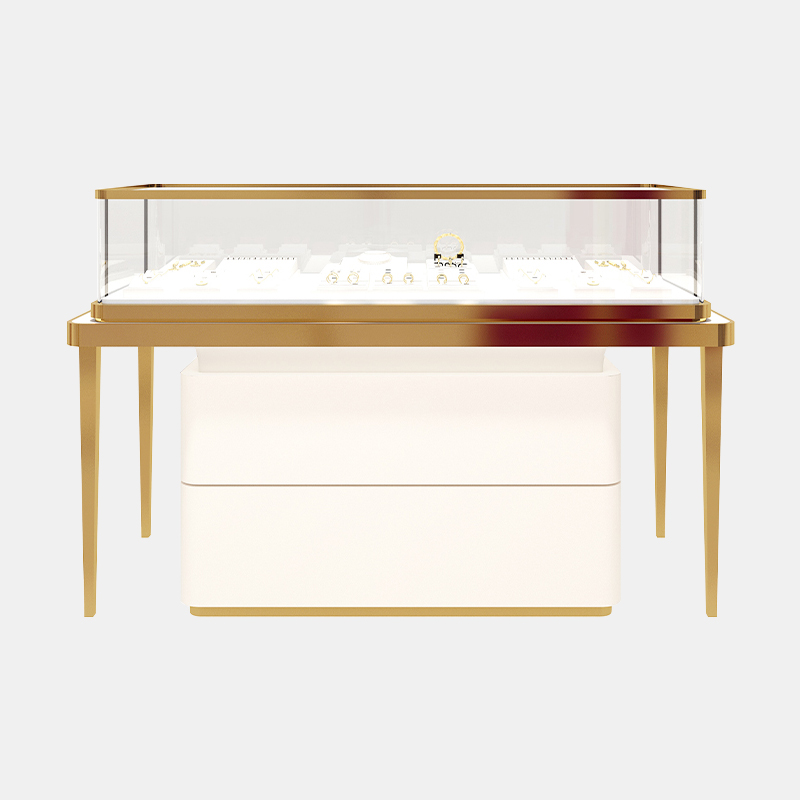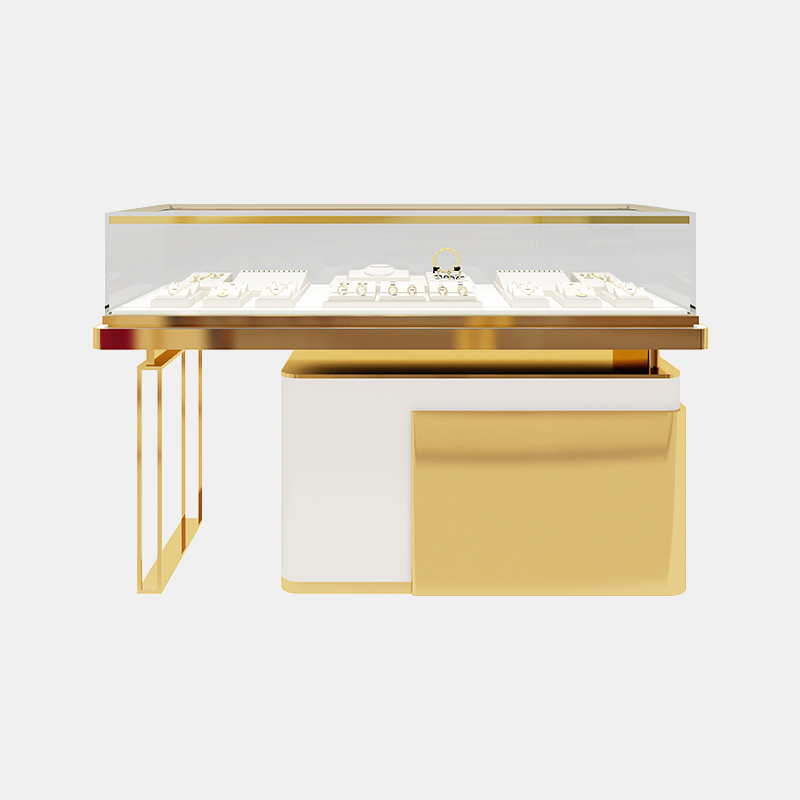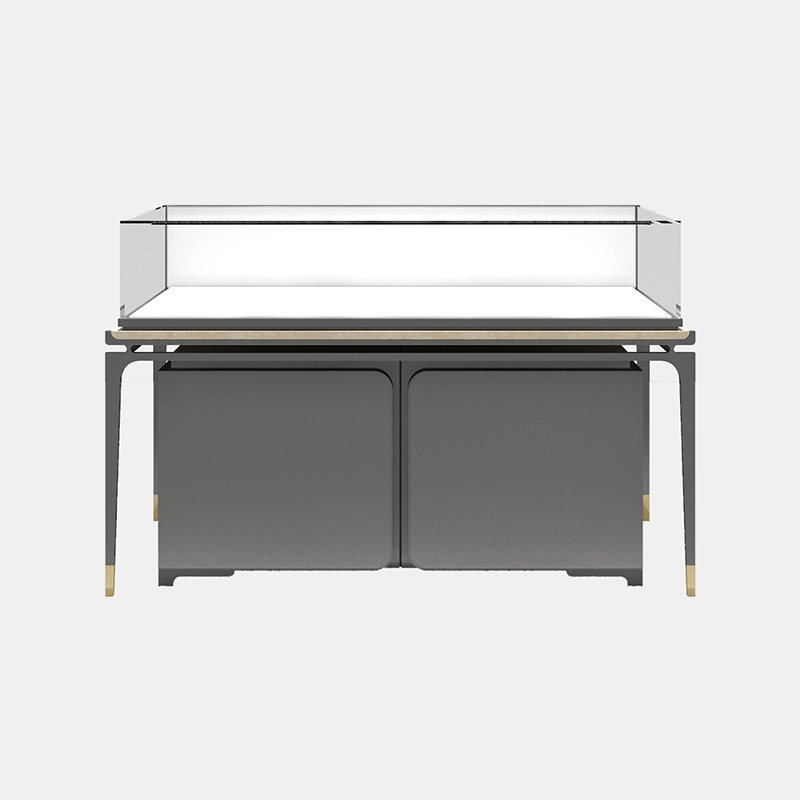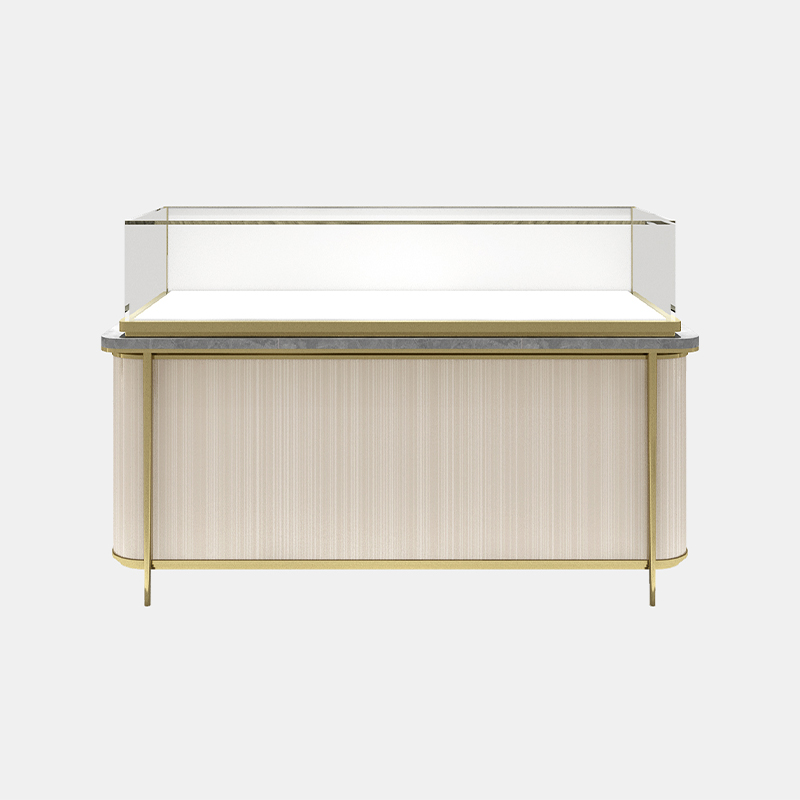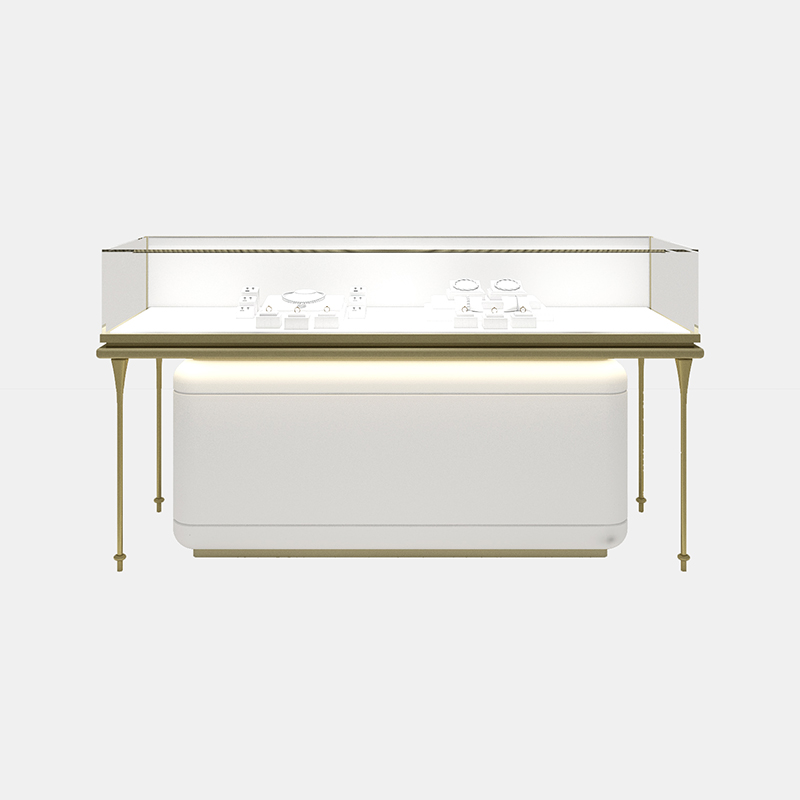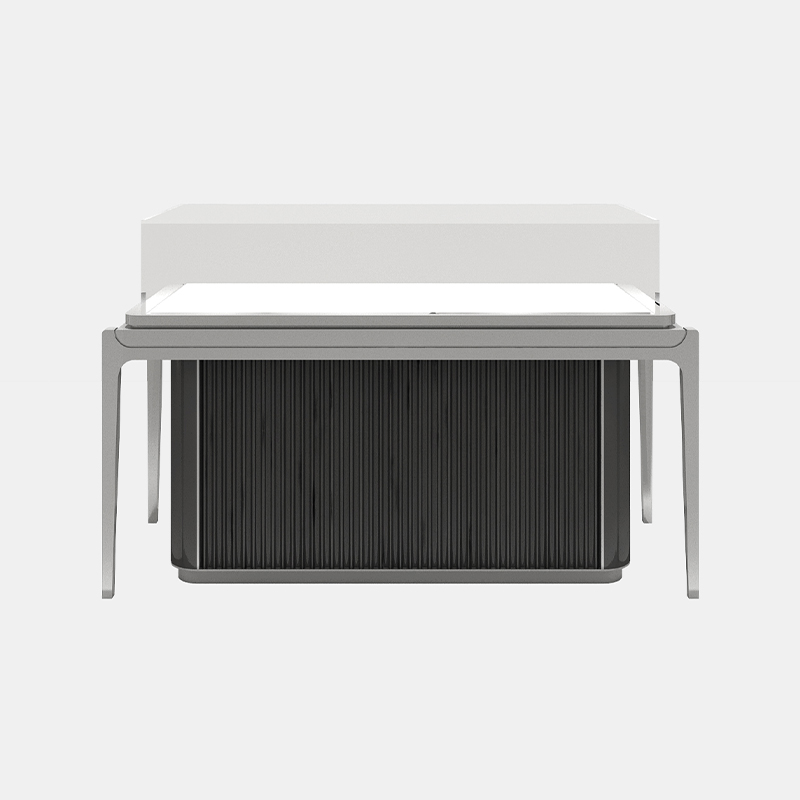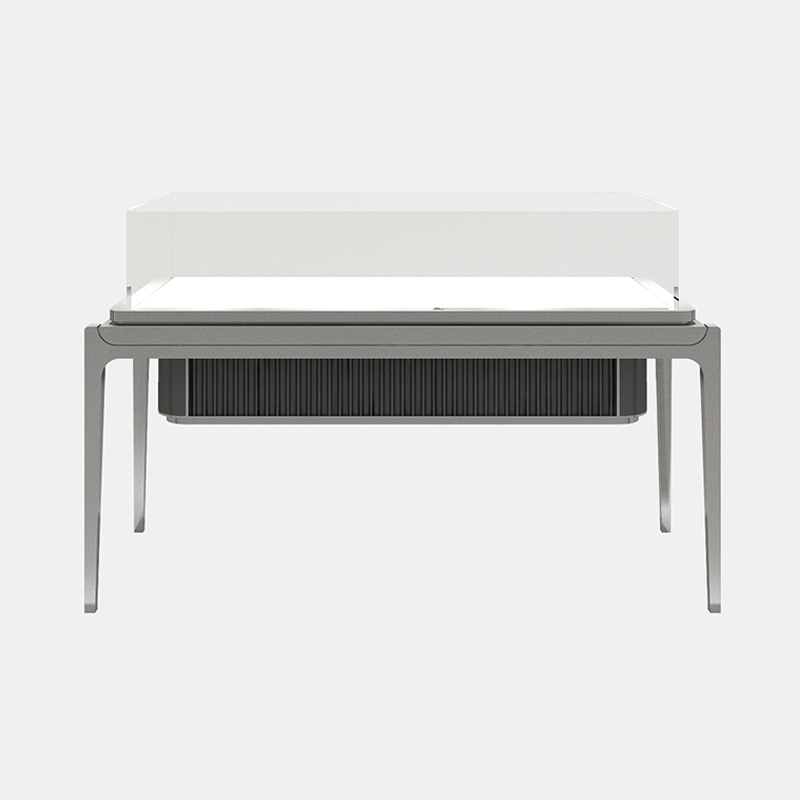
A customer walks into a jewelry store, stops at the first counter, and decides within seconds whether the pieces look valuable enough to ask about. The counter is doing three jobs at once: it presents the product, protects it, and gives the sales associate room to work. When one job fails, the whole store feels less credible.
The short answer: a good jewelry store display counter gets five fundamentals right: a clear sightline, layered lighting, secure but unobtrusive construction, usable storage, and a service layout that keeps staff out of the customer's space. Finish and branding support those fundamentals; they cannot compensate for them.
Here is how to judge a counter before you buy, including the tolerances and risks that tend to show up after installation.
Content
Most sales counters place the work surface around 900–950 mm above the floor. The glass hood adds another 100–250 mm, and that final height decides whether a customer can see the back row of a tray without stooping. A counter that looks elegant in a drawing can hide the smallest pieces in real life.
Test the sightline with actual product trays, not a catalogue photo. Ask a shorter colleague to stand where a customer would stand and confirm that the rear row is visible from about 1.5 m away. Check the sales associate's side too: if the counter forces a reach across the display, staff will handle stock awkwardly, and handling is where damage and shrinkage begin.
Two procurement questions help: What is the finished height from floor to top of glass? And what is the clear internal height between the display deck and the glass? Ask for both in writing.
The table below is a quick comparison for a showroom review. It focuses on what customers and staff experience daily, not on decorative details that are easy to photograph but hard to live with.
| Element | What good looks like | Common failure |
|---|---|---|
| Sightline | Hood height tested with real trays; rear row visible from about 1.5 m | Frame and glass obscure the back row |
| Lighting | Two or three layers; consistent colour temperature; high colour rendering | One bright downlight creates hot spots and glare |
| Security | Laminated or laminated-tempered glass, concealed locks, clean cable routing | Visible padlocks or exposed wiring |
| Storage | Soft-close drawers sized to the tray system already in use | Drawers too shallow for existing inventory |
| Service flow | Separate customer zone and staff aisle, typically 900–1,200 mm wide | Staff must reach across displayed pieces |
Jewelry needs layered light, not one bright source. A typical specification uses ambient light for the room, task light inside the counter, and accent light for featured pieces. Keep colour temperature consistent across the store; mixing warm and cool sources makes gold and diamonds look inconsistent. High colour rendering helps stones and metal read naturally.
Watch for glare at customer eye level. A bright LED strip reflected in the glass can be more distracting than dim lighting. Dimming and separate switching for accent lights are worth specifying, because a counter that is too bright during the day often stays too bright at night.
For stores that want the lighting layer built into the counter rather than added later, this product is a useful reference:
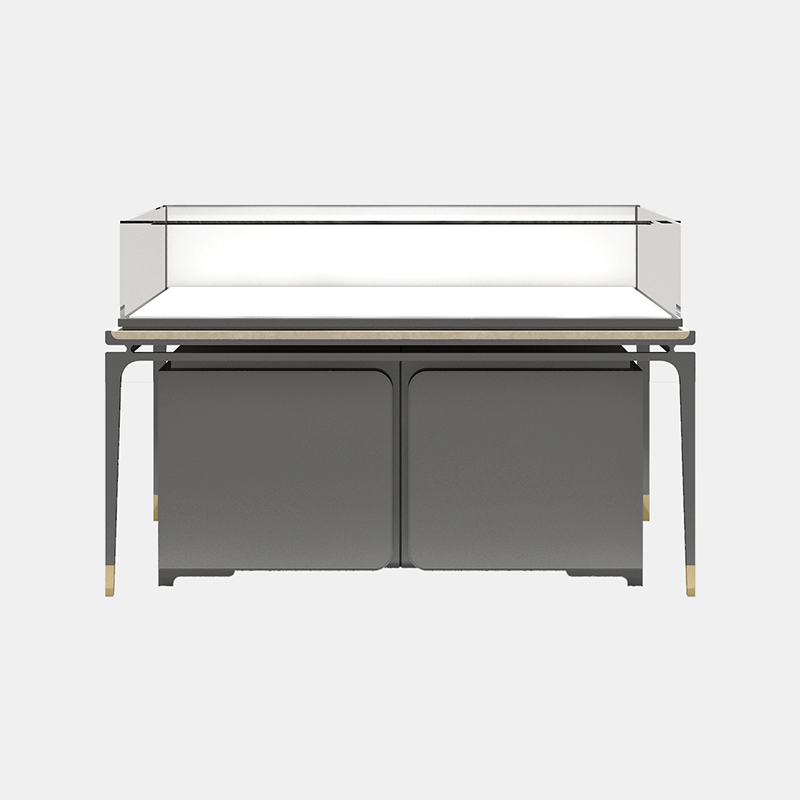 JR-S201 Jewelry Display Cabinet with Integrated LightingIntegrated lighting and customizable materials, shapes, colors, and sizes support secure, attractive jewelry retail display in this showcase.View Product →
Security is mostly invisible when it is done well. Laminated glass or laminated-tempered glass gives better fragment retention than ordinary tempered glass, which matters for high-value pieces. Locks should be concealed but serviceable, and lock points need steel reinforcement inside the frame, not just a stronger lock cylinder.
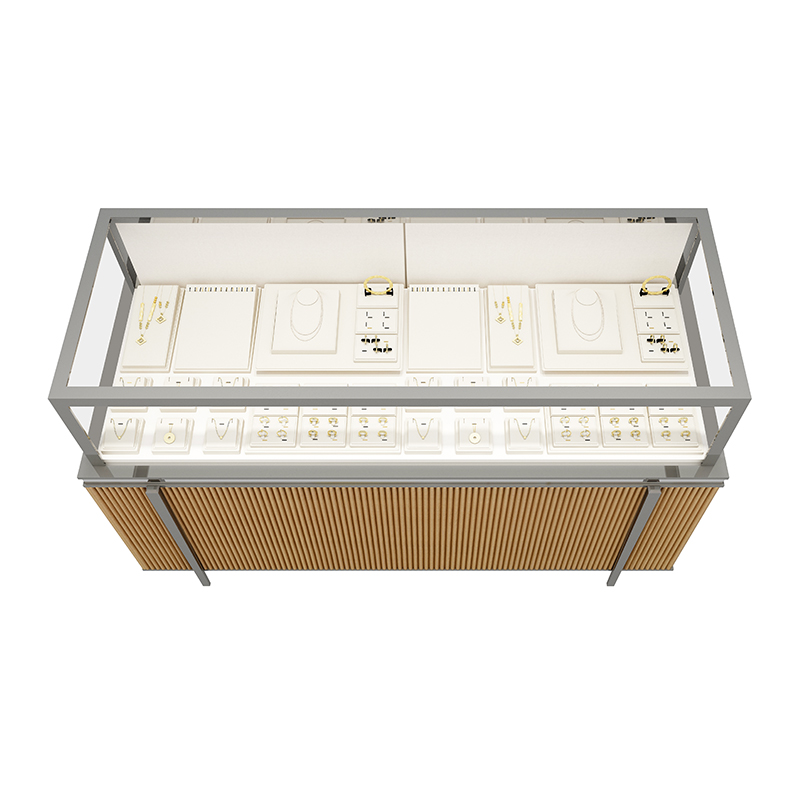
Look at cable routing. Exposed wiring and visible transformers make a counter look temporary and create a cleaning problem. A ventilated base helps LED drivers and drawer hardware last longer. The isometric sketch below shows the structural layers worth checking during a factory review.
For a stainless-steel counter where durability and clean lines matter, this model is a useful benchmark:
 JR-S103 Stainless Steel Jewellery Display CabinetStainless-steel showcase built for durable, corrosion-resistant jewelry display, with customization options for retail presentation and easy cleaning.View Product →
Stainless steel frames suit high-traffic stores and are easy to wipe down. Solid wood and lacquer finishes add warmth, but the lacquer cure and edge sealing matter more than the colour name. Ask for a finish sample under the store's actual lighting; a warm white LED can shift a grey lacquer toward green.
Storage should be sized around the tray system you already use. Drawers that are a few millimetres too shallow become a daily annoyance; drawers that open into the staff aisle are a safety issue. A practical service aisle is around 900–1,200 mm, with more width where two associates pass. The customer zone and the staff zone should be separate, so no one has to reach across a displayed necklace to fetch a box.
For stores that need a combined high-low presentation, a modular combination counter can reduce bespoke joinery and shorten installation. This jewellery combination display cabinet is one example:
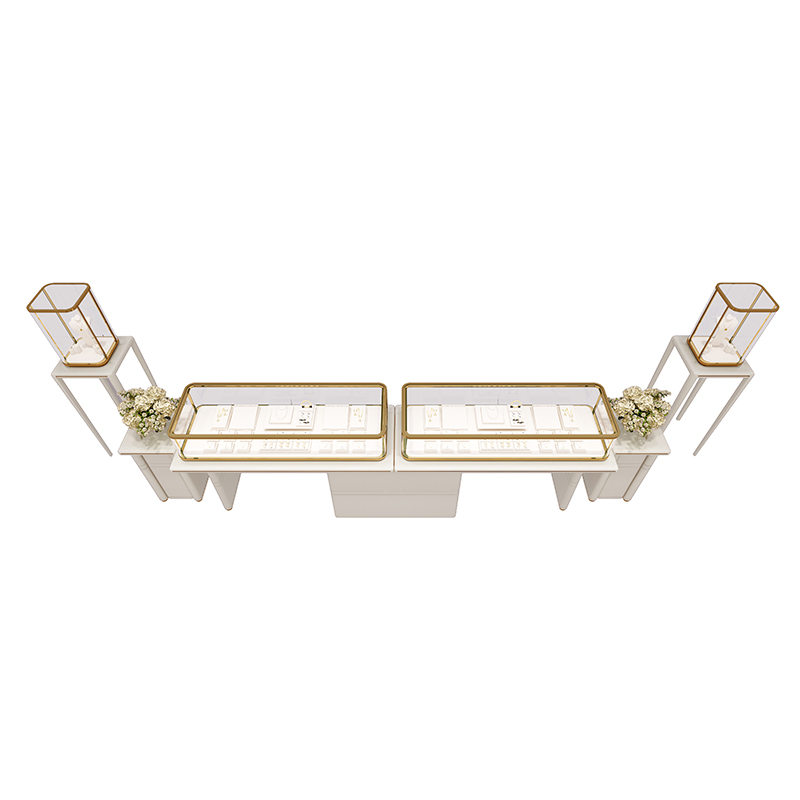 JR-C101 Jewellery Combination Display CabinetMulti-functional jewelry cabinet with drawers, compartments, glass and velvet lining for organized storage and luxurious retail presentation, customizable in materials and sizes.View Product →
Brand fit shows up in proportion, trim, light colour, and the way the counter frames the product. A luxury brand may need deeper shadow gaps and quieter hardware; a fashion jewelry brand may need more colour and faster tray changes. Custom display cabinet work should start from the store's planogram and the staff's routine, not from a style board alone.
Reviewing completed jewelry display projects is a faster way to judge whether a supplier understands those details than reading a catalogue. Ask how the counter is levelled on an uneven floor, how glass is replaced, and what tolerances the factory holds on cabinet joints.
Zhejiang Suntop Commercial Display Products Co., Ltd. was founded in 2009. Its factory covers 25 acres, with 25,000 square meters of building area and annual production capacity of 300 projects. Its main customer types include jewelry, cosmetics, watches, and museums. After 16 years in the display props industry, Suntop has received provincial high-tech enterprise and credit enterprise awards and holds a number of relevant industry technology patents. The company's stated approach is to reflect each client's brand concept through high-quality display spaces, with design, production, and installation handled as one process.
Q1. How high should a jewelry display counter be?
Most sales counters sit around 900–950 mm at the work surface. The glass hood height depends on whether customers sit or stand, so mock up the final height with real trays.
Q2. What glass is best for a jewelry counter?
Tempered glass is common. For high-value pieces, laminated or laminated-tempered glass gives better fragment retention. Ask for the glass specification in writing.
Q3. How much lighting does a jewelry counter need?
Use layered lighting rather than one bright source. Aim for consistent colour temperature, high colour rendering, and dimmable accent lights. Test glare at customer eye level.
Q4. How many drawers should a display counter have?
Enough for the tray system you actually use, not the maximum the catalogue offers. Drawers should open without blocking the staff aisle.
Q5. Can a display counter be customized for a small store?
Yes. Shorter runs, corner returns, and combined high-low units often fit better than standard islands. Confirm lead times and site tolerances before ordering.
Q6. What is the biggest mistake buyers make?
Buying on appearance alone. Check sightlines, lock reinforcement, cable access, and service clearance before comparing finishes.


 ਪੰਜਾਬੀ
 English
 عربى
 русский
 中文简体